The Siege of Neuss and the trial of Peter von Hagenbach 1474/1475

Ep. 214 – The Siege that Woke up an Empire (Neuss 1474/75) History of the Germans

Listen on Spotify

Listen on Apple Podcast

Listen on YouTube

Transcript

Introduction

The venerable city of Neuss between Cologne and Düsseldorf was founded in 16 BC as a Roman army camp, making it one of the oldest in Germany. Its history is marked by the usual mix of feuds with its archepiscopal overlord and the establishment of a trading and pilgrimage hub. Despite its Roman remains, the impressive church of St. Quirinius, and proximity to where I grew up, Neuss may never have appeared on the History of the Germans Podcast, had it not sustained a 10 month long siege in 1474/1475.

Depiction of Charles the Bold’s siege of Neuss (1474-75)
Aarau, Aargauer Kantonsbibliothek, MsWettF 16: 2, f. 58r – Silbereisen: Chronicon Helvetiae, 1572

A siege, even a brutal and prolonged one is not sufficiently unusual to be included in the show. But this one merits almost a whole episode. Tales of the heroic defense of a small town on the Rhine against an overbearing foe intent on wiping out their way of life, coalesced the empire in a way it had not come together since the days of Frederick Barbarossa. A watershed was crossed, under the leadership of an emperor who was more surprised than anyone to be put at the head of the resistance.

And that is not all, in this episode we will also cover the very first trial for war crimes ever that took place in another small town in the same year 1474.

Christmas Present

But before we start a quick update on the Christmas Special. Over a hundred of you have already cast their vote.  The survey is still open, so the final result will be announced next week. There is still room to sway the outcome. And by the way I am confident I have sent an invitation to vote to all patrons on all platforms.

Vote here

If however you have not received one, let me know and I resend it. Or, if you are not yet a patron and want to have your say, you can sign up at historyofthegermans.com/support as Isaac R., James L., John B., MeisterEule, Henry W. and Simon W. for the second time have already done.

And with that, back to the show.

Recap

Last week we ended with the emperor Friedrich III and his son Maximilian making a hasty retreat from Trier, leaving behind an enraged, furious, angry, incensed, hopping mad duke of Burgundy.

Charles “Le Temeraire”, called the Bold in English, who should be named “the reckless” had good reason to be upset. Instead of a coronation as king of Burgundy, complete with crown, sceptre and splendid procession, he had been made a fool of by the penniless Austrians.

Charles the Bold in about 1461–1462, Rogier van der Weyden

I do not have the time to give you a full psychological assessment of Charles the Bold, but if you are a little bit patient and you tune into the Grand Dukes of the West Podcast, Josh will give you a much more rounded picture than I could ever provide provide here.

And you can get the full backstory of the Burgundians.

Trouble in the Archbishopric of Cologne

Whatever his psychological make-up, an angry Charles of Burgundy, ruler of a dozen or so duchies and counties, overlord of the richest cities north of the Alps can be a problem, in particular, if one happens to live within crossbow shot of his borders.

After Charles had taken over the duchy of Guelders, it was the revered archbishopric of Cologne that had come within crossbow shot. And to make things worse, the Archbishopric of Cologne, had few shields left to fend off incoming projectiles.

Ever since the battle of Worringen in 1288, the Prince Electors of Cologne had been on the back foot. Their dominance in the Rhineland was crushed by a coalition made up of the city of Cologne, the dukes of Brabant and the counts of Berg. The archbishops had to retreat to – as John the Carre called it – a Small Town in Germany. Their once tight grip on their vassals, the noble lords and cities of the territory along the Rhine between Neuss and Andernach had loosened. The archbishops’ political standing locally and on the level of the empire was fading, territories were lost or pawned off.

Battle of Worringen, 1288. Illustration from 1440/50 from a version (KBR mss. IV 684) of the chronicle “Brabantsche Yeesten” (ca. 1316-1350) of Jan Van Boendaele, called de Clerc (died 1365).

Dietrich of Moers who held the post for almost fifty years, from 1414 to 1463, had attempted to consolidate the archbishopric into a coherent territorial state, whilst at the same time install his brothers and cousins on the thrones of the neighbouring bishoprics. That got the see of Cologne involved in several major feuds, including one with the city of Soest and one over who would become the prince bishop of Munster. These wars were extremely expensive and yielded little tangible benefit to the inhabitants of the archdiocese, except for members of the von Moers family. When Dietrich von Moers died in 1463, the archbishopric was technically bankrupt.

Epitaph des Erzbischofs Dietrich von Moers, Konrad Kuyn 1460 bis 1463

The estates of the various territories that made up the worldly possessions of the archbishop then forced the cathedral chapter and every future archbishop to sign an agreement, the Erblandvereiningung. This was another one of these agreements that granted the representatives of the local nobility and the cities decision rights on political, financial and military matters, including the decisions to raise taxes or go to war.

The gathering storm – Ruprecht of the Palatinate

Dietrich von Moers successor, Ruprecht of the Palatinate had signed off on this agreement, but almost immediately breached its provisions. He hired soldiers from his brother, Friedrich the Victorious of the Palatinate, and put them to good use. He regained some of the territories his predecessor had pawned away and bullied the estates. But soldiers are expensive. The archbishop needed cash and so introduced a flat tax per head and per head of cattle. That was pretty bad, but when he tried to snatch the customs station at Zons away from his own cathedral chapter, the cauldron boiled over.

The estates, supported by the cathedral chapter, referred to the right of resistance included in the Erblandvereingung, and deposed Ruprecht of the Palatinate. They elected Hermann of Hesse, a younger son of the Landgrave of Hesse as temporary administrator of the archbishopric. The rebellion was supported wholeheartedly by the cities of Cologne and Neuss.

Cologne Cathedral, 1795

In response the archbishop Ruprecht of the Palatinate gathered allies, which included his brother, Friedrich the Victorious and – most crucially – Charles the Bold, duke of Burgundy, Luxemburg, Brabant, Gelders, count of Holland, Seeland, Hainault, Flanders and Namur, advocate of the bishoprics of Liege and Utrecht etc., etc. With Charles the Bold came the duke of Cleves, another neighbour and battle hardened warrior.

On the face of it this rebellion was doomed.

Friedrich the Victorious – as his name suggests – had a reputation for being, well, victorious. He had fought in both the Mainzer Stiftsfehde and in the Princes wars and had been successful. He had captured his adversaries at the battle of Seckenheim and forced them to pay ransom large enough to sustain his powerful army.

But even this imperial war hero paled into insignificance compared to Charles the Bold. The richest territorial ruler north of the Alps had built up a standing army, equipped with the latest artillery pieces the masters in Bruges, Ghent, Mechelen, Milan, Venice and Augsburg could provide. He had issued detailed ordinances that set out the size of squadrons and companies, detailed rules on pay, leave, uniforms, equipment, the frequency of inspections, training and promotion of officers. He commanded a professional army, and one more heavily reliant on artillery than any other, safe for the army of Matthias Hunyadi in Hungary.

Military Ordinance of Charles the Bold, Master of Fitzwilliam 268, c. 1475

The siege of Neuss begins

In July 1474 this army, in total more than 14,000 men, entered the archbishopric of Cologne to put an end to this silly uprising. The estimate was for a campaign of a few weeks, at the end of which Charles would become the hereditary advocate of the archbishopric, aka the home of the imperial coronation chapel in Aachen would become a Burgundian protectorate.

The first place the mighty host encountered was the ancient city of Neuss. Neuss lies 35km north of Cologne and was one of the more important cities in the archbishopric. Its walls date back to the ancient Romans but had recently been reinforced. It was surrounded by water, its moat fed by three rivers, the Rhine, the Erft and the Krur.

Hermann of Hesse, the administrator and protector of the archbishopric appointed by the estates had come into Neuss with a force of maybe 3,500 men, bringing the total number of the defenders to 4,000.

The Burgundian army arrived at the southern gate of Neuss on July 29, 1474. They set up their headquarters in an abandoned monastery on an island in the watery marshes, positioned military units blocking each of the 6 city gates and the shelling began. Ten bombards, six mortars, and a large number of culverins, serpentines and other pieces of artillery fired at the walls almost constantly.

This was not just a siege, this was a Duke of Burgundy siege. Olivier de la Marche, one of Charles’ courtiers remarked: “It was one of the most beautiful and most generously supplied sieges one had ever seen. Our camp was like a city. There were craftsmen, wholesalers, textile merchants, fish mongers, grocers, barbers, carpenters, knife makers, labourers, lamplighters,  [..] everyone fulfilled their own calling and lived with dignity in fine tents, that seemed to be have been set up to last forever. Some looked like towers, others had moats and drawbridges around them. There were also windmills, inns, taverns, cabarets and tennis courts, and anything else one’s heart could desire. As for desire that could be covered by the 4,000 ladies of flexible morals who had come along as well.

The Siege of Neuss by Charles the Bold in 1475. Anonymous painting in the Museum Hof van Busleyden, Mechelen,

Inside the city of Neuss, the opportunity to play tennis or go to the cabaret was limited, nor were there fishmongers, grocers or barbers galore. The city was small, billeted with almost as many soldiers as it had inhabitants and supplies were hard to come by. With gates blocked by Burgundian soldiers, the only way to get things in and out was under the cover of darkness or during sorties.

These occasional sorties by the Hessian troops were surprisingly successful. More than once these fierce fighters managed to sneak amongst the Burgundian troops and caused utter havoc. Presumably Charles’ soldiers were too busy playing tennis or frolicking with camp followers in their fine tents to keep a proper lookout. Meanwhile the militia from Cologne would attack the Burgundian camp from the rear.

Charles grew increasingly frustrated with the slow progress. He was an enormously energetic man and he was constantly appearing in the different sections of the siege, encouraging his men, until they called him the flying duke as they could not figure out how he could be in so many places at the same time. And he did not spare his resources. He tried to divert the river Erft to drain the moat around the city and when that failed sank earth-laden barges to build a dam.

We are now 2 months into the siege and Neuss showed little signs of giving up, even though conditions inside the walls must already have been appalling. Ammunition was running low and casualty numbers were rising, whilst food was scarce. Still Neuss held out and will hold out for a further 8 months, outnumbered 4 to 1, an almost unimaginable feat of resistance.

why Defending Neuss – or the harsh rule of the Burgindians

Which leads to the question, why they were so stubbornly resisting. On the face of it this was a conflict about taxation and decision rights between the upper classes of the archbishopric of Cologne, not something your average Joe should be laying his life on the line for, let alone the life of his wife and children.

One reason for their resistance had to do with the reputation Charles “le Temeraire” of Burgundy had acquired in his still fairly young reign.

In 1467 he had burnt down the city of Dinant, and when I say burnt down, I mean burnt down, so that nothing was left. The reason was that Dinant had not only rebelled against the oppressive taxation by the Burgundian dukes, but had called Charles a bastard, the result of a tryst between his mother and the bishop of Liege. For this insult 800 citizens of Dinant had their hands tied up behind their backs and were thrown into the Meuse river. Dinant, once an important centre for the manufacturing of cannon and other metallurgy never recovered.

Dinant par Claude Chastillon vers 1590

In 1468 -as we mentioned last week– he did the same to the even larger city of Liege that had rebelled for a second time. Again, total destruction, fire raging through the streets of wooden houses and citizens executed by the dozens, if not hundreds.

Joseph Dreppe, Le Sac de Liège (1805)

The inhabitants of Neuss were well aware of these events and they must have expected similar treatment should they let Charles the Bold enter their city. As far as they were concerned they had the choice of dying with a sword in their hand and taking some Burgundians with them, or drowning with their hands tied behind their backs.

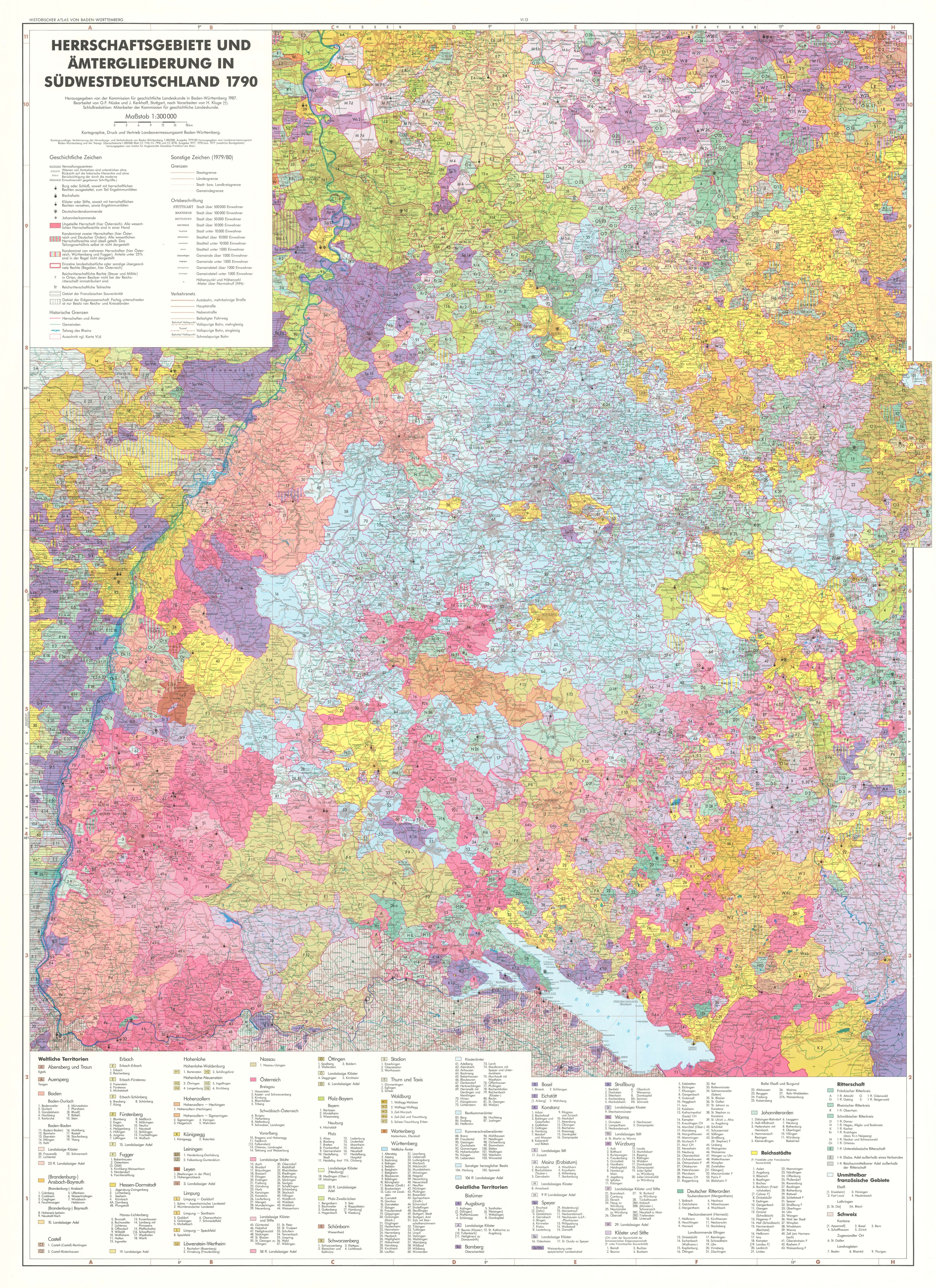
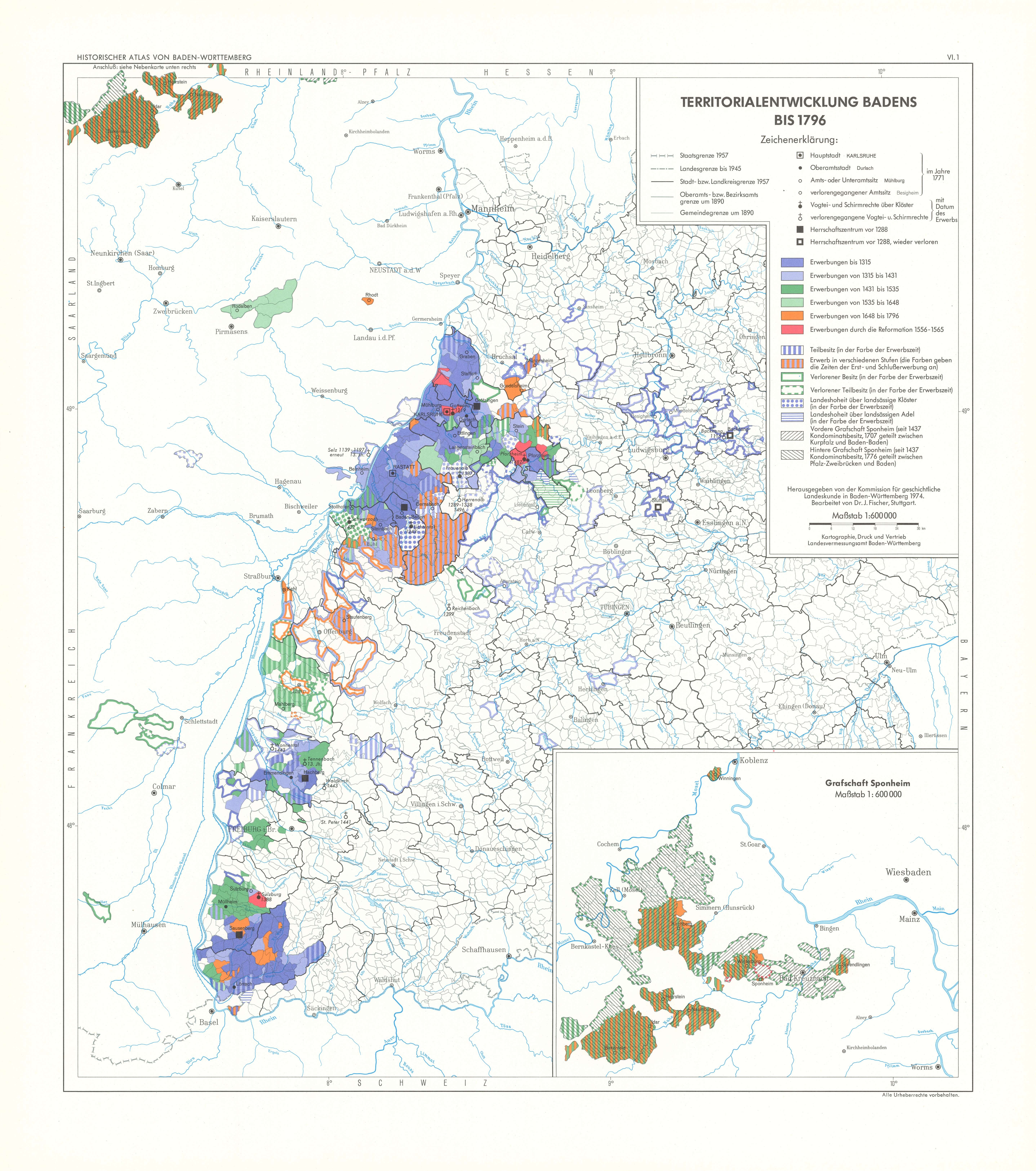
So far, so comparatively normal. But in many respects events occurring before and during the siege of Neuss had developed an unusual, much more modern rather than medieval dynamic that explained the stubbornness of the defenders. And one of these events in the run-up to the siege of Neuss took place in Further Austria, the ancient homeland of the House of Habsburg, roughly modern day southern Alsace and Baden.

The Reign of Peter von hagenbach in Alsace

In 1469 Charles the Bold had acquired Further Austria as a pawn from Sigismund of Tyrol. Sigismund received 50,000 Rhenish Florins and Charles was given control over the territory in Alsace and the upper Rhine. I mentioned this last week saying that these lands in Alsace were an extension southward of the Burgundian territory, which is obviously geographical nonsense. It was an extension eastwards. Apologies for that. If you live in London, everywhere that has sunshine and wine is south.

Sigismund of Tirol (Alte Pinakothek) 

Charles appointed one of his most loyal military commanders, Peter von Hagenbach as his governor for these lands. We have met Peter von Hagenbach already. He was the man who caught up with Friedrich III on his flight down the Mosel river. What Hagenbach did not know was that he had barely a year left to live after his epic row downriver.

Hagenbach was almost perfect for the job. He was originally from this part of Alsace, was completely bilingual in German and French and had spent most of his career in the service of the Burgundian dukes.

Hagenbach was a harsh man, very much like his master. He had commanded the artillery at Dinant and at Liege and had participated in the massacres. In his youth he had abducted a local merchant he had dined with the evening before, to extract a ransom payment. In other words an aristocratic hardman with scant regard for bourgeois city dwellers.

Hagenbach’s set objectives were to streamline these territories where the loose Habsburg rule had let things slip. The cities had gained a lot of freedom, revenue sources had dried up and taxes had not been collected. Hagenbach got to work. He replaced the independent city councils in  Mühlhausen and Breisach, installed new toll booths on the Rhine and introduced a tax of one penny on each bottle of wine.

Tales of his excessive cruelty made the rounds. He had people killed without even giving the slightest clue as to why—many of them with his own hand. The slightest refusal to satisfy his whims was tantamount to a death sentence. In particular sexual depravity was placed at his door. He regularly raped nuns. Another alleged incident involved Hagenbach inviting a town’s married couples to his residence for a party. Once all were assembled, he removed the husbands from his residence and forced the wives to strip naked. Following this, he placed a covering over the head of each woman. The husbands were then ordered to return and inspect the naked bodies of the masked women. Those who were not able to identify their wives in this state were thrown down a long flight of stairs. Those who recognized their wives were rewarded by being forced to ingest copious amounts of alcohol that rendered them fatally ill.

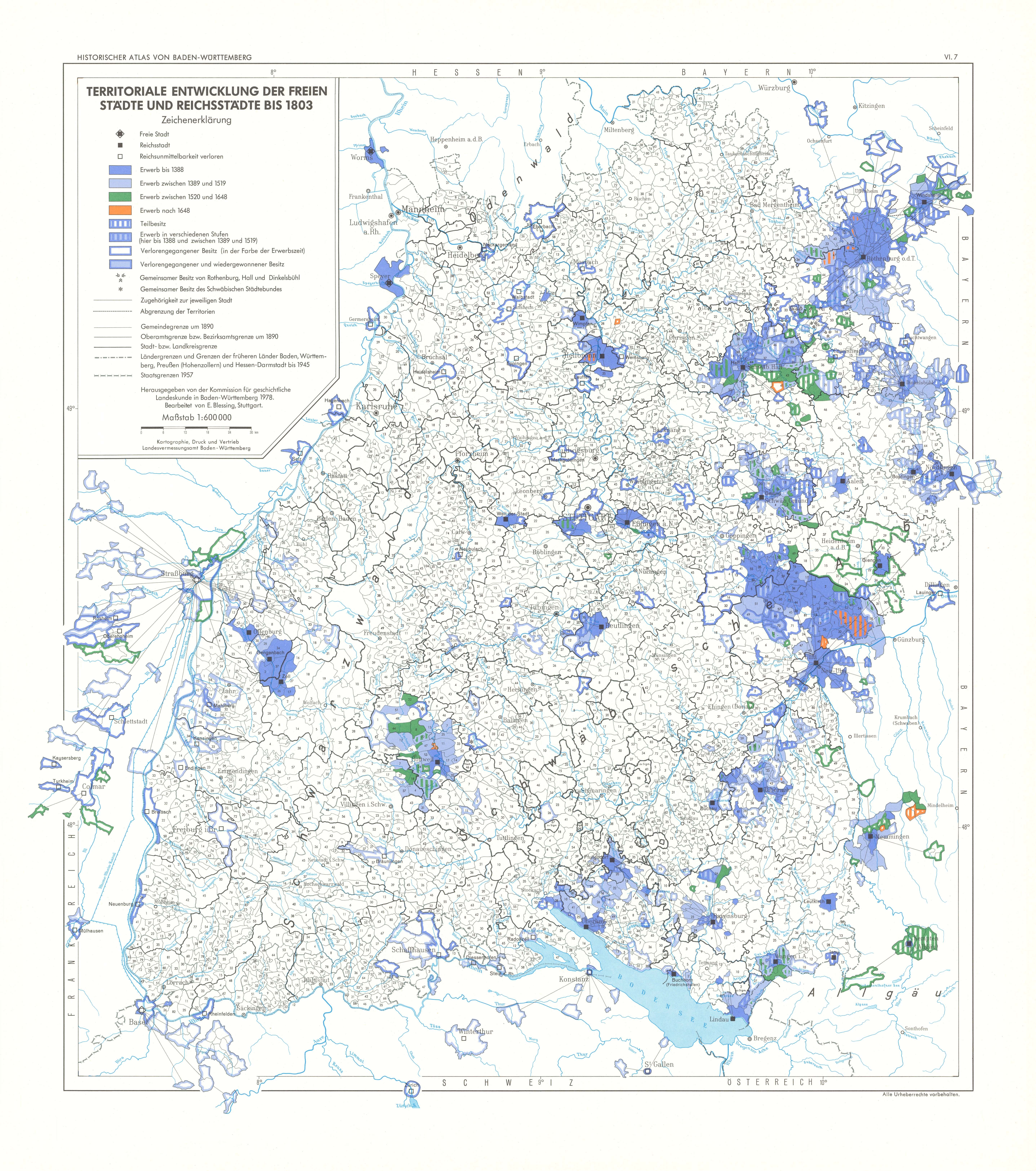
The result was disquiet that gradually turned into rebellion. The rebellion was supported by the Swiss Confederacy who felt increasingly uncomfortable with the Burgundian presence right outside the gates of Basel. The tensions mounted to a point where the Swiss Confederacy and the regional free cities, Strasburg, Basel, Colmar and Selestat entered into the league of Constance. They went to Sigismund of Tyrol and offered to give him the money to redeem his lands from Charles the Bold. Sigismund sent 60,000 gold florins to Dijon, reclaimed Further Austria and appointed a new governor. Hagenbach refused to yield and took his stand in the city of Breisach. But he could not hold it. His soldiers mutinied and the city he had stripped of their civic institutions and liberties supported them.

The trial of Peter von hagenbach

In May 1474 Hagenbach was arrested. He was subjected to torture 6 times in the dungeons of the public prison before he was brought across town for a further set of torture sessions. By then his body was already so broken, he could no longer walk and had to be pushed across in a wheelbarrow.

What followed was one of the most unusual trials of the late medieval period. It would have not been unusual for Hagenbach who had confessed under torture to be immediately lynched by the populace. But instead, he was given a trial to take place in public on the main square of Breisach . The court comprised 28 judges, representatives of the cities of Further Austria, as well as the league of Constance. Hagenbach was represented by first one and then three attorneys of his own choosing, who put up a vigorous defence.

Hagenbach on trial, from Berner Chronik des Diebold Schilling dem Älteren

Many modern historians had tried to debunk the stories of the atrocities that Hagenbach had allegedly committed and indeed much had been reported long after the event. And it is notable that some of these, specifically the story about the married couples, did not make it on the list of accusations. The prosecution focused on four specific allegations, namely

  1. that he had four citizens of Thann summarily executed without trial,
  2. that he had broken his promise to protect the ancient laws and privileges of the city of Breisach by stripping the city of its self-governing institutions, illegally quartering soldiers, pillaging and plundering property and imposing onerous taxes,
  3. that he planned to expel and then exterminate the citizens of Breisach, and
  4. that he raped numerous women and girls in the region, including nuns.

Hagenbach argued as follows:

On item 1, the killing of the citizens of Thann, that these were rebels against Burgundian rule,

On item 2, the violation of the rights of Breisach, he believed the city had sworn a new oath to Charles the Bold and with that had given up their ancient rights,

On item 3, the planned expulsion and killing of the inhabitants of Breisach, what was there to say, so he said nothing,

On item 4, the rape of women and girls, he said everybody did that anyway and that he usually paid for it, which made it consensual.

To be frank, not all of these arguments cut it, not even in the 5th century. But one argument his lawyers brought forward got the judges attention. They argued that the court had no right to judge him. He was a servant of the Duke of Burgundy, had acted on his orders and hence only the duke of Burgundy had the right to judge him. “Is it not known that soldiers owe absolute obedience to their superiors?” he asked.

The prosecution countered that this defence was inadmissible. The acts he committed were acts against the laws of God and men. There was no need to ask the duke of Burgundy whether he had issued these orders since by claiming he acted under illegal orders, he was committing lese majeste.

The judges asked to be allowed to retire and deliberate on the weighty issue they were asked to resolve. Deliberations took a long time, but when the judges returned, one after the other declared Peter von Hagenbach guilty and condemned him to death.

Hagenbach was formally stripped of his knightly status, but allowed the privilege of execution by the sword. His last words were “please forgive what I have done through lack of wisdom or through malice. I was only human. Please pray for me”.

Execution of Peter von Hagenbach

How the first conviction for war crimes affected the Nurnberg tribunals

This judgement has entered not just the history book but also legal textbooks. This was the very first trial for war crimes. By rejecting the defence of “I was just following orders” the judges in Breisach created the idea that there were acts that cannot be justified, crimes against humanity or as they called it acts against the law of God and men.

This case became important in the Nurnberg trials where some of the defendants argued that they had only followed orders. Convicting them for acts that were formally legal under German law would be a retroactive application of new criminal sanctions. The Anglo German lawyer Georg Schwarzenberger pointed to this judgment as proof that there was already an old tradition in German law that sanctioned crimes against humanity even if formally covered by statute.

To this day the Hagenbach trial is still occasionally cited by the International Court of Justice in the Hague.

And just in case you wonder how come you did not know this, let me tell you, you are not alone. I studied law in Freiburg, half an hour’s drive away from Breisach and I had never heard about this until I looked it up yesterday.

What the trial meant for the Empire in 1474

Apart from breaking new ground in legal theory reverberating for centuries, the execution of one of Charles the Bold’s most senior officers also had more immediate consequences. Once more Charles is found by his courtiers smashing furniture and shouting obscenities. He did swear revenge, but he could not immediately take action in Alsace since his army was already on its way to Neuss.

On the other hand, the League of Constance was aware that a confrontation with the duke of Burgundy was only a question of time, which made them natural allies of the brave defenders of Neuss.

And then the story of Peter von Hagenbach, his atrocities and trial spread rapidly across the empire. The trial and execution had drawn 4,000 people to Breisach. There is a letter in the Nurnberg archives that contains a detailed eyewitness report of these events. Strasburg and Colmar were shipping their wine to Cologne for distribution, accompanied by letters. Cologne in turn was a senior member of the Hanseatic League, one of the densest information networks of the period. Why that was, check out the episodes on the Hanseatic league. The important point is that by the late 15th century information travelled infinitely faster and to a broader audience than it had ever done in western europe since the fall of the Roman Empire. And we now have 16 printing presses running, including ones in Strasburg, Basel and Cologne. Nobody has found a pamphlet yet that talks about the Hagenbach trial or the siege of Neuss, but I would not be surprised if one turned up. We know that the bread and butter for 15th century printers wasn’t the great bibles and psalters, but schoolbooks, indulgences and public announcements. Very few of these survived, much like my copy of the Financial Times from last week. But that does not mean they had never existed. And as we will find out in the upcoming episodes, printers, engravers and woodcutters played a huge role in shaping views and opinions.

Spread of printing in Europe in the 15th century

Whichever way news of the Hagenbach trial circulated, they did. This trial was important because it showed something new and fundamental, that the forces of the empire could come together and repel an intruder. An intruder who planned to attack their way of life.

the freedoms of the imperial estates versus the Modern state

Peter von Hagenbach may have been a particularly boorish and brutal man, but he was indeed following the orders of Charles the Bold. Charles wanted to force not just Alsace, but the entirety of his possessions into what we might call a modern state. A modern state where there was only one law, one court system, person that was allowed to use force. What he wanted to do away with were all these complex laws and privileges that granted cities or lords the right to dispense justice, condemn wrongdoers to death or engage in feuds.

When he burned Liege and Dinant, when he let Peter of Hagenbach loose on Alsace, he did not act as just some sadistic raging bull. He believed that this brutality was necessary to get the  great cities of Flanders, Brabant, Holland and Hainault to give up these ancient privileges, their right to arm themselves and to resist ducal orders.

And he offered an alternative to the old system of confusing and contradicting individual freedoms. He set up the court in Mechelen, the sole court of appeal for all his territories. He passed a wide range of legal ordinances in an attempt to bring clarity and consistency to the practice of the lower courts as well. He consolidated the fiscal administration for the individual duchies to standardise taxation, and, if he had received his much coveted crown of Burgundy, he might have set up the estates of his kingdom, replacing the various representative bodies in place in each of his duchies, counties and bishoprics.

Solemn opening session of the Parliament of Mechelen under Charles the Bold, Jan Coessaet, 1587

In this objective he was no different to most princes in the empire, only in the scale, speed, intensity and brutality he pursued it. And that put the fear of god into all these dukes, counts, cities, bishops and abbots on the western side of the empire. If the Burgundian juggernaut were to swallow them up, put new Hagenbachs in as governors and systematically dismantle their institutions and then,  what would be left of what they called their freedoms?

News of Hagenbach’s acts is Alsace  changed the way people saw the siege of Neuss. This was no longer a local power struggle between the archbishop and his estates, but a fight for the heart and soul of the empire. Despite all the talk about the urgency of imperial reform, the elites of this empire did like this complex system of interactions between the emperor, the prince electors, princes, bishops, abbots, imperial cities, free cities, immediate counts and knights, and within them the estates, guilds, councils and so forth. Yes it was unwieldy, ineffective but it had been created by their ancestors over centuries, one privilege and one charter at the time. They called it their freedoms, which is not the same as freedom, but still very different to the cities and nobles in France or England who were slowly but surely brought under the royal yoke.

At the same time the dozens of universities that had opened in the empire, produced a new elite of lawyers and humanists. Men sometimes from sometimes modest backgrounds rose to senior roles within the chanceries of all these dukes, electors and archbishops. And they rarely stayed with just one university or one employer. They had usually been to several academic institutions before passing their degrees. And once qualified they may work a few years for the emperor before moving on to a more generous or more interesting prince elector or duke. By constantly moving around they build relationships that spanned the empire from north to south and east to west. These networks exchanged information, views, ideas and occasionally coordinated to line up their masters behind a project they all supported.

The Glorious german Nation

Meanwhile the imperial lands were booming. New industries were emerging or taking the lead for the whole of Europe. Arms and Armour from Nürnberg, Augsburg and a dozen other places took over from the masters of Milan and Brescia, new techniques allowed German engineers and entrepreneurs to dominate European mining and manufacturing. The financial centre of the continent moved from Florence, Milan and Venice to Augsburg. What these innovations meant for people is best expressed in this 1460s printer’s colophon quote: “This excellent book, Catholicon, has been printed in the goodly city of Mainz, in the glorious German nation (which, by the Grace of God, the Almighty has deigned to prefer and exalt above other nations of the earth by gracious gift and so lofty a light of genius).”  

There was huge pride in these achievements, in the way things were and were organised. And this pride was no longer reserved to a small elite of aristocrats, as it had been in the days of Frederick Barbarossa, this sense of being in it together was shared much wider.

The historian Len Scales places the Shaping of the German identity into the 14th century but it is in the 15th century that it is breaking through to the surface. The term “the Holy Roman Empire of the German Nation” appeared a few years later, in 1486. But the Gravamina Germaniae, the complaints of the Germans about the role of the church were already read and discussed widely. Konrad Celtis, the arch humanist who would attempt a comprehensive Germania Illustrata by the end of the century had just embarked on his university career. It is now, in the second half of the 15th century that the idea of being part of a German culture, of sharing in the great innovations of the time and living in a unique system of government takes on political significance. The most influential historian of this period, Peter Moraw called this process Verdichtung, the densification or intensification of the constitution of the empire.

Freidrich III before neuss

And who do you think has been swept along with all this enthusiasm for the empire and its defence? The most unlikely of them all, the emperor Friedrich III.

Already in March 1474, so months before Charles the Bold arrives before Neuss did he demand the princes raise 20,000 troops to defend the archbishopric of Cologne. At the same gathering he banned Friedrich the Victorious, brother of the deposed archbishop of Cologne and called on his allies, Albrecht Achilles of Brandenburg and Albrecht of Saxony to lead an army west.

Initially reactions were lukewarm. But when Neuss refused to surrender, and held out month after month, the idea that the all-powerful Burgundian duke could actually be defeated was gaining traction. Enthusiasm built and built. Friedrich III, who had gone to Cologne, received offers for help from ever more far flung places. He was probably as surprised about this as we are.  Even the Swiss Confederation, the arch enemy of the Habsburg for 200 years, offered to march under his banner.

He went to Andernach where in January 1475 he took command of a force of 20,000. He formally declared war against Charles the Bold in one of the first such modern declarations of war. He had to break a number of fortresses along the way, which is why it took him until March before he arrived in Neuss.

Belagerung von Neuss, Holzschnitt aus Conradus Pfettisheim: Geschichte Peter Hagenbachs [Straßburg] 1477

By then Charles’ forces had been pounding the walls for 10 months. Inside the city of Neuss the situation has become utterly desperate. They sent word to the imperial forces that they could not hold out for more than a few days, unless they get relieved.

Charles did not know that and his own situation had also become untenable. Some of his troops had mutinied and nearly shot him. He was due in Calais with his forces to help the English in renewed hostilities with the French. In Lorraine the duke Rene had called off the protectorate. The death of Peter von Hagenbach was as yet unrevenged.

Charles and Friedrich met and signed a truce. And they renewed their commitment for the marriage between Maximilian and Mary of Burgundy. The great dynastic link that would change the face of Europe is still on, even though the fathers of the happy couple had lined up their armies against each other.

Next week we will follow this leg of the story, find out what happened to Charles the Bold and the seminal engagement. But that is only one short story, the other, the bigger one about how the empire came to be what it became is gong to be with us or a very long time. I hope you will join us again.

And if you feel that it is time for you to stand up for your freedoms, for your ancient privilege of listening to the History of the Germans without the atrocities committed by advertisers, you can do so by strengthening the war chest of your favourite podcaster at historyofthegermans.com/support

The Gathering at trier in 1473

Ep. 213 – Duping a Duke and the Awakening of Friedrich III History of the Germans

Listen on Spotify

Listen on Apple Podcast

Listen on YouTube

Transcript

Introduction

Hello and welcome to the History of the Germans: Episode 213 – Duping a Grand Duke or the Awakening of Friedrich III, which is also episode 11 of season 11: The Fall and Rise of the House of Habsburg.

How long can an emperor not be an emperor? The official record stands at 25 years, that is how long Friedrich III had stayed out of the core areas of the Holy Roman Empire. That meant 25 ears of Imperial Diets without the presence of an Emperor, 25 years of stasis on the challenges of the time, the reform of the empire and the defense against the Ottoman expansion.

But sometime in the late 1460s the apathic emperor Friedrich III, dubbed the Imperial Arch Sleepyhead awakes and does what he had never done before – something. And that something turned into a lot of things, some related to imperial reform, but the most significant something for European history was a marriage, well, an engagement for now, followed by a flight down the river Mosel away from the intended father of the bride.

Yes, it is that famous marriage, just not in the way you may have thought it happened.

Christmas Present

But before we start I wanted to ask you what you want for Christmas. There are so many of you who contribute to the show either financially or by telling their friends and family about the History of the Germans. I had originally thought I would provide a regular flow of bonus episodes for you, but this was ultimately not feasible. As we moved out of the early and high middle ages into the Late Middle Ages and Early Modern Period, the sheer volume of information and the quite frankly bewildering complexity of the period has made demands on my time that left no room for bonus episodes. But you surely deserve more. So I am going to produce a Christmas special, and if you are a patron or one time donor to the show, you can choose what this Christmas special is going to be. Here are the options based on proposals I have received over time:

  • A classic Q&A episode where I will try to answer all your questions,
  • A travel itinerary through Germany where I give you 5 to 10 places I think you should see and that are not on the classic route, or
  • A maximum five minute recording of me butchering German Christmas songs.

I will send you an email in the next few days from my email address historyofthegermans@gmail.com with a poll. Just click on what you prefer and I will deliver, but please do not make me sing….

And if you want to participate in the poll but have not yet signed up as a patron, you can do so at historyofthegermans.com/support as Ulrik M., Nathalie W. , Christopher T., Noel F. and Stepan C. have already done

And with that, back to the show.

What could Have Been…

We are in the 1460s and it is make or break time for the emperor Friedrich III. The head of the house of Habsburg was a case of terrible miscasting. For all we know, he would have been much happier as a simple imperial prince living in his castle in Wiener Neustadt and tending to his garden and his beloved wife Eleanor. If that had been his fate, he might have ended up as Friedrich the Fruitful, last mentioned in an 1878 biography by a renowned medievalist at the university of Graz, appreciated for his tasteful late gothic funeral monument, but otherwise completely forgotten.

Tomb of emperor Friederich III

But that was not his destiny. Instead the electors, believing he was the foretold last Emperor who would finally bring peace and justice to the land, if not ring in a 1000 years of bliss, had elevated him to king of the Romans.

They were sorely disappointed. Friedrich was apathic, always looking for compromise and happy to step back his ambitions. He had kept away from the issues of the empire, not even shown himself there for 25 long years. This long period of inertia had gained him the nickname the Imperial Arch Sleepyhead.

A.E.I.O.U.

But he was also an intelligent and a genuinely serious person. We do not know whether he realized his shortcomings, but he believed profoundly in the sanctity of the office he had taken on. Even though he had neither the resources nor the charisma to enforce the imperial rights, he never abandoned them. He was, if anything, a staggeringly stubborn man. The kind of doggedly tenacious person who would let his family be bombed to smithereens in the Hofburg rather than giving up his rights to the duchy of Austria.

Even before he had been elected he had devised his personal motto, the letter A.E.I.O.U. Like his ancestor Rudolf the Founder who had devised his own secret script, Friedrich was into astrology, puzzles and mysticism. So he never declared officially what this was supposed to mean, leaving everybody guessing.

A.E.I.O.U. in Friedrichs “Handregistratur”,

When he first mentions it in his notebook in 1437, it might have meant “Amor electis, iniustis ordinor ultor”, which means something like “friend of the chosen and avenger to the unjust”. But then it could also mean, “Alle ere is ob uns” = all honour is for us or Aquila electa iusta omnia vincit = the chosen and just eagle conqueres all.

Friedrich not only saw the empire as eternal and superior to all other princes, he also firmly believed that the House of Austria was exceptional. He had fully bought into the Privilegium Maius, the great forgery of his ancestor, including the fake letters by Caesar and Nero granting Austria preeminent status in the Roman empire.

He took as gospel the “Austrian Chronicle of the 95 Rulers” that had emerged around the same time as the Privilegium Maius. We talked about that in episode 204. This was the story of the rulers of Austria going back to the year 1,500 BC. Here we are reliably informed that this glorious land, once founded by Hercules’ son Norix, had been ruled first by Jewish patriarchs, then Roman emperors and Babenberger dukes, before its great mission was taken up by the Habsburgs.

Friedrich had the coats of arms of these 95 imaginary predecessors immortalised in stone in the courtyard of his castle at Wiener Neustadt. He confirmed the validity of the fake Privilegium Maius in his function as emperor.

Wappenwand der Wiener Neustädter Burg (Theresianische Militärakademie)

And somehow in his head and then in his propaganda, these two strains merged into a narrative whereby Austria was the natural inheritor of the imperial title and predestined to unite Europe. That is when the most common interpretation of AEIOU took hold: “Austriae est imperare orbi universo” or in German: “Alles Erdreich ist Österreich untertan”, both of which mean All the world is subject to Austria.

It is from here onwards that the members of the house of Habsburgs, even when they were ruling far flung lands in Spain or Naples or Flanders, referred to themselves as members of the Casa di Austria, the House of Austria, the dynasty that was predestined to rule over the whole world.

But in 1470, this idea of an all powerful Austria could not be further from reality.

the threat from Matthias Hunyadi

As we heard last week, Friedrich’s neighbour to the south, Matthias Hunyadi, the king of Hungary was reorganizing his kingdom along the lines of a modern Renaissance state, complete with humanists, libraries and a standing army. A standing army strong enough to hold back the mighty Ottoman empire and hence infinitely more powerful than any levy Friedrich could muster in Austria.

And the man who had so often come to Friedrich’s rescue, Georg of Podiebrad, had himself come under a lot of pressure. His past as a leader of the Utraquists had finally caught up with him. Pope Paul II had revoked the Compacta that had readmitted the Utraquists into the Catholic Church and in 1466 excommunicated and deposed the king. Matthias Hunyadi found it in his heart that he, as the shield of Christendom, had to pick up the burden of stealing Georg of Podiebrad’s crown.

As it turned out, Matthias wasn’t as good a general as he was an organizer and book collector. So, despite his extraordinarily well trained and well equipped army, his progress against Georg was slow. But as far as Friedrich was concerned, Podiebrad could no longer be relied upon to come and take the conkers out of the fire as the Germans would say. And the big question was what Matthias would do once he was finished with Bohemia.

Strengthening of the Wittelsbach opposition

Next up the alliance of imperial princes who had already tried to replace Friedrich twice, had become even more powerful. They had won the Mainzer Stiftsfehde and the Princes War. Friedrich’s allies, the margraves of Baden, the duke of Wurttemberg and Albrecht Achilles of Brandenburg were licking their wounds. And then the Wittelsbachs had added another Prince Elector to their list. In 1463 the canons of Cologne had elected the brother of Friedrich the Victorious as their new archbishop and Prince Elector. They might have lost Georg of Podiebrad as a candidate for the title of king of the Romans following the latter’s excommunication, but they were now talking to the richer and more powerful Matthias Hunyadi who was contemplating a bid for the imperial throne, not a man with modest ambitions was he.

But that was still not all. The empire had not only to deal with a resurgent Hungary looking north, but also with a duchy of Burgundy that was disentangling itself from France and was looking to expand eastwards.

Teh expansion of Burgundy into the Empire

The duchy of Burgundy as an independent state had come about initially because king John the Good of France who wasn’t very good as a king, had given the French Burgundy to his beloved youngest son Philipp.

Burgundy is one of those confusing places and political entities. The name goes back to a Germanic kingdom created in the 5th century. It was absorbed into the Merovingian kingdom and broke up into several parts in the 10th century.

There is the duchy of Burgundy, roughly equivalent to the French region of Burgundy around Dijon and Beaune. Then the free county of Burgundy around Besancon, known as the Franche Comte. The kingdom of Upper Burgundy, roughly today’s French Speaking Switzerland with its centers in Geneva and Lausanne and finally lower Burgundy covering the Rhone river from Lyon to Arles and the French Alps. This Burgundy that we are talking about today has its nucleus in the duchy of Burgundy, nothing to do with these other Burgundies.

Burgundy By Marco Zanoli (Sidonius) Own work, CC BY-SA 4.0, https://commons.wikimedia.org/w/index.php?curid=5943793

After Philipp, called Philipp the Bold had received the duchy of Burgundy from his father, he married the heiress of the immensely rich county of Flanders, who also brought Brabant and Limburg into the family. There was one duke in the middle called John the Fearless, but it was under the third duke, Philipp the Good who ruled from 1419 to 1467, that the Burgundians expanded aggressively into the empire.

We did already discuss the acquisition of Hainault, Holland and Seeland in episodes 198 and 199. But Philipp the Good wasn’t done with that. Throughout his reign he added Luxemburg, Namur and Liege, making him truly the Grand Duke in the West.

Burgundy under Philipp the Good

The Burgundian rulers were immensely wealthy because they owned the great Flemish trading and cloth-making towns of Bruges, Ghent, Antwerp, Brussels, Ypres, and, and, and…. For a long time the Burgundians had been focused on French politics where they were the deciding force in the Hundred Years’ War. I was Burgundian support for the English that forced the French into the treaty of Troyes that brought the soin of Henry V to the French Throne.

But when Henry V died and England was careering towards the War of the Roses, the Burgundians were in a bit of a pickle. Though they were originally French princes, the French did not like them very much anymore – something about burning a virgin in Rouen. So as much for self-preservation as for self-aggrandization, the grand Dukes of the West needed a new title and a new positioning. And that title and that positioning was in or in conjunction with the empire.

The son of Philipp the Good, Charles who we call the Bold, but which the French call Le Temeraire, the Reckless, built a huge standing army and ordered tapestries that depicted Gundobad, the fifth century king of the Burgundians, and he would often talk about the lands of the emperor Lothar that covered a broad stretch of territory from the North Sea to the Mediterranean.

Charles “Le Temeraire”

All things that made many people inside the empire nervous, including the emperor Friedrich III, who as we have just heard, already had a long list of things to be nervous about.  

The Awakening of friedrich III

He was actually so nervous he did something he had not done before, which was – to do something. As I said, he wasn’t stupid or a total pushover, just slow, deliberate and keen on the quit life. But a quiet life was no longer on the card, If he wanted to get out of this situation, and most importantly for him, preserve the honor of the House of Austria as well as the Imperial crown, he needed to find new allies and approaches.

Friedrich III

The first thing he did was to go to Rome and reconfirm his close relationship with the papacy now that his friend and former chancellor pope Pius II was dead. What he got from this meeting with pope Paul II apart from promises of support and friendship was the approval of separate bishoprics for Vienna, Wiener Neustadt, Ljubljana and I think one more, important steps that allowed him to deepen and consolidate his power at home.

Mino da Fiesole – Paulus Venetus PP. II

A renewed Approach

But that was no longer enough. The powers arrayed against him had grown far beyond the once important powerbase of his family.

So, in 1470 Friedrich III completely reverses his policy stance. It is as if he had listened to a poem by Janos Pannonius, the great Hungarian Humanist who wrote:

Rome was once saved by Fabius’ delaying

But your delays, Friedrich have brought it to breaking.

You’re always consulting and never quite doing.

Couldn’t you act for once and stop all that chewing

You harken to Saturn, the most frozen of stars;

Far better if emperors were guided by Mars

After 25 years of not setting foot into the empire, of calling diets and assemblies he did not attend and eternal dithering and debating and delaying, Friedrich III took off his imperial arch sleepy head.

The solution to his problems lay in the empire. If he could harness the power of the imperial princes in the defense of his homelands, then he may be able to face off against Matthias Hunyadi. And how can he get that done – by finally delivering on Imperial reform.

The Landfrieden of 1467

In 1467 he issued another common peace, this time including an outright ban on feuding. Anyone pursuing a feud without authorization was guilty, not just of a breach of an imperial order, but was guilty of lèse-majesté.

That was significant in two ways. First, the concept of lèse-majesté is part of Roman Law, the famous laws of the Justinian which granted the emperor in essence absolute power over legislation and execution. These powers have been circulating and have been claimed by the emperors since Barbarossa. We discussed them extensively in episode 55. That was 3 and a half years ago in podcast time and 300 years in actual historical time.

Corpus Iuris Civilis – Dionísio Godofredo – 1583

In the meantime, Roman law had permeated so much of European, specifically continental European jurisprudence. What appealed was that Roman law was structured and comprehensive. Justinian had made sure that this great opus had an inherent logic where each element connected with the other in the creation of one coherent legal philosophy, the exact opposite of the Germanic laws built on tradition and precedent.

It was Roman Law that was taught at the universities across Europe making sure that lawyers from different legal traditions and speaking different languages could still understand each other, negotiate agreements and argue cases before each other’s courts.

And it was immensely popular with kings and princes as it cut through the messy set of ancient rights and privileges, the estates and other representative bodies that pointed to tradition and long practice to hem in the ruler.

Whether it was the Renaissance states of Italy, the grand kingdoms of France and Hungary or the German territorial princes, everyone was busy implementing Roman Law principles.

Friedrich III jumped on the bandwagon when he added the lèse-majesté to the arsenal of the fight against feuds. And he did implement these rules, at least to the extent he was able to. When his mercenary captain, Andreas Baumkirchner declared a feud against the emperor over unpaid bills, Friedrich lured him to Wiener Neustadt, and had him and two of his colleagues executed – for lèse-majesté. He had learned to walk and chew gum at the same time.

Areest of Andreas Baumkircher (19th cnetury)

The Chancery under Adolf of Nassau

In 1470 he had a visit from Adolf of Nassau, the archbishop of Mainz. We have met him in episode 191 and 186 already. Not a nice guy, but Friedrich is no longer mister Nice Guy either. He needed to get stuff done and Adolf was a guy who could get stuff done. Adolf took charge of the imperial chancery and the Kammergericht, the redesigned professional court system that Friedrich had established in 1442, but that had fallen into disuse.

Adolf II von Nassau, Archbishop of Mainz

The Imperial Diet of 1471

And Friedrich showed himself again in the Empire. In 1471 he called the princes of Christendom to Regensburg for a grand assembly to discuss what to do about the Ottomans. Admittedly that was a bit late, a touch self-serving as Ottoman raiders had been penetrating into Styria and yielded the usual zero result, but at least Friedrich was breaking the ice, no longer Saturn, the most frozen of stars.

And Mars was on its way.

Build-up to The Burgundian Engagement

But before he got there, he took a detour to see Mars’ lover, Venus. Not for himself obviously. Since his wife Eleanor had died in 1467, he had not shown any interest in other women, either out of his natural inertia or in an attempt to create another holy imperial couple like Henry II and Kunigunde.

No, Venus was reserved for his one and only son, Maximilian. Last time he had appeared on the scene was in 1463 when he was a four year-old hiding in the cellars of the Hofburg. But by now, i.e., the year 1473, he had grown up to be a strapping lad of 14, ready to take on his duties as son and potential successor to the Holy Roman Emperor.

And his father had an idea, or more precisely his former chancellor Aeneas Piccolomini had  had that idea a long time ago. An idea so cunning, it would change the history of Europe quite fundamentally.

And that idea was for Friedrich to take a leaf out of the book of his ancestor Rudolf I and finally properly leverage his imperial title, not by calling in vacant fiefs, that he would do later, but by offering crowns in exchange of marriage. And the person he was offering the crown to was Charles “Le Temeraire”, the Reckless, the Grand Duke in the West, duke of Burgundy, Luxemburg, Limburg, Geldern, count of Flanders and Namur, advocate of the prince bishoprics of Liege and Utrecht, etc., etc. pp. And in exchange Charles would offer the hand of Mary, his only daughter and only child, in marriage to Maximilian of Austria.

What an amazing deal! Charles gets what he always wanted and the House of Habsburg brings home the richest heiress in Europe. But before you go, ah hurrah we are finally getting into how the Habsburg had married their way to the top, let’s hear what actually happened.

Such a seminal transaction could not be done over the phone or by messenger, the two principal actors – no not Maximilian and Mary – but Friedrich and Charles needed to meet. And that meeting took place in the autumn of 1473 in the city of Trier.

Friedrich had come there with an entourage of Imperial Princes, including several Prince Electors, a total of about 2,000 men.

The Splendour of Charles the Bold

Charles “Le Temeraire” arrived with his own standing army of 15,000 and a full display of the wealth and power of the Grand Dukes of the West.

Kaiser Friedrich III. und Herzog Karl von Burgund – Treffen in Trier 1473. Hier wurde erstmals über eine Heirat mit Maria von Burgund gesprochen. Holzschnitt aus dem “Weiß Kunig”

Charles had reached the pinnacle of his career. He had clapped his adversary, king Louis XI of France in irons, had brutally suppressed an uprising in his city of Liege, allowing his troops to plunder and burn the place so that the Austrian ambassador wrote back to his master that Liege was covered in a blanket of red snow, only the stumps of the church towers sticking out. After that the proud cities of Flanders, even the mighty and unruly Ghent submitted to the will of the duke. That was followed up with the annexation of the Duchy of Geldern and an agreement with the duke of Lorraine that turned that duchy into a protectorate of the Burgundians. With these acquisitions Charles had finally connected the family’s original possession, the duchy of Burgundy with their main power base, the low countries in one contiguous territory. And he was extending his tentacles further south by acquiring the Habsburg lands in Alsace from Friedrich’s dissolute cousin Sigismund of Tyrol.

When Charles rode into Trier at the head of the army that had burned Liege, had taken Geldern an intimidated the duke of Lorraine, he insisted on showing the other side of Burgundian power, the splendor of his court. He arrived wearing a cloak bedecked with 1,400 pearls and 23 rubies over his golden armor. He wore a hat, not yet his most famous golden hat, but still an ostentatious garment featuring a stork feather decorated all over with precious stones.

Charles the Bold in mourning attire after the death of Philip the Good. Illumination from a manuscript of Chastellain’s Chronicle of the Dukes of Burgundy

Charles had brought what looked to many his entire store of household goods, clothes in gold and ermine for himself and his entourage, the finest tapestries from the unsurpassed workshops in Arras, Tournai and Brussels, plates and cups made from gold and silver, the most dazzling armour from Milan, ,anuscripts lavishly decorated by the Limburg brothers and travel alters by Jan van Eyck and Rogier van der Weyden and, and, and whatever bling there was, Charles had it, and lots of it, and he was flaunting it.

The Devonshire Tapestry, Arras 1420/30
Fall of Tangier, from the Pastrana series of tapestries, Tournai 1472-1480
Mon seul désir (La Dame à la licorne) – Musée de Cluny Paris

The contrast to the austere and in comparison, penniless emperor was stark. And what made the whole thing even more awkward was that Friedrich as king and emperor ranked far above a mere duke, even one who had more land, more soldiers and a lot more money than he had.

Reliquiar Karls I. des Kühnen – Gérard Loyet (1467–1471)

The negotiations at Trier

The first few days were taken up with questions of etiquette, before negotiations could begin for real.

Charles and Emperor Frederick III at a banquet in Trier by Diebold Schilling the Elder

Charles opening bid was that he would like to be elected king of the Romans and thereby become Friedrich’s successor as emperor. He would then sponsor the election of Friedrich’s son Maximilian who would also become his heir by marrying the delightful Mary of Burgundy.

Mary of Burgundy, portrait by the circle of Master of the Legend of Saint Madeleine (Maître de la Légende de sainte Madeleine), Château de Gaasbeek, c. 1530–40.

Friedrich very much liked that very last bit of the offer, but the other elements not so much. Friedrich was not at all willing to allow a King of the Romans to be elected during his lifetime who would then lead the imperial reform movement and sideline him. And that reluctance even extended to his own son, let alone the powerful duke of Burgundy.

Fortunately for Friedrich he could hide behind the reluctance of the Prince Electors to endorse Charles’ candidature. Friedrich still had a majority in the college of electors, having strong links to the archbishops of Mainz and Trier, the duke of Saxony and the Margrave of Brandenburg.  But these links were not strong enough to convince them that they should elect someone with a standing army of 20,000, reckless ambition and a reputation for utmost brutality. Plus they had not enjoyed being upstaged by Burgundian glitz and glamour every single day of the 1 and a half month the gathering lasted.

The Burgundian army under Charles the Bold storms the Swiss garrison at Grandson in February 1476

A crown and an Engagement

Friedrich proposed an alternative option. What he could arrange was an elevation of the duke of Burgundy to king of Burgundy. That was an ancient title the empire had acquired (episode 24) but it had been a long time since anyone had been crowned king of Burgundy, I think the last one  was Karl IV. But the title had never formally disappeared.  

I could not find out what exactly the constitutional construct for Charles’ intended royal title had been. Was it a title like the king of Bohemia that gave a degree of independence but retained the bonds of vassalage to the empire, or was it meant to be an elevation to an independent royal title as it had been bestowed on Poland and Hungary in the 11th century.

Even if this was a bit vague, Charles was keen. The royal title he was sure would help him to turn his various territories with their respective institutions and traditions into a more coherent political entity. And he really liked to wear a crown instead of just a ducal hat. So he had his goldsmiths produce such a crown and a sceptre, an orb and all the other accoutrements, all in the finest and latest Burgundian fashion.

Coronet of Margearet of York, Wife of Charles the Bold, made around 1468

He summoned the bishop of Metz to preside over the ceremony.

But before that went ahead, the last business end needed to be tied up. The engagement of Maximilian and Mary of Burgundy. As it happened, only Maximilian was present at Trier. Mary had stayed behind in Flanders depriving the Emperor from inspecting the merchandise, which irritated him no end. Charles seemed to have brought his entire household, just not its most important member. But even though she was sight unseen, still the engagement went ahead.

Mary and Maximilian love brooch dating to 1476. Engagement brooch given to Mary of Burgundy by Maximilian I of Austria

With all the agreements signed and completed, Charles spent his days devising ever more elaborate parades, rituals and costumes to display his soon to be elevated status. Whilst Friedrich had very different thoughts. Well, we do not know what his thoughts were and historians have debated them back and forth for a long time.

The flight of emperor friedrch III

What we do know is that in the middle of the night, the day before the intended coronation, Friedrich with his small entourage boarded a ship and slipped out of Trier. When Charles heard about it, he sent his trusted lieutenant and governor of upper Alsace, Peter von Hagenbach to intercept the emperor. Hagenbach and his men rode as fast as they could along the Mosel river. When their horses got tired, they swapped them for a rowing boat and they rowed as hard as they could. Finally, they caught up with the emperor. Here is historian Bart van Loo’s description what happened next: quote

Konrad von Grunenberg’s ship (1486)

Hagenbach who was fluent in French and German could address Friedrich III in his own language and asked whether his majesty wouldn’t wait a bit for the Burgundian duke.  Hagenbach said that Charles felt wretched because the emperor had risen so early. If it pleased Friedrich to exercise patience, the duke would be able to say farewell in a dignified manner. Even in delicate circumstances, courtesy remained an important consideration.

Friedrich agreed on condition that it would not take too long. When half an hour had passed and the vessels were still bobbing in the stream, a frown appeared on the emperor’s face. Hagenbach declared he would fetch his master. He could not be far away. Friedrich nodded. The Governor of Upper Alsace then jumped in his boat, but he was barely out of sight before the sovereign of the Holy Roman Empire gave the order to continue the journey. By the time Hagenbach reached the duke, the bird had flown.” End quote.

What followed was an epic tantrum. Charles the bold had already been famous for his outbursts, but what his courtiers observed on this day, November 25th, 1473 went beyond what anyone had seen before. Charles locked himself into his room and smashed all his furniture’s like a 15th century Keith Moon. This day that he had hoped would be one of glory and triumph, had become one of fury and shame. The duke of Burgundy had been played in the most outrageous fashion. His daughter, the greatest prize in the European marriage market had been given away for nothing. Breaking the engagement wasn’t an option because it would make his embarrassment even more obvious than it already was, and there was also no other means to acquire a royal title. The rage that he felt about this would send him on an ever more reckless path to achieve his dream of reviving the early medieval Burgundian kingdom or even the empire of Lothair.  

Outlook

And this path will lead him to a small town between Cologne and Dusseldorf, the city of Neuss and into one of the longest and most celebrated sieges of the Late Middle Ages, though celebrated more vigorously in the German Lands than in the dominions of the Burgundian dukes.

Siege of Neuss by Charles the Bold in 1475, by Adriaen Van den Houte

But this story and how that elevated both the sense of unity amongst the subjects of the empire and their emperor is what we will look at next week.

I hope you will come along again.

And if you feel the weight of a golden hat compressing your neck or you got tired of your thousands of pearls sewn into your ermine coat, you could augment your splendour by donating your fellow listeners a few more weeks of advertising free listening to the History of the Germans. You know where to go and you know what to do.

Matthias Corvinus, King of Hungary

Today we will talk a lot about Matthias Corvinus, the legendary renaissance king of Hungary whose library outshone that of the Medici in Florence and whose standing army was one of the greatest – and most expensive – military forces in 15th century Europe.

Why are we talking about a Hungarian ruler in a series about the Habsburgs? Trust me, there is a good reason beyond it being a fascinating life story.

Ep. 212 – The Library of the Raven King History of the Germans

Listen on Spotify

Listen on Apple Podcast

Listen on YouTube

Transcript

Hello and welcome to the History of the Germans: Episode 212 – The Library of the Raven King, also Episode 10 of Season 11: The Fall and Rise of the House of Habsburg.

Today we will talk a lot about Matthias Corvinus, the legendary renaissance king of Hungary whose library outshone that of the Medici in Florence and whose standing army was one of the greatest – and most expensive – military forces in 15th century Europe.

Why are we talking about a Hungarian ruler in a series about the Habsburgs? Trust me, there is a good reason beyond it being a fascinating life story.

But before we start, it is just me in my saffron robes holding out my begging bowl. I cannot offer the Dhamma, the teachings of the Buddha nor can I explain the principles that help you live a fulfilling life. All I can offer in return is the absence of ever more hyperbolic praise for humdrum consumer products, let alone promotion of sports betting sites, which is today the #2 podcast advertiser. If that is enough for you and you want to drop your grains of rice into my bowl, you can do so at historyofthegermans.com/support. And there you can join the immensely generous: Kliment M., Michael N., Sofia G., Tobias P., Ben H., Paul-James V. and Scott P.

And with that, back to the show.

Last week we ended on a cliffhanger. Emperor Friedrich III and his young family were huddling together in the cellars of the Hofburg as cannon pounded the ancient fortress. Walls and towers were crumbling and one errant projectile, one falling piece of masonry or the simple lack of food could have wiped out the dynasty that was destined to rule half of Europe.

The siege of the Hofburg in 1462

How did they get out? Was it the citizens of Vienna realizing they had gone too far? Or the emperor’s brother, the archduke Albrecht VI putting family ahead of personal ambition?

No, help came from one of the least probable corners, from Georg of Podiebrad, the king of Bohemia. Georg, you may remember, had put his name forward as King of the Romans in an attempt to fill the vacuum the 15 year absence of the emperor from the Reich had created. And in this attempt to rise to the title, Georg had allied with Friedrich’s arch enemies, the Wittelsbachs, namely Ludwig the Rich of Bayern-Landshut and Friedrich the Victorious, Count Palatine on the Rhine, and – who would believe it – the emperor’s brother and besieger.

Still, in December 1462 Georg or more precisely his Victorin showed up outside Vienna with of a force of his dreaded Bohemian fighters and demanded that Friederich and Albrecht made peace. Under the watchful eye of the Bohemians, the brothers signed an agreement whereby Albrecht was given control of the whole of the duchy Austria including the city of Vienna for eight years in exchange for a substantial annual payment to Friedrich.

And so the emperor Friedrich III, his wife Eleanor and his son Maximilian were allowed to leave the smoldering ruins of the Hofburg. Teeth clenched and full of anger and hatred, they had to walk the gauntlet of the citizens of Vienna who hissed at them, saying, go back to Graz, seemingly a place so barbarous, no upstanding Viennese felt was fit for human habitation.

Eleanor and Maximilian

Friedrich immediately swore revenge and the war of the brothers continued for another 12 months. In these 12 months Friedrich made some progress, as usual not  through action, but through the actions of his enemies. Albrecht VI managed to irritate the Viennese in record time, so that the mayor, Wolfgang Holzer opened secret negotiations inviting Friedrich III to return. Albrecht got wind of that and had Holzer and two of his colleagues torn limb from limb. A move that was not universally popular in the capital. Before the Viennese could gather their spikes and pitchforks to take revenge on their ungraceful lord, Albrecht VI died, of an infection, the bubonic plague or poison, whatever – he was dead.

Archduke Albrecht VI

By 1464 Friedrich III was back in Vienna, as if nothing had happened, well, he did not go back to Vienna obviously since the Hofburg was still in ruins and memories were fresh, but metaphorically and politically, yes, he was back.

But that does not answer the more fundamental question, why did Georg of Podiebrad help Friedrich III? Why did he not just let the stubborn emperor get buried under the rubble of his superannuated castle?

Episode 210 – Ladislaus PostumusThat gets us back to the circumstances that had brought Georg of Podiebrad to the throne of Bohemia. Georg, as we have heard, had not an ounce of royal blood in his veins. He had been elevated to the title because he had exercised de facto control of Bohemia for more than a decade already. When the nominal king of Bohemia, Ladislaus Postumus, died, the estates of Bohemia preferred the devil they knew to some hereditary claimant like Friedrich III, Kasimir of Poland or the duke of Saxony they didn’t.

Podiebrad had managed to walk a thin tightrope between the two main political factions, the moderate Hussites, known as the Utraquists, and the old school Catholics. The Utraquists had emerged from the heretical Hussite movement that had taken control of the kingdom in 1420 and that no catholic army could overthrow. In 1436 the council of Basel had agreed the Compacta with the Hussites, an agreement that readmitted them into the church, and allowed them certain Hussite practices, such as the eucharist in the form of bread and wine. Hence the name Utraquists, which translates as “under both kinds”.

Map of Bohemia showing the religious affiliaions of different places between Catholics and Utraquists (showing a chalice)

Georg had been the leader of the Utraquists but through a sequence of military successes and subsequent compromises had gained acceptance by the Catholics in Bohemia as well.  By 1462, when Podiebrad appeared before Vienna, this political construct had come under ever increasing pressure, not from the emperor or any of the other frustrated candidates, or from within, but from the papacy.

Ever since Friedrich had signed the concordat of Vienna, the papacy had gained the upper hand over the conciliar movement. The Roman Curia began to systematically dismantle the reforms that had been agreed at Basel. One of the decisions the popes, in particular pope Pius II, aka Silvio Piccolomini, wanted to reverse was the compacta that allowed Hussitism to exist, even in its massively watered down form.

Before his coronation, the papal nuncio had made Georg of Podiebrad swear a secret oath that he would suppress the Hussite religion. Georg did swear the oath but crossed his fingers behind his back, since executing the wish of the Roman pontiff would have been obvious political suicide.

George of Poděbrady, “King of Two Peoples”: Treaties Are to Be Observed. (1923) A painting by Alfons Mucha, part of his monumental cycle The Slav Epic, depicts papal nuncio Fantinus de Valle reminding to king his coronation promise to bring Bohemia “back to the womb of the true Church” and exterminate “heretics” 

Georg needed to find a way to legitimize his rule without suppressing his own people, the Utraquists. Which is why he became keen to be elected King of the Romans. If that had worked out, he would have been largely immune from papal excommunication. I have not done the numbers, but by my estimate, more than half of the rulers of the empire since Henry IV had been excommunicated at one point or another, and all of them had held on to their crowns, except for Otto IV.

The other way he hoped to inveigle  his way into the hearts of the Roman prelates was by promising to fight against the Turks. Bohemia had at the time the most effective war machine in western europe making this a valuable offer.

Hussite Wagenburg

And then there was another player who could provide Georg with his much needed air cover, and that was the emperor Friedrich III himself. For one, Friedrich III was the emperor and Bohemia was part of the Holy Roman Empire. As long as Friedrich recognized Georg as king, Georg was the legitimate king. Moreover, in 1462 the pope was Pius II, aka the former chief secretary of the emperor, Silvio Piccolomini. Doing the emperor a big favour might keep the pope from going all guns blazing after the Hussites and after himself.

And the other question is, what happened if Friedrich managed to get out of Vienna under his own steam? If he found Georg on the side of his enemies, he would almost certainly ban him and encourage the pope to excommunicate him and depose him. And that could easily lead to an uprising of the Catholics inside Bohemia, plus an invasion by his rapacious catholic neighbors.

So, much better to gain eternal imperial gratitude as the white knight who had come to the rescue. And that is why Friedrich III did not end up dead under a pile of rubble.

Georg’s search for legitimacy of his kingship stayed within the established legal and cultural frameworks of the Late Middle Ages. As far as he could make out, it was the Popes and emperors who ultimately decided what was right in the eyes of god, and hence what was right in the eyes of men.

But we are in the year 1462, the year when Piero della Francesco painted his Madonna della Misericordia,  Mantegna began work on the Camera degli Sposi in Mantua, Botticelli was apprenticed to Filippo Lippi and Leon Battista Alberti had published his book on architecture. The Humanists had learned Greek from the envoys of the emperor of Constantinople and were compiling the definitive versions of the works of the great philosophers, Plato, Aristotle, Zeno, Epicurus and all the others. And these definitive versions were coming off the printing presses that had been running for a decade now. The world was changing. The Renaissance was not just coming, it was here.

Andrea Mantegna: Camera Degli Sposi, Mantua

Which gets us to Georg’s colleague, Matthias Hunyadi, the 15 year-old who had been made king of Hungary about the same time as Georg had become king of Bohemia.

Matthias Hunyadi as a young man

And when Georg had an issue with legitimacy, young Hunyadi had the same problem, but tenfold.

When Georg became king he had ruled Bohemia already for a decade. Matthias on the other hand was a boy of 15 with no experience or track record. His only claim to fame was descent from Janos Hunyadi, the hero of Belgrade. It was his uncle, the commander of the Belgrade garrison, who used his substantial influence to get the magnates to elect him. This uncle may have believed he would be rewarded with at lest a few years of regency on behalf of his nephew, but found himself instead confronted with the harshness of Matthias character. The young king sent him off to defend the border in Serbia where the Ottomans promptly captured and decapitated him.

In light of these events, several senior magnates became unsure about young Matthias, left Buda and elected of all people, Friedrich III as king of Hungary. What made this an even more serious challenge to the son of Janos Hunyadi was that Friedrich had the crown of St. Steven. You may remember that 28 years earlier the mother of the boy king Ladislaus Postumus got her lady in waiting to steal the crown of St. Steven to prevent the coronation of the Polish king as king of Hungary. That particular part of the plot failed, but the crown of St. Steven had remained in Vienna all that time. Friedrich III now had it and used it to get crowned as king of Hungary.

As usual, this was the maximum extent of Friedrich’s activity as king of Hungary. He fortified the castles he already held in the west of the country and went home to Wiener Neustadt for more gardening.

That allowed Matthias and his advisers to stabilize the situation and regain the confidence of several of the magnates who had rebelled.  But the issue of the crown remained.

These crowns were not just decorative objects, but spiritual ones as well. They contained relics, they were linked to saints, in this case Saint Steven of Hungary, and over the long period that Hungary was ruled by foreign families, had become the symbol of the state itself.

We have already seen that Karl IV had quite deliberately made the Crown of St. Wenceslaus the object that the Kingdom of Bohemia rallied around, rather than the person of the king. In Hungary that process had not been that deliberate, but the result was similar. Only a king who walked under the crown of St. Steven was the real king.

And that applied even more to a king who had no royal blood. Matthias needed the crown of St. Steven if he wanted to make sure his kingdom and his dynasty would endure.

And in 1463 he got it back. Matthias had been negotiating with Friedrich III for years over his claim to be king of Hungary and the crown. And as always, Friedrich had blocked and insisted on his rights, even when he had no chance at all of turning them into tangible power. But when Friedrich returned from his ordeal in the Hofburg he was ready to trade. For the right sum, a sum large enough to muster an army against his hated brother, he would hand over the saintly headgear. 80,000 gulden was the price, and some minor small print. Friedrich was allowed to retain a few Hungarian counties and castles, places he had held since 1440 anyway. And just one minor thing – Friedrich was allowed to retain the title of a king of Hungary and if Matthias would die without heir, Friedrich would inherit Hungary.

That should have been one of those completely out of the money options that were practically worthless. Matthias was 20 years old, Friedrich was 48. Matthias had just got engaged to Catherine, the daughter of Georg of Podiebrad, 14 years old and ready to produce heirs. What were the chances that Friedrich would outlive Matthias and that Matthias would have no legitimate children. Yeah, what were the chances indeed?

The crown of St. Stephen did help Matthias to establish his right to rule Hungary, but that was by no means enough.

The Magnates of Hungary, the 60 families that controlled this enormous kingdom that at the time comprised not just modern day Hungary, but also Slovakia, Croatia and Transylvania, they did not regard the Hunyadis as equals. Matthias had not been born in a massive castle in the Hungarian plain, but in the house of a well-to-do wine grower in a city that is now in Romania where it is called Cluj-Napoco, but is known to Hungarians as Kolozsvár and to Germans as Klausenburg. This was and is one of these regions of Europe that are heavily contested between various ethnic groups, including the Siebenbürger Sachsen who had come there in the 13th century. There is no way I can get through this story as a sidebar in this episode, so we just leave it at that.

Matthias Hunyadi was born in Transsylvania. His father, though a great hero, had come from a family of lower nobility who had risen to prominence and enormous wealth under Sigismund’s reign as king of Hungary. A hero, sure, but still, not exactly the right sort of chap. Even if his son now carried the most holy crown of St. Stephen on his head underneath it he was still the same old chav.

The house where Matthias Corvinus was born in Kolozsvár (present-day Cluj-Napoca, Romania)

What Matthias needed was a way to bend the magnates to his will. And not just one way, but preferably a whole set of tools. And since Matthias was a very smart guy, educated by one of Hungary’s most learned and most astute churchmen, he came up with several.

The first one was to style himself as Europe’s bulwark against the infidels. In 1456 Hungary had – again – stood alone against the Ottomans coming up the Balkans. And since the empire was unable to get its act together and neither Bohemia nor Poland really helped, Matthias could quite credibly claim that he, and only he, was the shield of Christendom. And that was a claim that resonated very strongly in Italy.

We tend to forget how close the Ottoman empire was to Italy, in particular southern Italy. The Straight of Otranto is the narrowest point of the Adriatic where just 45 miles separate the coast of Italy from Albania. I have been to Otranto and you can actually see the mountains of Albania from there. For now Skanderbeg, the most successful Albanian leader of the period was winning his battles against Mehmed II, but he died in 1468 and from then onwards an Ottoman invasion into Italy became a possibility, a possibility that  materialised in 1480, when Ottoman troops took the city of Otranto in Puglia.

Portrait of Giorgio Castriota Scanderberg.

Long story short, the Italians were a lot more concerned about an Ottoman invasion than the rest of Western Europe. Byzantine exiles from Constantinople had been stirring up fear of the alleged barbaric turks for decades. Their pupils, the Italian humanists would write long elegies about the Hunyadis and their valiant defence of Christendom against these vicious fiends. The popes in particular bought into that sentiment and supported a united and powerful Hungary. And as long as Matthias was the most likely person to keep Hungary together and ready to fight, the popes held their hand over the young king, come what may.

The second pillar of his regime was the army. And what an army it was. Matthias had inherited his father’s mercenary force of 6,000 to 8,000 men, kept under arms at all times. Over his 32 year reign he wil expand this force to its peak of 28,000 men, making it the by far largest standing army in christian europe, twice as large as the standing army of Louis XII of France. This army consisted of four main forces, the heavy cavalry, infantry and the light cavalry, the famous hussars and finally regiments of field artillery, used in the early stages of battle and during sieges.

Jörg Kölderer: A big caliber siege cannon from the “Elephant” series of Matthias Corvinus.

The regular use of artillery was not the only innovation. A quarter of Matthias’ infantry men was equipped with an arquebuse, a type of early musket, more than any other army at the time. Their fighting tactics took some inspiration from Jan Zizka’s Hussite wagenburgs. Though instead of bringing along carts, his infantry used pikemen to form defensive squares allowing the arquebusiers and crossbowmen to shoot at the enemy from inside this square, very much like Zizka’s fighters shot from inside their wagenburgs. Light cavalry too was an innovation, likely inspired by Ottoman warfare. These forces were highly mobile, brilliant at raids and surprise attacks.

Top: Black Army knights fought with Ottoman cavalry. Bottom: training of knights. Engraving from the Thuróczy chronicle (1488)

What made this force the most powerful fighting force in europe though was that key ingredient of modern warfare, discipline. The soldiers in the Black Army were professional soldiers who fought for money. Matthias paid them well. His heavy cavalry men were paid five florins a month, well above the usual 3 florins, light cavalry revceived 3 florins a month, again sustantially more than normal. Within the infantry pay varied between simple pikemen and the crssbowmen and arquebusiers and the most specialised, the gunners, operating the field cannon. But all were paid a lot more than anyone else would. And in return they had to follow orders, train, work together across cavalry and infantry and accept that their officers were chosen on merit, not on who their dad was. Compare that to the battle of Nicopol 70 years earlier where the arrogance and stupidity of the Burgundian and French high aristicrats led to the annihilation of the Christian forces by the Ottomans.

Saint George and Saint Florian, depicted in the armour suits of Black Army knights. Fresco of the Roman Catholic church of Pónik 

When Matthias army reached its maximum size of 28,000, the cost of keeping it in the field is estimated at 300,000 to 350,000 florins per quarter. To put that in context, Matthias paid Friedrich III 80,000 ducats for the crown of St. Stephen, basically a month’s wages. When Albrecht II paid up for the privilege to marry the daughter of emperor Sigismund and with her the right to the Hungarian and Bohemian crowns, he paid 400,000 florins, again, the equivalent of four months of Matthias’ army.

And this was not the only standing army in Hungary at the time. Apart from the mobile Black Army, Matthias furnished the fortresses along the southern border with permanent garrisons, equipped with cannon and trained in defensive siege warfare. These fortresses covered an unbroken line stretching 500km from the Adriatic see to Wallachia, almost five times the length of Hadrain’s wall.

Military movements of Matthias Corvinus and the Black Army

Bottom line, we are talking an absolutely unprecedented expenditure here. Now where did the money for all that come from?

Certainly not from the royal purse. The magnates controlled 2/3rds of the land directly and another quarter through the church. The king himself owned only about 5%. Nowhere near enough revenue to cover even a week of the army’s cost.

Then we have the Hunyadi’s personal fortune. Matthias Hunyadi had inherited 2.3 million hectares, 28 castles, 57 towns and 1,000 villages from his father. Now we are talking. But again, how long would that last?

Then there were the mines in what is now Slovakia. These were famous for their silver and copper and one of them, Neusohl, provided the Fugger’s with a virtual monopoly in copper after Matthias was dead. But as we have heard in the epsiodes about Nurnberg, in the 15th century the Hungarians never saw the true benefit of their copper. The copper seams in Slovakia were heavily mixed with silver, but it was the Nurnberger smelters who had the technique to extract the silver from the copper ore, making them immensely rich, whilst the king of Hungary and the local mining operators saw only a fraction of the value.

Sorting of Coppr ore in Neusohl
Engraving from De re metallica di Georg Agricola, Basilea, 1556

Now what? There is a reason we associate the appearance of standing armies with the establishment of modern states. General taxation was the only way such forces could be built, equipped and maintained. And the ability to set and collect general taxes required a large and  powerful bureaucracy, the kind of bureaucracy normally assocoiated with a modern state.

Matthias stablished a bureacracy across Hungary, though it is doubtful it had the same breadth and depth as a modern state. The true reason his people were prepared to pay his general tax of 1 gold florin for each household, was his army. These soldiers were not just permanently under arms, but they were also utterly loyal to the king. In particular in the beginning, the vast majority of them weren’t Hungarins, but Bohemians, Germans, Croats and Poles. They didn’t have any links to the peasants and minor nobles who they made to pay. Faced with a professional army even the great Hungarian magnates coughed up their due.

The Black Army and the line of fortresses along the border turned Matthias’ Hungary into a major European power, a power that could defend itself and the lands behind it against an Otttoman invasion. But it wasn’t powerful enough to take the offense to sultan Mehmet’s 60,000 cavalry and 10,000 Janissaries. Which explains Matthias’ rather lacklustre attempts to join the crusades the popes kept calling for. In fact he only pursued one major campaign, in 1464 in Bosnia where he recaptured an important fortress. But that was as far as it went.

When his ally, Vlad III, Voivode of Vallachia stood up against the Ottoman sultan and raided across Ottoman Bulgaria, Matthias not only left him hanging out to dry, but took him prisoner. We know Vlad III by his epithet Vlad the Impaler, or even better by his other nckname, Dracula, the little dragon. I am not going to discuss the contested question whether or not he was indeed a monster who had 10s of thousands of men, women and children, even babies impaled. What matters here is that Matthias used these stories to paint Vlad as a psychpath, which justified his decision to not support his crusade, to lock him up and thereby appease the Sultan.

Portrait of Vlad III (c. 1560), reputedly a copy of an original made during his lifetime

Which gets us to the third leg of his power, a tremendous public relations machine. Matthias had enjoyed a very thorough education. His tutor was Janos Vitez, one of the early Humanists in Hungary. Vitez had studied in Vienna and had risen to prominece in the service of emperor Sigismund. In 1445 he became the bishop of Oradea where he built one of the earliest Renaissance palaces in central Europe. That palace held a great library that contained the latest editions of the Latin and Greek classics, to be perused by his circle of Humanist friends, many of them Italians, but also Germans, Poles and obviously locals. He sponsored many young Hunagrians to study in Italy, including his nephew, Janos Pannonius, who became the best known Hungarian writer of this period.

Portrait of Janos Vitez, Plautus-kódex, Ferrara, c.1465. (Bécs, Österreichische Nationalbibliothek, Cod. 111.

Matthias, who had grown up in this environment was naturally drawn to the new ideas about architecture and culture that came over from Italy. It is again important to understand that Hungary at the time had access to the Adriatic and connections to Italy were close and well established. After all, the dynasty that ruled Hungary before Sigismund had been the Anjou of Naples. It is therefore not at all surprising that Italian Humanists, architects and artists were attracted by offers from Hungarian courts.

But there was also a political dimension to these cultural exchanges that Matthias sought to benefit from. Let’s take a look at who was in charge of the major Italian states in 1460/1470. Florence was ruled by the Medici, a family of bankers, Venice by an oligarchy of traders, Mantua, Bologna, Rimini, Perugia by local strongmen who had risen as condottiere, and then most of Northern Italy was under the control of Francesco Sforza, the greatest mercenary captain of his age. Very few of these were held by ancient aristocratic families, and even those like for instance Naples were held by rulers of dubious legality.

And one way in which these commoners justified their rule was through art and architecture. Brunelleschi’s cupola of the duomo in Florence was not just an engineering marvel, it was also a symbol of the effectiveness of the Medici rule. Leonardo’s last supper was not just a masterpiece, but also a sign that the Sforza were ruling with god’s blessing. But the biggest propaganda value lay in the references back to the ancient Romans. The great Roman consuls and emperors, Scipio, Marius, Caesar, Augustus, Trajan, Marcus, Aurelius, Constantine did not inherit absolute power but had earned it, whilst those who just inherited power, the Caligulas, Neros, Commodus and Heligobalus squandered it.

Interior of Teatro Olimpico (Vicenza)

By going back to the ancients, these strongmen could justify their rule, claiming their merit superseded the herditary rights of the Visconti or the Anjou. So when the Malatesta of Rimini comissioned Lean Battista Alberti to turn the old gothic cathedral into a mausoleum for his family in the style of a roman temple, it wasn’t a fashion statement, but a political one.

Art and Architecture was one component of this large public relations effort to legitimise the power of these nouveau riches, the other was science, knowledge, literature, and also libraries. The great Italian princes competed hard over who had the most dazzling court of intellectuals and the largest and best library in the land. Cosimo de Medici and his grandson Lorenzo were avid collectors, bringing together a thousand or so manuscripts covering both religious and secular topics, now in Michelangelo’s Laurentian Library. Frederico da Montefeltro, duke of Urbino and quintessential Renaissance prince had a similar number of books, most of them in Latin, but also 168 were in Greek, 82 in Hebrew and even 2 in Arabic.

Laurentian Library: Vestibule

And that is where Matthias, a new man like all of these, superseded them all. In the magnificent renaissance palace his Italian architects erected for him in Buda, his library comprised roughly 3,000 volumes, three times as many as the Medici and almost as many as the largest library in Christendom, the Vatican library. To amass such a number of books was at a minimum a huge logistical challenge. Travelling from Florence, where the best booksellers of the age operated, to Buda could easily take months. The roads were not always safe and these books were not only incredibly valuable, but also easy to conceal and sell, a bit like 19th century imperial jewellery.  Some of these books Matthias took from other Hungarian libraries whose owners had either passed away or fallen into disgrace. Others he had produced in the workshop he established in his palace at Buda, but the majority he ordered from Italy.

Castle of Buda in the 15th century

Hardly anything that Matthias built or collected survived the vagaries of time. His palaces in Buda and Visegrad have been entirely destroyed, so that just one of the many fountains that once adored his gardens survived. Of his famed library only 200 books can still be attributed.

Visegrad palace in the time of Matthias Corvinus

But as a political tool it did work. He had placed the library right behind the throne room. Foreign dignitaries and local magnates could see the rows and rows of books behind the king, making clear that his power wasn’t just built on brawn but also brain.

And whilst the Italian princes competed over books, painters and writers amngst each other, Matthias’ message had another, wider audience. In the 15th century most of Europe saw the Hungarians as fierce, but rustic and uneducated warriors. Meanwhile despite what the Greek refugees in Italy said about the Turks, thoe who travelled there knew that Constantinople had benefitted enormously from being again the capital of a huge empire. Wonderous new mosques and palaces were comissioned, old trade routes that had been disrupted reopened and Venetian and Genoese merchants resumed their activities. Italian artists like Gentile Bellini came to paint the sultan and Mehmet II’s library could easily rival thos eof teh Italian princes.

Hence Matthias needed to show Hungary not just as a military, but also as a cultural bulwark of Western Europe. His library, his buildings and the humanists at his court were there as the intellectual force that held back the alleged barbarism of the Turks.

We know him today as Matthias Corvinus, after his heraldic symbol, the raven, corvus in Latin. In the 15th century the raven was not yet a symbol of darkness and witchcraft. It appeared in Genesis when Noah sent a raven to find out whether the waters have receded, ravens fed the prophet Elias during a drought, and in Luke 12,24 it says: Consider the ravens: they neither sow nor reap, they have neither storehouse nor barn, and yet God feeds them”. Ravens were birds sent by God for a specific purpose, and hence most suitable for a king tasked with the defence of Christendom.

Raven of Matthias Corvinus, carrying a golden ring

Some Italian humanists then concocted the idea that the Hunyadis were descendant of Marcus Valerius Corvus, a roman senator elected consul six times and dictator twice. Matthias never formally endorsed the theory, but also did not deny it, again adding to the reasons he was the rightful ruler of Hungary.

Not just Hungary. As we already mentioned, Matthias Corvinus did not use his great army and broad support at home and abroad to regain lost territory from the Ottomans. In fact, he largely left the Ottomans alone after 1464.

Instead, he turned his gaze north, to Bohemia and Austria. It was these lands he used his army to conquer. First, he went for Bohemia, the kingdom of his erstwhile father in law, Georg of Podiebrad. By now pope Paul II had revoked the Compacta and Georg of Podiebrad had been excommunicated and declared a heretic. This gave Matthias the justification he needed. As the shield of Christendom, he was not only tasked with defence against the Muslims, but also with eradicating heresies. Or so he claimed. In 1471 he had succeeded in a manner of speaking. Georg of Podiebrad had given up the hope of creating a dynasty and had made Kasimir IV of Poland the heir to the kingdom of Bohemia, and he had given up the outer territories of Bohemia, Silesia, Moravia and Lusatia to Matthias.

After this success, Matthias turned on Austria and on Friedrich III. This war, that lasted until his death in 1490 could not be justified as a crusade against a heretic or a war against the Turks.

If there was to be a justification for his ambition, it went as follows. The Ottoman armies are far stronger than those of Hungary alone, even his Black Army. If Europe was to be defended successfully, all of the forces of central Europe, Hungary, Bohemia, Austria, the Holy Roman Empire and Poland have to act in unison. And guess how one can ensure that these diverse places act in unison…

Now, you ask, what has that to do with the Habsburgs?

States and empires stick together for a reason, often these reasons are cultural or linguistic. But sometimes they are not, sometimes they are driven by a shared belief in institutions – like in Switzerland – sometime they are a function of geography, like Britain, and sometimes they are a function of geopolitical circumstances.

If one wonders why three so culturally different nations like the Hungarians, the Czechs and the Austrians, plus a large number of others stuck together from the 15th to the early 20th century, it wasn’t just the iron will of the Habsburg dynasty. As we have seen at the top of the episode, the Habsburgs could have easily disappeared from history in 1462. If they had disappeared, I am fairly convinced that a multinational state in central europe would have emerged anyway, be it under the Hunyadis or the Jagiellons or someone else. Because only a combination of these forces and support from Poland and the Empire was strong enough to halt the Ottoman progress.

Habsburgs versus Ottomans – map

This objective was what gave legitimacy to the state and the campaigns of Matthias Corvinus and will give justification for the existence of the Habsburg empire. And the Habsburgs adopted some of the other elements of Matthias Hunyadi’s concept; the Landsknechte were the Maximilan’s version of the Black Army, general taxation, which in turn required the bureaucracy of a modern, absolutist state were introduced in the hereditary lands and in the empire. The sponsorship of art, architecture and literature as a counterpoint to the alleged barbarity of the Ottomans embellished Vienna. And last but definitely not least, the ferocious persecution of anyone who wasn’t Catholic became a key Habsburg feature.

That is not to say the Habsburgs slavishly copied Matthias Hunyadi. Friedrich III was no fan of the renaissance and his architectural taste remained rooted in the Gothic style; his right to rule was not based merit, but on his unshakeable belief that his family was divinely ordained . His son Maximilian was the first Habsburg to be a true Renaissance prince, but he left neither much architecture nor did he create a library. But he understood the importance of public relations in a way no emperor had before, using painting, engraving and the printing press to achieve what the Biblioteca Corvina did for Matthias.

But that is for next week when we will take a look at how Friedrich III responded to the emergence of the Black Army and the great Corvinian Library on his doorstep and how he finally, finally got out of his apathy, and went off to talk first marriage and and then war with Charles the Bold, duke of Burgundy, getting a ball rolling that will drop into the net that we call the Habsburg empire.

The Siege of the Hofburg in 1462

It is November 1462 and the emperor Friedrich III and his young family are huddling together in the cellars of the Hofburg. The citizens of Vienna are shooting cannonballs into the 13th century castle, the walls are crumbling and any moment now the angry crowds may break in. Outside, supporting the insurrection stood his own brother, calling on him to give up.

Two crowns he has already lost and a third is about to be knocked off his head as the imperial princes had ganged up on him. Friedrich III was a man who firmly believed in ancient laws and traditions and was profoundly ill suited for a world where, as Picciolomini wrote in the last sentence of his history of the emperor Friedrich III quote: “We are of the opinion that empires are won by weapons, not by legal means!”  

Two crowns he has already lost and a third is about to be knocked off his head as the imperial princes had ganged up on him. Friedrich III was a man who firmly believed in ancient laws and traditions and was profoundly ill suited for a world where, as Picciolomini wrote in the last sentence of his history of the emperor Friedrich III quote: “We are of the opinion that empires are won by weapons, not by legal means!”  

Friedrich III and with him the Habsburgs hit rock bottom, but how and why exactly he ended up there, and what that tells us about the profound changes during this period of history is what we are going to explore in this episode.

Ep. 211 – Hitting Rock Bottom History of the Germans

Listen on Spotify

Listen on Apple Podcast

Listen on YouTube

Transcript

Hello and welcome to the History of the Germans: Episode 211 – Hitting Rock Bottom, also episode 10 of Season 11: The Fall and Rise of the House of Habsburg.

It is November 1462 and the emperor Friedrich III and his young family are huddling together in the cellars of the Hofburg. The citizens of Vienna are shooting cannonballs into the 13th century castle, the walls are crumbling and any moment now the angry crowds may break in. Outside, supporting the insurrection stood his own brother, calling on him to give up.

Two crowns he has already lost and a third is about to be knocked off his head as the imperial princes had ganged up on him. Friedrich III was a man who firmly believed in ancient laws and traditions and was profoundly ill suited for a world where, as Picciolomini wrote in the last sentence of his history of the emperor Friedrich III quote: “We are of the opinion that empires are won by weapons, not by legal means!”  

Friedrich III and with him the Habsburgs hit rock bottom, but how and why exactly he ended up there, and what that tells us about the profound changes during this period of history is what we are going to explore in this episode.

But before we start I would like to touch on something completely different. I recently came across a Facebook post from someone claiming to have discovered a foolproof path to YouTube success. His method? Find the five most popular videos, transcribe them, and ask ChatGPT to create a new script from the results.

Apart from the obvious copyright issues, it made me wonder why anyone would want to do that. This is clearly not a creative endeavor of any kind. Whoever does that does not want to convey any thoughts or ideas, nor achieve a deeper understanding of anything; it’s purely about money. But who would pay for such drivel? Audiences care about quality and authenticity and are pretty good at smelling a rat. So it must be the advertising dollars they are after.

And yes, this scheme might yield a small profit, given the minimal effort required to churn out this AI-generated sludge. But for the rest of us, it is a nightmare. We end up wading through a morass of nonsense to find the nuggets we are looking for.

I am no luddite. I can see a lot of benefit from using AI tools to make this podcast better or better known. It is not the technology that is the problem, it is the advertising driven business model of social media. Without it, nobody would be pumping out utter dross. Which once more convinces me that running this podcast advertising free was the right choice, something I can only do thanks to the extreme generosity of our patrons who have already signed up at historyofthegermans.com/support. If you join them, your name will be immortalized here, just like Anne T., Ged M., TOXDOC, David W.H., Norman J., and Arvid M. are today.

And with that, back to the show.

TheAftermath of the death of Ladislaus Postumus

Last week we ended on the sudden death of the boy king Ladislaus Postumus. Ladislaus had been at least nominally king of Hungary, King of Bohemia and duke of Austria. However, power in these territories had largely shifted to local leaders, in Hungary to the great general John Hunyadi, in Bohemia to the Hussite baron Georg of Podiebrad and in Austria to the populist firebrand Ulrich von Eyczing.

Jan Škramlík: King Ladisalus Postumus thanks georg of Podiebrad on his deathbed
The election of Matthias Corvinus

Let’s first have a look at what happened in Hungary. The local leader there, John Hunyadi had died following his heroic defence of Belgrade against the sultan Mehmet. His eldest son, Lazlo had been executed by king Ladislaus for the murder of Ulrich of Celje, a relative of the king and rival of the Hunyadis. The younger son, Matthias had been brought to Prague as a prisoner when king Ladislaus had to flee Hungary from the rage of the Hunyadi party.

The mourning of LViktor Madarasz (1840-1917). The Mourning of Laszlo Hunyadi. 1859. Hungarian National Gallery. Budapest. Hungary.i

When King Ladislaus died, the imprisoned Matthias Hunyadi was freed. On his return to Buda, the Hungarian nobles gathered and, in an unprecedented act of political boldness, proclaimed him king.

It is difficult to overemphasise how significant this was. Hungary had been a Christian kingdom since the year 1000, its rulers chosen on lineage and merit. After the extinction of the original  Árpád dynasty in 1301, a series of foreign monarchs had ruled, each claiming descent or marital ties to justify their crowns. Matthias Hunyadi had no blood relation to the Arpads or any previous Hungarian ruler nor did he belong to one of the 60 magnate families. And pure merit could not justify it either, since at 15 years of age, he simply had not yet had the time to prove himself.

Still the magnates set aside the heirs of their erstwhile king, and instead elevated the son of the man who had defended Christendom against the Ottoman threat at the siege of Belgrade. Matthias became king of Hungary in January 1458 and ruled for 32 years. He became known by his latinised name, Matthias Corvinus, Matthias the Raven, and we will hear a lot more about him, just not today.

Andrea Mantegna – King Matthias Corvinus of Hungary
The rise of Georg of Podiebrad to king of Bohemia

And something similar was happening in Bohemia. There were various options for the succession of Ladislaus, first and foremost the Habsburgs, specifically the emperor Friedrich III, then the husbands of Ladislaus’ sisters, Kasimir of Poland and Wilhem of Saxony, or the true ruler of Bohemia, Georg of Podiebrad. And, like in Hungary, the estates set aside the claims of the princely houses, and chose a simple baron with not an ounce of royal blood.

Václav Brožík: A scene from the coronation of Georg of Podiebrad

One of the reasons the estates of Hungary and Bohemia were prepared to risk such a move was the inertia of Friedrich III. They looked at Friedrich’s track record and they knew for a fact that he would not come down to Buda or Prague with an army of mercenaries demanding his inheritance. Nor would Kasimir of Poland who was still fighting the Teutonic Order in Prussia nor Wilhelm of Saxony, well the latter because, because he did not have the cards.

The social, military and economic changes in the 15th century

But it was also a result of broader social, military and economic changes. When we did our series on the 15th century we came across men of modest backgrounds taking charge. Some made their career in the church, like Nicholas Cusanus and Andreas Silvio Piccolomini, something that had always been possible. But now we have bankers like the Welser, Fugger, Imhof and Hochstetter that are richer than any prince and determine the outcome of wars and imperial elections. We have inventors and entrepreneurs that change the world, like Gutenberg and his fellow printers, the armourers Kolman, Lorenz and Helmschmied, the cartographers, mathematicians, clockmakers; and there are the university professors training lawyers in how to take over the administration of the state. The military became a professional force, led by mercenary commanders who had risen through the ranks and some end up ruling cities as counts and marquesses and, in the case of Francesco Sforza, rise to the title of a duke of Milan.

Western Europe, for the first time in centuries experienced social mobility, social mobility that went as far as raising simple noblemen to the royal thrones in Hungary and Bohemia.

So one could argue that it wasn’t all Friedrich III’s fault that Hungary and Bohemia were lost to the Habsburgs for the time being. But then we have seen Sigismund gaining the St. Stephen’s crown from a much less promising position and we will see other Habsburgs turning tenuous titles into tangible territories.

The division fo Austria

That gets us to the last of Ladislaus’ possessions, the duchy of Austria. There the estates had appointed Ulrich von Eyczing as Landverweser, i.e., temporary regent whilst they debated who should be the new duke. Here are the runners and riders: Friedrich III, emperor and most senior of the Habsburg archdukes. Then there is his brother, Albrecht VI, at this point archduke in control of further Austria, i.e., the ancestral lands on the upper Rhine. And, in the outside lane, is Sigismund, the archduke and count of Tyrol.

Erzherzog Albrecht VI. (Österreich). Miniatur des thronenden Herrschers mit Rosenkranz in einem für ihn angefertigten Gebetbuch (Pergamenthandschrift, 1455/63)

On the face of it, neither Sigismund nor Albrecht should have a particular claim or interest in the duchy of Austria. Sigismund was the youngest and preoccupied with his innumerable and rapacious mistresses and his even more ruinous wars against Milan. And Albrecht’s main powerbase was a long way from Vienna.

On that basis Sigismund was given some vague promises and quickly dispatched back to Innsbruck, but Albrecht insisted on his pound of flesh. Much depended on the position Ulrich von Eyczing, the actual leader of the duchy. Eyczing in one of these 180 degree shifts we see a lot in this period, opted for the emperor he had previously dismissed as sluggish and miserly. Which was not very clever, since Albrecht simply snatched him and put him in jail. At which point even the sloth-like Friedrich felt he needed to come to Vienna and see what he could do to become duke. He freed von Eyczying and had a serious ding dong with his brother, which ended in an agreement to divide the duchy in two along the river Enns. Albrecht was to receive Austria above the Enns, which is modern day Upper Austria, where he established his headquarters in Linz. Friedrich got Austria proper, including Vienna.

We will get back to the situation in Vienna by the end of this episode, but before we do that, we need to talk about the other crown in play, that of the Holy Roman empire.

Friedrich III’s scorecard in 1458

Sorry, why is that crown in pay? Friedrich III has been elected in 1440 and crowned emperor in 1452. Who needs a new one. The simple answer was – everyone.

When the electors chose Friedrich III  in 1440 they expected him, the tall, broad shouldered promised mythical last emperor in control of all the Habsburg lands and crowns, to solve three major problems: Defence of Europe against the Ottomans, reform of the church and reform of the Empire.

By 1458 the scorecard for Friedrich III looked as follows:

Defence aganst the Ottoman threat

Defence of Europe against the Turks, to say it in the words of the Eurovision song contest: Saint Empire Romaine – Nul Points. Friedrich III had not mobilised any forces in the crusades against the Ottomans in 1444, 1448 and 1456. Constantinople had fallen under his watch and he had not lifted a finger helping John Hunyadi and Giovanni Capistrano defending Belgrade. The utter failure of the imperial diets in 1454, 1455 and 1456 that were supposed to organise the defence against the Turks was laid at his door, with some justification. He had called the gatherings but could not be bothered to go there himself, which meant very few other princes showed up and the whole thing went nowhere.

Church reform

Item 2 on the list, church reform scored no better. Yes, by going over to the side of the pope and ditching the council of Basel he did help ending the conciliar and papal schism. But at what price? The church in the empire remained subject to far reaching interference by Rome, church revenues went down to the papacy in much higher proportions then elsewhere and actual reform of the church, aka, proper training of priests, the end of benefice farming and generally better behaviour, none of that was happening. Some historians who defend Friedrich III argue that there was never a chance that the emperor could enforce church reform. Well, maybe, but at least he could have tried. Sigismund did try, and he achieved the end of the schism.

Reform of the Empire

That leaves item 3 – reform of the empire. Reform of the empire had been on the agenda ever since Ludwig the Bavarian and then Karl IV shed papal influence over the management of the empire. It was now down to the emperor and the German princes to define the laws, processes and institutions of the state.

Germania by Jörg Kölderer’s workshop for the Triumphzug of Emperor Maximilian

Karl IV had taken a first stab at it in two ways. On the positive side he passed the Golden Bull of 1356 that set out the roles of the Prince Electors and confirmed the absence of papal interference. On the not so positive side, his extreme bribery in the run-up to first his own election and then the election of his son Wenceslaus, had wiped out the financial basis of the royal office.

Map of the Holy Roman Empire in 1356

That meant from the middle of the 14th century onwards, being emperor was a pleasure entirely funded out of the officeholders private purse. Which explains why Karl IV’s successors, who all had serious money problems, were so remarkably ineffective.

In the hundred years since the Golden Bull, the empire had failed to set up an effective system of law and order, there was no formal political decision making process, no common rules on coinage, road building and commerce, nor was there a taxation system that could sustain any such institutions.

The empire was falling behind fast. In England, France, Spain, Poland institutions like parliaments, unified court system and tax collection infrastructure were being rolled out, despite, or because of the ongoing military pressure. The same was true for the territories within the empire, where princes were consolidating their power, hired lawyers to run their bureaucracy, negotiated taxation rates with the estates and enforced court judgements.

If the empire wanted to defend itself against the Ottomans and the encroachment by France, Burgundy, Poland, Sweden and Hungary, it urgently needed at least some of these kinds of institutions.

 That was the bit most people agreed on. The other thing that everybody agreed on was that making that happen, was extremely difficult.

Why? Let’s think this through. Say you were to introduce an imperial government tasked with defending the borders and preventing the endless feuding between the princes. Good plan. Now you need the money to fund this government, i.e., money to pay the bureaucrats, judges and if necessary armies to fight the Turks or keep the princes from killing each other. Well, that money should come out of taxes, which were to be paid by the territorial princes and the cities. To go with a concept that is now almost forgotten: “no taxation without representation”, meant the territorial princes and cities would demand a seat on that imperial government. At which point the emperor goes, hang on a minute. I am God’s anointed and I am not going to have my government be hemmed in by these other princes.

O.k., what is the emperor’s proposal? Well, Friedrich said: we can do as we do it back home in Styria and Carinthia, i.e., I call up the estates when I need money and will make concessions as and when that happens. But otherwise I can do what I want, in particular my judges are where you have to take your cases or appeals and if I ask for help fighting the Turks you come and fight for free like in the good old days of Frederick Barbarossa. At which point the territorial princes say, no, no, no. If we do it like that, then you have actual influence on the ground in my lands and my family had just spent a hundred years getting control of my own people, so thanks, but no thanks. And your idea I would fight for you for free, you are not serious, right

It is one of those almost irresolvable problems that require someone willing to dedicate time and effort resolving it, with the power to bang heads together and the willingness to compromise when needed.

Emperor Friedrich III wasn’t that man. His initial reform from 1442 had failed and even his great innovation, the Kammergericht was regularly left without appropriate staffing and leadership. Nevertheless he was stubbornly insisting on the imperial prerogatives whilst lacking the political, financial and military power to set up his own enforcement mechanisms. He was the Gromyko of his time, his vocabulary down to one word: Njet.

The situation was effectively untenable. The empire was deteriorating at quite a rate of knots, and all the inhabitants heard from Wiener Neustadt was “Njet”.

Martin Mair’s attempts to reform the empire

One man was particularly keen to do something about this gridlock, Martin Mair. We already mentioned him in episode 197, but just a quick rundown again. Of unknown social background, he had studied in Heidelberg and began his career in 1448 in Schwäbisch Hall before going to Nürnberg. He quickly established himself as one of the most gifted political minds of his time, so that he was lent out by his employer, the city of Nürnberg to various lords, including in 1449 to the emperor himself. There he struck up a friendship with the emperor’s chief councillor, Aeneas Silvio Piccolomini who tried to keep him in the service of the imperial chancery.

Gravestone of Dr. Martin Mair in St.-Martins-Church in Landshut

But Martin Mair had seen enough. He did not believe there was any chance that Friedrich III would bring law and order, let alone a set of institutions and processes that would strengthen the empire against its enemies. So he began working on an alternative.

The reform proposal of 1454

In 1454 he proposed a wide reaching reform of the empire, namely a permanent imperial government made up of the emperor and the Prince Electors or their representatives. A court that acted as the final court of appeal and was made up of lords, counts and princes, overseen by the imperial government, and all that funded by a tax system the details of which remained a secret.

That proposal was brought to the imperial diet of the same year and then again in 1455. These diets had been set up to discuss the defence against an Ottoman invasion, not to discuss imperial reform. But since Friedrich said Njet to imperial reform, the princes said Njet to funding an army against the Turks, and nothing happened on either front.

Friedrich the Victorious of the Palatinate as candidate

In 1456 things became a bit more dicey for our Friedrich III.

Having failed with his reforms, Martin Mair, decided to play the man as well as the ball. He collected electoral votes to put someone else on the throne. Someone he thought had the energy, military might and political clout to pull it off. And that someone was none other than Friedrich der Siegreiche, Friedrich the Victorous, Count Palatine on the Rhine, our friend from episode 189.

Friedrich der Siegreiche by Albrecht Altdorfer

The way Mair and his supporters thought this could be made acceptable to Friedrich, was to present the Count Palatine as a junior king, below the emperor, doing the drudgework, whilst the emperor could remain in Wiener Neustadt growing radishes or whatever it was he was doing down there.

That did not cut the mustard though. The emperor already had beef with Friedrich the Victorious over the way the latter had shunted his nephew out of the line of succession. So Friedrich III objected to the person, but even more to the whole concept. He was emperor, there was no need for a separate king of the Romans and that was that. At which point Friedrich the Victorious said, well in that case we do it against your will.

The only reason Friedrich III did not get deposed in 1457  was that Albrecht Achilles of Brandenburg got cold feet and withdrew his support to Martin Mair and his friends. The conspirators did not have a quorum amongst the Prince Electors and so they had to give up. And half a year later the main supporter of the plan, the archbishop of Trier was dead and was replaced with a relative of the Habsburgs.

Proposing Georg of Podiebrad as King of the Romans

Martin Mair still did not give up. In 1461 he presented another candidate, Georg of Podiebrad, recently crowned king of Bohemia.

George of Poděbrady, “King of Two Peoples”: Treaties Are to Be Observed. (1923) A painting by Alfons Mucha, part of his monumental cycle The Slav Epic, depicts papal nuncio Fantinus de Valle reminding to king his coronation promise to bring Bohemia “back to the womb of the true Church” and exterminate “heretics” (i.e. Utraquists / Hussites), while the king passionately objects that he isn’t a heretic but maintain faithfulness to the faith – “according to his conscience”

Let’s take a step back. In 1273 the imperial princes balked at the idea of making a Bohemian king of the Romans, even one of impeccable lineage going back to Saint Wenceslaus and an unblemished track record as a military leader and a reputation as a faithful son of the Holy Catholic church. Barely 200 years later they are seriously considering a simple baron who had usurped the crown from one of the most eminent princely houses, namely the Habsburgs, and much more concerning, was a man who had risen to power as the leader of the Utraquists, a Hussite sect that had fought the catholic church for decades.

Why did they chose him? There were a number of reasons. First up, he was a successful military leader and a charismatic individual. Then – despite all that had happened – he had a very good relationship with the emperor Friedrich III. And then Podiebrad played his cards right. He never provided any detail of the institutional changes he would implement once he was king. Instead he talked about peace and unity. And then he emphasised the fight against the Ottomans, one subject everyone could agree on and that covered up the smell of heresy that surrounded him.

In February 1461 the princes gathered in Eger to discuss imperial reform. Georg of Podiebrad had high hopes that this would be his great breakthrough. Support for the emperor had been crumbling for a long time now. Friedrich III’s main allies were his brother-in-law the elector Frederick of Saxony and Albrecht Achilles of Brandenburg. Whilst Saxony remained broadly supportive, Albrecht Achilles’ enthusiasm for the Habsburg cause had faded a lot.

Darstellung des Albrecht Achilles auf der Predella des von ihm gestifteten Schwanenordensaltars (1484) in St. Gumbertus 

Meanwhile the party hostile to the emperor had grown substantially. There was Ludwig the Rich of Bayern-Landshut, his cousin Friedrich the Victorious, the elected archbishop of Mainz Diether von Isenburg, even count Ulrich of Württemberg, the landgrave of Hessen and the bishops of Bamberg and Würzburg joined the chorus of the discontent.

They called Friedrich III idle and pointed out that he had not shown his face in the empire for a solid 15 years, had failed to organise defence against the Turks and had sold the imperial church down the swanny. Martin Mair proposed another simple three point program: King Georg of Podiebrad should lead an imperial army against the Turks, second, that Georg of Podiebrad should guarantee an all-encompassing peace in the empire and three, that the church taxes should only be collected with the consent of the Prince Electors. Huzzah! What a great plan. Everybody was nodding. Let’s do all that.

And then Podiebrad added one more thing, he suggested they should meet again in a formal imperial diet and elect a new head of the empire to facilitate this most excellent program. And that is when they all went quiet. There was a lot of shuffling of feet until margrave Friedrich of Brandenburg, the brother of Albrecht Achilles pointed out that they were in Eger, on Bohemian soil, and that no emperor could be elected on Bohemian soil. They agreed to meet again in Nürnberg in four weeks time.

The emperor fights back

This was now serious. Though the election did not happen in Eger, it could happen at the next gathering, just a month hence. Friedrich III contacted his only true supporters, the dukes of Saxony and urged them to protect his interests. And there may have been some other diplomacy efforts under way, since the gathering at Nürnberg showed some major cracks in the united front Martin Mair had tried to engineer. Duke Ludwig the Rich of Bavaria had a long running disagreement with Albrecht Achilles of Brandenburg that came back to the fore. Friedrich the victorious and the archbishop of Mainz withdrew their support for Georg of Podiebrad for reasons I have not yet fully understood.

All they could agree on was to write a harsh letter to the emperor asking him to show up at an imperial diet on May 30th in Frankfurt and do his job for once. Friedrich dithered as usual. The situation has become so contentious that the pope now got involved. And that pope was Pius II, previously known to us as Aeneas Silvio Piccolomini, chief advisor of emperor Friedrich III. He had been elevated to the throne of Saint Peter on the back of the concordat he had negotiated on behalf of the empire (no conflict of interest here at all), his relentless efforts to organise a crusade against the Turks and his conservative position on any form of deviation from papal doctrine, theological and otherwise. He had come a long way from the man who had embraced the council of Basel and written erotic novels. Now he was a hardline defender of papal supremacy and propriety, and a very smart one at that.

Pope Pius II
By Giusto di Gand and Pedro Barruguete for the Studiolo of the duke of Urbino (Palazzo Ducale)

In concert with Friedrich’s aides, he prevented the diet in Frankfurt from taking place at all. And we see the disagreements between the imperial princes breaking up their unified front. In August 1461 he set the cat amongst the pigeons when he deposed Diether von Isenburg as archbishop of Mainz and replaced him with Adolf of Nassau which kicked off the Mainzer Stiftsfehde, binding Ulrich of Wuerttemberg, the margrave of Baden and his brothers as well as Friedrich the Victorious of the Palatinate. And the attempted reconciliation between Albrecht Achilles and Ludwig the Rich fails. Friedrich and Albrecht Achilles renew their alliance. The two sides are now set for war, on one side we have the Palatinate, Bayern-Landshut and  Diether of Isenburg, the deposed archbishop of Mainz, On the other side we have Brandenburg, Wurttemberg and Baden as well as Trier and Metz. Since we have discussed the two wars that make up this conflict in episodes 191 and 197, I will not repeat it all here. But what we had not discussed was the third front that extended this conflict to the entire south of the empire and was about to spell doom for the Habsburg emperor.

The War of the Brothers

And that was the conflict between emperor Friedrich III and his brother archduke Albrecht VI.

Two very different men

These two had been quarrelling off and on since they were teenagers. When the emperor was slow, occasionally timid and stubborn, the archduke was the true son of Ernst the Iron, seizing opportunities, easily swapping sides and quick to draw a sword. Friedrich had hoped he could appease his brother by giving him further Austria, a territory large enough to keep him occupied but not so large as to threaten him. When the brothers divided the duchy of Austria and Albrecht got the part above the Enns river, the balance had shifted. They were now almost equals. Watching Friedrich letting Bohemia and Hungary go and getting under intense pressure from inside the empire, he saw the opportunity to take the other half of the duchy of Austria from his brother.

Friedrich never cared much about Austria and he particularly disliked Vienna. Even when he was ruling Austria in his own right, he rarely showed himself in the city. Nor did he make an effort to keep law and order in the duchy. When things got very bad in 1460, he did mount another expedition against the robber barons, but brought only a meagre band of 13 evildoers to justice. That contrasted with Albrecht’s haul of 600 thieves in 1458.

In June 1462, when the empire was set alight by the Mainzer Stiftsfehde and the War of the Princes, Albrecht VI set out to take Vienna. He had joined the anti-imperial coalition and made a deal with Ludwig the Rich of Bavaria. Meanwhile inside the city of Vienna, the supporters of Albrecht had taken control. They elected Wolfgang Holzer as their new mayor.

Friedrich III comes to Vienna

Friedrich, somewhat unaware of these events came to Vienna in person to assert his claim to the duchy. He should have realised that the situation was dangerous when the city refused to open its gates to him and his small band of mercenaries. They let him in after 2 days of negotiations. Friedrich took up residence in the Hofburg and called the citizens together. He told them to replace Wolfgang Holzer, their recently elected mayor, with someone of the emperor’ choosing. They did, but then things rapidly went out of control.

As per usual, Friedrich did not have the money to pay his soldiers, so he demanded money from the city. The city refused. The soldiers began stealing stuff and found themselves being beaten up by the populace. Friedrich had to drop his candidate for mayor and Wolfgang Holzer returned to City Hall.

Holzer recommended that Friedrich left the city, as clashes could easily escalate. Friedrich refused and the clashes escalated. Friedrich and his soldiers barricaded themselves into the Hofburg.

The siege of the Hofburg

On October 5th, 1462 the citizens of Vienna rose up against their lord, the emperor Friedrich III. And on October 17th, they began the siege of the Hofburg. They wheeled their cannon onto the square before the castle and systematically brought down walls and towers.

Siege of the castle of Vienne, Woodcut late 15th century

At this point the Hofburg was still a 13th century fortress, in no conceivable way able to withstand 15th century artillery. Day by day more of the defences came down. Two weeks later Friedrich’s brother, archduke Albrecht arrives in Vienna with further reinforcements. He is quickly recognised as duke and overlord of Vienna. Albrecht offers Friedrich safe conduct for his return to Wiener Neustadt, but Friedrich refused.

For four weeks the cannon kept pounding the ancient castle where Friedrich III and his family are holding out. The situation is dire and the imperial family is starving. By now Friedrich and Eleanor had been married for 9 years. She had given birth to three children so far, the eldest, Christoph had died after a few month, but a second boy had lived. He was 2 ½ years old and his name was Maximilian, a name that had never been used in the Habsburg family or in the family of Eleanor of Portugal before. And there was another baby, Helene, who would not live much longer.

I have been married for 26 years now, so I can say with some authority, that if I had brought my wife and our two small children into a castle that is being pounded by cannon, that is surrounded by hostile locals and we were running out of food, I would come in for some criticism. And if I had got us into this situation through my stubbornness and lack of political acumen, that criticism could have become intense. There is no recording of the marital conversation between Eleanor and Friedrich, but if chroniclers write down that she had called him incompetent, you can imagine what was said in the privacy of the imperial bedchamber.

Eleanor and Maximilian, from Empress Eleanor’s Book of Hours. 

Maximilian who should have been much too young to remember these events still recounts in his autobiography that quote “he was so little and unsteady in his feet, that he had to hold someone’s hand as he descended down into the cellars. There he still heard the din of arms and the roaring of the cannon, but his mother protected him day and night with the help of the guards.” End quote.

This was even worse than the siege of Wiener Neustadt in 1452. This time their life was truly in danger, even the whole dynasty was. Neither Archduke Albrecht, nor their cousin Sigismund of Tyrol had any legitimate children, one misguided cannonball and the Habsburgs would be no more than a footnote of history.

And rightly so. Friedrich III had managed to lose two crowns for the family, Hungary and Bohemia, and a third one, the imperial one, was hanging by a thread. He had failed as emperor on all three counts. The Habsburg family unity was broken to the point that his brother had joined his enemies and was now shelling him. The few lands he actually ruled were down in the dumps and under threat from the Hungarians and the Turks.

If little Maximilian had succumbed to the horrors of the siege, history would have forgotten the Habsburgs quicker than you can say “who’s that emperor anyway”. This period, November and December 1462 is, as far as I can see, the low point of the House of Habsburg. There will be more and even more severe setbacks – Friedrich III will lose even his beloved Styria and spend his time as an itinerant emperor dependent upon the charity of his hosts. But difficult as these times were, they never again reached this level of despair.

Outlook To next week

So from next week, we will get to the second part of this season, the rise of the House of Habsburg. But if you still think that their success was only a matter of being in the right marital bed at the right time, you will find things are a bit more complicated. I hope you will join us again.

And if you want to make sure this show makes it out of this valley of tears and into the sunny uplands of Habsburg world domination, go to historyofthegermans.com/support, where you can find various options to keep us on the road and advertising free.

Lord of All, ruler of No One

Our journey today will take us away from the emperor Friedrich III who will spend most of the episode holed up in his castle at Wiener Neustadt, fretting and gardening. Instead we look at the dramatic life of his younger cousin, Ladislaus Postumus, king of Hungary, king of Bohemia and Archduke of Austria. This will take us back to Prague and its complex religious politics, to Vienna where the people fall for the alluring promises of a populist and to Hungary where one of the greatest generals of the age squares up against Mehmet II, the conqueror of Constantinople.

Ep. 210 – Ladislaus Postumus, Lord of all, Ruler of No One History of the Germans

Listen on Spotify

Listen on Apple Podcast

Listen on YouTube

Transcript

We do apologize for the delay to this service. We are aware that you have a choice of podcasts and very much appreciate that you have today again chosen the History of the Germans.

Hello and welcome to the History of the Germans; Episode 210 – Ladislaus Postumus, Lord of all, Ruler of No One, which is also Episode 8 of Season 11, the Fall and Rise of the House of Habsburg.

Our journey today will take us away from the emperor Friedrich III who will spend most of the episode holed up in his castle at Wiener Neustadt, fretting and gardening. Instead we look at the dramatic life of his younger cousin, Ladislaus Postumus, king of Hungary, king of Bohemia and Archduke of Austria. This will take us back to Prague and its complex religious politics, to Vienna where the people fall for the alluring promises of a populist and to Hungary where one of the greatest generals of the age squares up against Mehmet II, the conqueror of Constantinople.

But before we start a quick reminder that the History of the Germans is not solely driven by my mojo, but by the generosity of our patrons. And you can become a patron too by signing up on historyofthegermans.com/support. And then I want to say special thanks to Mads H., Anne J(anssen), Henry W., Joeri N., Klaus K., Alucard Z. and Dan, who have already signed up on historyofthegermans.com/support

And with that, back to the show.

Armagnac War & Vienna Concordate.

Last time we ended on Friedrich III’s journey to Rome, a journey that brought him the imperial crown and a wife, Eleanor of Portugal. But there is no free lunch, in particular no free lunch with the pope. The price Friedrich paid for sceptre and spouse was to throw the imperial church under the not yet existing bus.

Piccolomini introducing friedrich III and Elenor of Portugal

He signed the Vienna Concordat, the treaty that would define papal-imperial relations for the next 350 years. While France, England, and other kingdoms had long negotiated agreements to keep Rome at arm’s length — limiting papal say in church appointments and the flow of funds — Friedrich’s deal granted the pope a lot. The pope could overturn local elections of bishops and abbots, if he felt another candidate was more worthy or was worth more. Cash flowed more freely to Rome than from anywhere else. 30% of papal pomp came out of the purses of imperial subjects, double of what Frenchmen or Englishmen let go south.

No surprise that anti-papal and anti clerical sentiment reached new heights, piling on to a tradition that went back to Henry IV, Fredrick Barbarossa and Ludwig the Bavarian.

Did it at least work? Did Friedrich receive a hero’s welcome? His authority restored, his common peace renewed and his Imperial courts universally recognised?

Well, not really. His failure to stop French mercenaries ravaging the southwest was still fresh in memory. No amount of imperial bling could distract from the fact that church taxes were going up, the council of Basel was dissolved and papal emissaries were picking up the most lucrative benefices.

The Armagnac War

So, no it didn’t. But then Friedrich didn’t need to be loved, just obeyed. He controlled all the Habsburg possessions, Upper, Lower and Further Austria, Tyrol, the kingdoms of Bohemia and Hungary, a powerbase strong enough to force through whatever policies he wanted to implement, right.

Well, let’s break it down. Friedrich did not own Upper and Further Austria, or Tyrol, nor was he king of Bohemia or king of Hungary. The reason he controlled these lands was as guardian of his cousins, Sigismund of Tyrol and Ladislaus Postumus. Sigismund had reached maturity and taken ownership of Tyrol in 1446.

That was a blow, but he still had the greatest of prizes, Ladislaus Postumus. We have met him briefly in the last episode, where he accomplished the greatest feat of his fairly short life, he was born. Born as the son of Albrecht of Habsburg, king of the Romans, king of Hungary, king of Bohemia, Archduke of Austria, Margrave of Moravia and, and, and.

Albrecht II

So let us trace what happened to him and the territories he had inherited up to the time Ladislaus came back from Rome with his beloved guardian. And we start with Hungary

Hungary until 1452

When Ladislaus was born in February 1440, his father had been dead for four months. His mother, daughter of Emperor Sigismund, took up the fight to defend her infant son’s inheritance — focusing first on Hungary. She had him crowned in the ancient coronation church by the correct archbishop and with the stolen crown of St. Stephen – all at the tender age of 12 weeks.

Elisabeth of Luxemburg, mother of Ladislaus

Hungary was a land dominated by about 60 magnate families who owned about 2/3rds of the land. The church, controlled by the same people owned another fifth, and the king barely one-twentieth. Peasants and burghers held what crumbs remained.

The majority of these all powerful Hungarian magnates rejected the idea of a  newborn as ruler, in particular since another attack by the Ottomans looming. In the ensuing civil war Ladislaus, his mother and her small group of supporters amongst the magnates were pushed back to Bratislava, which they could only hold thanks to support by emperor Friedrich’s brother, the archduke Albrecht VI.

Ladislaus mother died in 1442 and – as per his father’s testament and very much to the chagrin of Albrecht VI – the guardianship for the boy went to emperor Friedrich III.

Emperor Friedrich III

The big shift in Ladislau’s fortunes came in 1444 at the battle of Varna. As we heard last time, the Habsburg’s rival for the Hungarian crown, king Wladyslaw III of Poland had been killed fighting the Ottomans. It took Poland three years to install Wladyslaw’s brother, Kasimir IV on the throne, meaning there was no immediate successor in Hungary. A vacant throne plus the fear of a renewed Ottoman campaign forced the Hungarian factions to come together.

Battle of Varna

Two magnates dominated the scene

In one corner we have Ulrich, count of Celje, great-uncle of Ladislaus, whose family had risen from Habsburg vassals to imperial princes ruling lands in modern Slovenia, Croatia, Bosnia, and Austria. They backed Ladislaus’s claim from the very beginning — but were bitter enemies of the Habsburg Leopoldine line, to which Emperor Friedrich belonged.

Ulrich of Celje (portrait from 1700)

In the opposite corner we have John Hunyadi, a minor nobleman from Wallachia, modern day Rumania. He had made his career in the military, first in the service of Sigismund and then of Albrecht II. Whilst he was deployed in all of Sigismund’s wars, including the fighting with the Hussites in Bohemia, it was in the wars with the Ottoman Turks that he had made his name and had become immensely rich. At his death he owned 2.3 million hectares, 28 castles, 57 towns and 1,000 villages, mainly in the south of the country. Defense against the Ottomans was his lifeblood, which is why he had backed Władysław III instead of the infant Ladislaus. For that he was rewarded with command of Hungary’s armies and the title of Voivode of Transylvania.  His successful 1442–44 campaigns made him famous across Europe and forced the Turks into peace

John Hunyadi

In 1444 he followed the crusader army into the defeat at Varna — a disaster for Christendom that cost him his king, but sufficiently hard fought to halt the Ottoman advance.

With Władysław dead and no Polish successor in sight, both factions — Celje and Hunyadi — finally united behind Ladislaus. Ladislaus was still only four years old, so that a council of regents was established.

With both John Hunyadi and Ulrich of Celje supporting Ladislaus claim to the throne, one could assume the two men would now kiss and make up. But that would be misunderstanding the situation. These guys cared very little about very little Ladislaus, and a lot about who controlled Hungary. One of Hunyadi’s first actions as regent of Hungary was to try to dislodge Ulrich of Celjefrom western  Hungary, which he failed to do. From then on, the two men would be in near continuous armed conflict of varying intensity. In the meantime the regency council was dissolved and Hunyadi became sole regent of Hungary.

In 1448 Hunyadi suffered a crushing defeat by the Ottomans, which weakened his prestige. Celje and Hunyadi now stood roughly equal, and both understood that whoever controlled young Ladislaus would control Hungary.

We are heading into the 1450s and Ladislaus is slowly but surely getting closer to maturity. When Hunyadi tried to force Friedrich III to hand over young Ladislaus by force, the emperor remained stubborn. So Hunyadi went for the second best option and agreed with Friedrich III that he would not send Ladislaus to Hungary before the boy was 18.

Ladislaus Postumus

Thus, although Ladislaus was king of Hungary in name, real power rested with John Hunyadi — and that was supposed to remain so until 1458.

Bohemia before 1452

The situation in Bohemia was even more convoluted. By the end of the Hussite wars, the country was on its knees. Around 10% of the population had perished, the German minority that had dominated trade and the lucrative mining business, had been expelled. Without the contacts and expertise of German merchants and engineers, production had slowed down and trade had shrunk. The ultimate beneficiaries of the revolt were the mighty barons who had seized almost the entirety of church and crown property. The radical Hussite factions, the Taborites and Orebites had been defeated militarily and politically neutralized. Two groups remained, the old-school Catholics and the moderate Hussites going by the name of Utraquists. Their theological differences had narrowed down to the question whether the laity should be allowed the receive bread and wine during the Eucharist.

Otherwise they were almost identical; each of the factions were dominated by the barons focused solely in how they could enrich themselves at the expense of the cities and peasants. In a cruel twist of fate, the revolution that had called for freedom and equality, ended with the return of serfdom. The only major export were mercenaries, hard boiled by the endless wars and adept at the use of handguns and wagenburgs.

Hussite warriors

During his brief reign, Ladislaus’ father had relied on the old-school Catholics, whilst the Utraquists had tried to put Wladislaw III of Poland on the throne. After Albrecht’s death, the Catholics backed Ladislaus’s claim, whilst the Utraquists did not put any candidate forward. They did not mind leaving the throne vacant for a while, after all Bohemia had spent decades without a king.

Between 1440 and 1444, the barons of both sides debated the issue at several diets. The compromise they came to was to accept Ladislaus as king, not to crown him before he had reached maturity, aka not before they knew what kind of a guy he turned out to be. A delegation was sent to Emperor Friedrich III, requesting that the boy be raised in Bohemia, learn Czech, and become familiar with his future kingdom. Friedrich refused. The result was stalemate: Ladislaus was recognized but not ruling.

Friedrich III, in his function as Guardian of young Ladislaus, maintained links with the Bohemian barons. That involved for one, Ulrich of Rosenberg, the long standing leader of the catholic party and largest landholder in Bohemia. But he also built a relationship with the Utraquists, in particular with a young man by the name of Georg of Podiebrad, who in 1444 took over the leadership of his party.

Georg of Podiebrad

Georg of Podiebrad was from a rich but not very old Bohemian family. His father had fought with Jan Zizka and the Hussites right from the very beginning of the revolt. When he was 14 he took part in the battle of Lipany when a coalition of Catholics and moderate Hussites defeated the radical Taborites. In 1438 he had fought against king Albrecht II.

Immediately after he had taken over as leader of the Utraquists, Bohemia descended once more into a civil war between the Catholics and the Hussites that lasted from 1444 to 1448. George of Podiebrad emerged victorious. The diet elected him as Landverweser, aka regent of the kingdom on behalf of the still absent Ladislaus. In 1451, just before his journey to Rome, Friedrich III recognized Georg of Podiebrad in his role as regent of Bohemia.

The two men seemingly got on really well. Piccolomini, who was at the time Friedrich III’s closest advisor called Podiebrad quote: “greatly experienced in warfare and commendable for his gifts of body and mind, except that he is infected with the folly of communion under both species and Hussitism”

Austria before 1452

Now for the third part of Ladislaus’ inheritance, Austria. Here, Friedrich III showed an unusual burst of energy. While he made no serious attempt to rule as regent in Bohemia or Hungary, in Austria he did — and with good reason. Of all the Habsburg lands, the duchy of Austria was the most lucrative after the silver mines of Schwaz. How else was he to fund his various tasks as Holy Roman Emperor.

Austria, or more precisely the guardianship over Ladislaus as duke of Austria came with some heavy baggage. As many a buccaneering acquiror had found out to his or her detriment, a P&L never comes alone, there is always a balance sheet attached. And in the case of the duchy of Austria that balance sheet was very much out of balance. Ladislaus’ father, Albrecht II had borrowed from the estates on an epic scale. He used the money to wage war against the Hussites and to support his father in law Sigismund financially. There were the 400,000 florins on his wedding day to Elisabeth, but even more loans and gifts over the decades. Some of it was covered by taxation, but still a huge amount had been given to him in the form of loans.

The estates now knocked on Friedrich’s door and asked for their money back. Meanwhile law and order in the duchy had fallen apart again. A decade had passed since Albrecht II had crushed the robber barons, and Friedrich’s cautious approach — coupled with empty coffers — allowed the bandits to return#. In 1450 things got so bad, Friedrich had to get out of his lethargy. He mobilized the ducal forces and captured 60 robbers who he had executed on the market square of Vienna.

Still the locals were not satisfied. They were further enraged when they heard about the agreement between Hunyadi and Friedrich that extended Ladislaus guardianship until the boy was 18.

Things were boiling over when on October 14, 1451 Friedrich announced his departure for Rome for his imperial coronation — and that he would take Ladislaus with him.

That same day 39 lords and city representatives met at the castle of Mailberg and swore not to rest until their rightful lord, young Ladislaus, was released from the clutches of his warden and was residing again in the Hofburg in Vienna.

The movement’s leader was Ulrich von Eyczing, a member of the Bavarian lower nobility who had become immensely rich in the service of Albrecht II. Eyczing had managed Albrecht’s finances from the moment Albrecht had taken control of the duchy of Austria. Piccolomini painted him as a shrewd and money grabbing parvenu, others saw him in a more positive light. But what he definitely, was, was a man who could whip up a crowd.

On December 12th he mounted the pulpit that stood on the Am Hof Square, the largest in medieval Vienna. His speech began by ventilating the well known grievances, the unpaid debt, the bandits and the absence of a duke in the Hofburg and then went on to claim that Friedrich kept their true lord, young Ladislaus in appalling conditions, more prisoner than ward. Then in a masterstroke of political theatre he presented Ladislaus’ sister Elizabeth, wearing rags as proof of Friedrich’s avarice and meanness.

Mailberg Oath

That cut through. The oath of Mailberg was signed by another 250 nobles, towns and cities. Vienna deposed the mayor that Friedrich had just approved and replaced him with a new one who immediately renounced the city’s allegiance.

Friedrich was already en-route to Rome. He briefly considered to return and quell the revolt. But decided to press on, for one because it is never clear how long a window for an imperial coronation remains open, and also because Ladislaus was travelling with him to Rome, so whatever von Eyczing and his co-conspirators wanted to do with their rightful lord, they couldn’t.

Ladislaus was now 12 years old and as far as anyone made out, enjoyed his time in Rome and did not suffer any depravation from his older cousin, the emperor.

Return to Wiener Neustadt

in June 1452 Friedrich returned to Wiener Neustadt, with Ladislaus in tow, Ladislaus who was the nominal king of Bohemia, the nominal king of Hungary and the nominal Duke of Austria but ruled nothing. 

Friedrich III with Imperial Crown

Wiener Neustadt was Friedrich’s main residence. The town lies about fifty kilometres south of Vienna and, at the time, belonged to Styria rather than the duchy of Austria. Never at ease in Vienna, Friedrich had built himself a castle-palace there, decorated with curious monuments we will certainly return to later. The castle stood within extensive gardens, where the emperor devoted himself to his favourite pastime — gardening — a hobby his contemporaries found even stranger than his cryptic mottos and imagerie.

Burg in Wiener Neustadt

And if he had hoped he would come back to a joyous reception as the crowned emperor, he was sorely disappointed. Ulrich von Eyzing’s support in Austria had only grown in his absence. Amongst the many allies he found in Austria as well as in Bohemia, was Ulrich of Celje, the great uncle of little Ladislaus and major power player in Hungary. Ulrich had previously sought the support of Friedrich in his struggle against John Hunyadi for the supremacy in Hungary. But now he had joined the chorus of discontent, demanding the emperor hands over young Ladislaus.

For Friedrich, surrendering Ladislaus spelled the collapse of the powerbase he needed to be an effective emperor. When Friedrich III was elected in 1440 he was the most powerful Habsburg in decades if not centuries. As the eldest son of Ernst the Iron he owned Styria, Carinthia and Carniola as well as further Austria, the ancestral lands along the upper Rhine. As guardian of Sigismund of Tyrol, he controlled these rich lands, including the silver mines. And as guardian of Ladislaus he ruled the core duchy of Austria and exercised the rights of his ward in Hungary and Bohemia.

By 1452 much of that had already slipped away. He had very reluctantly released Sigismund of Tyrol from his guardianship in 1446. He had given Further Austria to his brother, Albrecht VI after the debacle of the Armagnac wars. I by the way made a mistake in one of the previous episodes where I ascribed the foundation of the University of Freiburg to Albrecht V. It was in fact Albrecht VI, the brother of Friedrich III who founded it.

If Friedrich III released Ladislaus from his guardianship, his resources would be limited to his duchies of Styria, Carinthia and Carniola, lovely places and in case of Styria prosperous, but nowhere near profitable enough to sustain imperial ambitions.

So, of course Friedrich III fought tooth and nail to keep hold of young Ladislaus and thereby his ability to rule the empire. No, of course not. He did sent a force to Vienna to suppress the rebellion, but this effort came to nought, possibly because he could not pay the soldiers. And when the two Ulrich, of Celje and of Eyzing showed up before Wiener Neustadt with an army of  4,000 militiamen from Vienna, he caved. Ladislaus moved to Vienna and for the next decade or so, Friedrich III barely ever left his beloved home in Wiener Neustadt, fretting, gardening and making babies with the lovely Eleonor of Portugal.

His inactivity was noticed all across the empire and criticism of his inability or unwillingness to discharge the duties of a nominal leader of Christendom reached a first peak when Constantinople fell in 1453 Yet neither that seismic event nor unrest at home could drag the emperor out of his flower beds.

We will explore the consequences of this long phase of imperial hibernation in the next two episodes.

Today, though, we turn to young Ladislaus, and the patchwork of lands he at least nominally ruled.

Ladislaus in Vienna

Even though the Austrians, Hungarians and Bohemians had formed a united front demanding the release of young Ladislaus, that was really the only point on which their interests aligned. Each party wanted to get hold of the rightful heir to their lands to anchor him in their culture and politics.

Ladislaus Postumus aged 17

Ulrich von Eyczing wanted him to remain in Austria to stabilise the duchy and strengthen local authority. George of Podiebrad needed him in Prague to reconcile the Utraquists and old-school Catholics under his regency. John Hunyadi, ruling Hungary in the boy’s name, wanted Ladislaus to come to Buda to legitimise his de facto power. And Ulrich of Celle wanted that too, but for himself.

Unsurprisingly these four parties fell out almost immediately. On September 6th Ladislaus entered Vienna in a grand procession, organised by Ulrich von Eitzing. Only weeks later, a Hungarian delegation arrived, demanding that their king be handed over. In January 1453, Ladislaus travelled to Bratislava to receive the homage of his Hungarian subjects, but days later he was whisked back to Vienna.

The two protagonists present in Vienna, Ulrich von Eitzing and Ulrich of Celje, clashed hardest.  Eyczing wanted the young duke to remain in Austria and restore order, while Celje urged him to pursue his rightful crowns in Hungary.

Ladislaus and his uncle Ulrich of Celje

Eitzing could not let that happen. In September 1453 he led armed men into the Hofburg at night who apprehended Ladislaus, his sister and Ulrich von Celje in their sleep. At sword point, the terrified boy was forced to dismiss his uncle from all Hungarian offices and order him to leave Vienna. The next day Ladislaus confirmed John Hunyadi as his captain general in Hungary.

Ladislaus crowned king of Bohemia

Holding a blade to one’s throat is rarely the way into a boy’s heart, which may explain why Ladislaus was somewhat less enamoured of Ulrich von Eyczing than he had been. Within weeks, the boy was in Moravia, where George of Podiebrad assembled the Bohemian barons to swear him allegiance. On October 28th he is crowned king of Bohemia in St. Veit’s Cathedral with the crown of St. Wenceslaus.

At last, he held all his titles — King of Bohemia, King of Hungary, and Archduke of Austria — though how much power came with them was another matter.

After his departure from Vienna, the estates established a council of regents that declared they would administer the  state until Ladislaus turned 20. In Hungary, John Hunyadi braced the kingdom for the next Ottoman assault that was as inevitable as drizzle in London. And in Bohemia, where Ladislaus now resided, real power lay with George of Podiebrad, whose influence grew all the greater with the young king under his roof.

The battle of Belgrade 1456

Into this already unstable situation came another wave of Ottoman attacks. Pope Nicholas V had called for a new crusade after the fall of Constantinople, but responses were tepid. Friedrich III convened  three imperial diets between 1454 and 1456, attending only one — the one held in his hometown of Wiener Neustadt. These diets painted the now familiar picture of a dithering, indecisive, and as some claimed, cowardly monarch. Whether he was indeed any such thing is not relevant, because the perception struck and the facts spoke for themselves.

When the Ottomans struck Serbia and Hungary, no help came from the empire. The Hungarians, bitterly divided, rallied around their greatest soldier, John Hunyadi.

The enemy’s target was Belgrade, the gateway to Central Europe. The city stands at the junction of the Danube and Sava, just upriver of the Iron Gates. Every crusade to the east that had not travelled by ship via Venice, Genoa or Pisa, had passed this way. Now the Ottomans were coming the other direction.

Belgrade had always been a heavily fortified town, but between 1404 and 1427 it had been turned into one of the most extensive and most advanced military complex in europe. On the hill in the centre of town stood the fortress. That was surrounded by the walled upper town which held the garrisons and armouries and then the lower town surrounded by another, a third wall with only four major gates. Two sides were protected by the rivers Sava and Danube.

Sultan Mehmed II, conqueror of Constantinople, came prepared. He brought 22 great cannon, between 20 and 200 ships to seal the river, and as somewhere between 30,000 and 100,000 men — a host nearly as large and as well-equipped as the one that had breached the Theodosian Walls.

Against him stood 7,000 men inside the city of Belgrade and two relief armies coming down the Danube river. Of the relief forces, one was Hunyadi’s professional army of veterans — perhaps 10–12,000 men hardened by decades of fighting. They had campaigned with him from 1442 to 1444, bloodied the Ottomans at Varna, and survived the disaster of 1448.

The second was a force of roughly 30,000 peasant-crusaders, inspired and rallied by the fiery Franciscan preacher Giovanni Capistrano. Few had proper weapons; many carried pitchforks and flails. They did, however, possess a makeshift flotilla — perhaps 200 small ships — to challenge the Ottoman blockade.

San (sic) Giovanni da Capistrano

The battle became part of the Hungarian national myth and was recently turned into a Netflix series called The Rise of the Raven, based itself on a series of bestselling books.

Mehmed II reached Belgrade before Hunyadi. He encircled the city by land and sealed the river. His giant cannon started pounding the town’s outside wall in preparation for a final assault. Hearing of Hunyadi’s approach, the sultan might have intercepted him — but he did not, he gambled he could take the city first. He was wrong.

Siege of Belgrade (Ottoman miniature)

When Hunyadi arrived, Belgrade was still holding out. To reach the city, he launched a daring river assault. In a five-hour battle, his ships broke through the Ottoman blockade and resupplied the garrison.

Hungarian Miniature of teh siege of Belgrade

That was a setback, but Mehmet never intended to starve the city, but to storm it. For that he needed to break the walls with his cannon, which were now pounding the walls day and night. The defenders who had cannon of their own responded in kind and killed the commander of the Ottoman forces, Karaca Pasha.

On July 21st, 1456 a breach opened, and Mehmet sent in his elite troops, the Janissaries. In a running street the Ottoman forces hacked their way towards the centre of town, one house and one street at a time. Hunyadi ordered the defenders to gather all flammable material and build barricades of tarred wood throughout the city. Wherever the Janissaries broke through, he ordered his archers to set these wooden barricades alight. A wall of fire swept through the city, cutting the attackers off. Surrounded and isolated, the Janissaries were overwhelmed and massacred.

Meanwhile their comrades fighting on the other side of the wall of fire were pinned down by the Hungarian relief forces and suffered heavy losses.

By nightfall, both sides withdrew to their camps.

The next morning, discipline collapsed. Capistrano’s crusaders poured from the gates to plunder abandoned Ottoman positions and stumbled into fresh fighting. More and more men joined from either side until it turned into a full scale battle. Capistrano could no longer hold back and the peasant crusaders stormed out of Belgrade. Hunyadi had no choice but to follow. He struck for the Ottoman artillery, expecting the Ottomans to concentrate on defending their cannon and with it their only chance to take Belgrade. That eased the pressure on the crusaders who managed to break through the Ottoman lines. They captured the Ottoman camp and Hunyadi took the artillery.

Mehmed II rallied his troops and led them personally in a counterattack. Encouraged by their sultan’s bravery his beaten-up forces recovered their camp. But they could go no further. Mehmet II had been injured in the attack and their cannon were lost.

In the night they buried their dead, put their wounded on to carts and headed back to Constantinople.

The road to Hungary remained closed. Belgrade had held. The Ottoman tide would not reach it again for another seventy years.

The Aftermath

The victory at Belgrade sent shockwaves across Europe. Pope Calixtus III, the first of the Borgias, proclaimed a perpetual thanksgiving: every church bell would ring at midday, calling Christians to pray three Our Fathers and one Ave Maria in gratitude for deliverance from the Turks. The midday bell still rings today, its origin largely forgotten.

Pope Calixtus III

As for the victors — John Hunyadi and Giovanni Capistrano — neither lived to enjoy their success. Both died within weeks, victims of the bubonic plague that swept through the crusader camp.

With John Hunyadi gone, Hungary fell into political limbo. The young king Ladislaus had left for the safety of Vienna when news of the Ottoman advance had reached Buda, but after the great victory, he returned. At sixteen, crowned and recognised, he was expected to take full control of his realm and appoint his great-uncle Ulrich of Celje as Captain General in Hunyadi’s place.

The dead hero’s sons, László and Matthias, saw danger in every move. Their father and Ulrich of Celje had been bitter enemies, and they knew the new Captain General would come for them. Ulrich of Celje soon demanded repayment of fabricated debts and the surrender of the Hunyadi estates. The claim failed, but the hostility deepened.

In November 1456, Ulrich and King Ladislaus travelled to Belgrade to take possession of the fortress, commanded by László Hunyadi. As they ascended the ramparts, their men quartered in the upper town. The next morning, László struck first: Ulrich of Celje was dead.

At first, the terrified king feigned reconciliation, even promising the Hunyadi widow that her sons were safe. But once back in Buda, he had them seized. László was condemned for murder and publicly executed; Matthias was imprisoned.

The mourning of Lazlo Hunyadi

For the first time, Ladislaus Postumus had acted like a monarch — ruthless, decisive, unflinching. But power in Hungary rested not with the crown but with sixty great magnate families, and their reaction would decide whether the boy-king ruled or merely reigned.

Ladislaus did not stick around to find out what happens to a man who kills the son of Europe’s Saviour and Hungarian National hero. He fled to Bohemia, taking Matthias Hunyadi with him as a hostage

In Prague, his regent George of Podiebrad cared less about judicial niceties and welcomed him with royal honours and arranged a glittering marriage alliance with the French crown.

Days before the nuptials, Ladislaus Postumus, King of Hungary, King of Bohemia and archduke of Austria  keeled over and died. Rumours of poison spread and persisted for centuries, until in 1984 his grave was opened and his skeleton examined. Ladislaus Postumus had died of Leukaemia.

Death of Ladislaus Postunus

And thus, most unexpectedly the boy king, the plaything of his magnates and hope of his many subjects was gone.

Who was to inherit these crowns and duchies? His closest male relative was the emperor Friedrich III. So this must be the moment the famous Austro-Hungarian monarchy came into being. Friedrich III got to rule most of Central europe, his money problems are over and the empire can be put on a track to centralisation and consolidation of imperial power. Oh boy, oh boy – next week we will see how this is so not at all happening.

And if you find supporting this show beats rooting for Friedrich III, go to historyofthegermans.com/support, where you can find various options to keep the History of the Germans on the road and advertising free.

Reichserzschlafmütze

Today we – and the Habsburgs – stride back on to the grand stage of European politics. Not with a titan of history or monarch whose long and fruitful reign resonates across the centuries, but with Friedrich III, better known as the Reichserzschlafmütze – the imperial arch sleepy head, Or perhaps more fittingly the imperial arch dawdler.

He ruled from 1440 to 1493, a total of 53 years – the longest reign of any Holy (or unholy) Roman Emperors (bar Constantine VIII). And yet, is also the most derided of reigns. In 1878 the Historian Georg Voigt sneered: “He was not remotely capable of handling such far-reaching politics, leaving Bohemia to its own devices, the Hungarian throne dispute to the helpless queen dowager, Austria to the arrogant dynasts, and the mercenary and robber bands.” “His light, simple hair, his long face with little movement, and his sedate gait betrayed a sluggish, deliberate nature, to which any enthusiasm, indeed any excitement, was alien. His love of peace has been endlessly mocked, but it was based on a completely dull sense of manhood and honour. No prince was so easily consoled by such insolent and repeated insults.” End quote.

Freidrich III

Modern historians are kinder, praising his thorough education and dogged determination to preserve what was left of the majesty of the Holy Roman Emperors. But even they can’t avoid calling him flabby, underhand and happy to sell out his friends and allies.

Not exactly the kind of guy one wants to spend three or four episodes with. But this is history, not Hollywood. The nice guys do not usually win by yanking hard on the levers of destiny. More often than not tenacious men of low cunning, who weasel their way through, are the ones who are bringing the results.

And results he did get. At the end of his reign, the empire had changed profoundly. The open constitution of the Middle Ages had given way to a denser and more structured organization.

Why and how Friedrich III – despite all his many shortcomings – got to move the needle of German history is what we will look at over the next few weeks.

Ep. 209 – The First Habsburg Emperor History of the Germans

Listen on Spotify

Listen on Apple Podcast

Listen on YouTube

Transcript

Hello and welcome to the History of the Germans: Episode 209 – The First Habsburg Emperor, which is also episode 7 of season 11: The Fall and Rise of the House of Habsburg.

Today we – and the Habsburgs – stride back on to the grand stage of European politics. Not with a titan of history or monarch whose long and fruitful reign resonates across the centuries, but with Friedrich III, better known as the Reichserzschlafmütze – the imperial arch sleepy head, Or perhaps more fittingly the imperial arch dawdler.

He ruled from 1440 to 1493, a total of 53 years – the longest reign of any Holy (or unholy) Roman Emperors (bar Constantine VIII). And yet, is also the most derided of reigns. In 1878 the Historian Georg Voigt sneered: “He was not remotely capable of handling such far-reaching politics, leaving Bohemia to its own devices, the Hungarian throne dispute to the helpless queen dowager, Austria to the arrogant dynasts, and the mercenary and robber bands.” “His light, simple hair, his long face with little movement, and his sedate gait betrayed a sluggish, deliberate nature, to which any enthusiasm, indeed any excitement, was alien. His love of peace has been endlessly mocked, but it was based on a completely dull sense of manhood and honour. No prince was so easily consoled by such insolent and repeated insults.” End quote.

Modern historians are kinder, praising his thorough education and dogged determination to preserve what was left of the majesty of the Holy Roman Emperors. But even they can’t avoid calling him flabby, underhand and happy to sell out his friends and allies.

Not exactly the kind of guy one wants to spend three or four episodes with. But this is history, not Hollywood. The nice guys do not usually win by yanking hard on the levers of destiny. More often than not tenacious men of low cunning, who weasel their way through, are the ones who are bringing the results.

And results he did get. At the end of his reign, the empire had changed profoundly. The open constitution of the Middle Ages had given way to a denser and more structured organization.

Why and how Friedrich III – despite all his many shortcomings – got to move the needle of German history is what we will look at over the next few weeks.

But before we start let me just mention the historyofthegermans.com website. That is where you find episode transcripts complete with images of objects or artworks I mention on the show, maps and portraits as well as links to related episodes. There are season overviews, playlists by ruler, book recommendations, blogposts and lots more. If you subscribe, you get an email with the full transcript every time I release a new episode. Plus if you go there, even if you do not come to support the show, it raises the profile of the website, which means it ranks higher in Google searches, which then means more people find the show. A win-win for all of us.

And today we want to thank Lynne E., Kris S., Jacob, Simon T., Seb B. and Geert Jan K. whose generosity makes all this possible.

And with that, back to the show

The Stolen crown of St. Stephen

It is October 1439 and Albrecht, King of the Romans, king of Bohemia and king of Hungary is dead. This energetic and warlike prince was felled not by enemy action, but by dysentry he picked up on a campaign against the Turks. He was on his way to Vienna believing that if only he could once more see the walls of his hometown, he would survive. But he didn’t. His wife, the formidable Eliabeth, daughter of emperor Sigismund prevented the body of the dead king to get to Austria where he had wanted to be buried. Instead, she diverted the funeral cortege to Fehérvár (Stuhlweissenburg), the ancient burial place of Hungarian kings since Stephen I.

Elisabeth of Luxemburg

Albrecht II did not have a son when he died. But his wife Elisabeth was pregnant. Her doctors assured her the child would be a boy, a boy who was to become the heir to the crowns of Hungary and Bohemia, and the duchy of Austria.

The magnates of Hungary faced a dilemma. They were loyal to Elisabeth, the daughter of Sigismund who had ruled Hungary for half a century, and hence her son was the legitimate heir.

But then the Turkish offensive of 1439 had only stopped because of the disease. Sooner or later the Ottomans were going to be back. And probably sooner if they found out that the kingdom was ruled by a newborn. In other words, they needed a fully functional ruler.

To square the circle they suggested to Elisabeth that she should marry the king of Poland, Wladyslaw III. That would unite the forces of Poland and Hungary under a competent military leader, a leader who might even rally the feared Hussite fighters into a crusade against the Turks.

Wladyslaw III of Poland and Hungary

However, Elisabeth would not hear these more than reasonable arguments. She was convinced she was carrying a son and she did not want to squander the boy’s chances to become king – nor her chances of ruling Hungary as regent. As I said, she was a formidable lady.

Still needs must, and the Hungarians elected Wladislaw as king of Hungary and were preparing his coronation.

Elisabeth had to stop them.  How? By using – drumroll – the crown of St. Stephen. This was one of Europe’s oldest crowns—by tradition a papal gift from pope Sylvester II to King Stephen in the year 1000, though more likely made in Constantinople around 1070. Either way, it was sacred, ancient, and indispensable for a viable coronation. So Elisabeth had it stolen.

St. Stephen’s Crown

We know all about this heist, because the lady who snuck into the vaults of Visegrad castle, Helene Kottanerin, wrote it all down , how she placed some decoy ladies in waiting in the castle who let her in, how she filed through locks, removed and then replaced the seals and sewed the invaluable crown into a cushion. Now though lady Helene is adamant she brought the crown to her mistress, queen Elisabeth, safe and sound, today the cross at the top of the crown is bent. So maybe, maybe someone sat down on that cushion when he or she shouldn’t have … who knows.

The result was that Elisabeth had the crown and shortly afterwards a boy, on whose head she then placed said crown. Wladislaw III had to make do with a fake crown. But his army and his support was not fake. Elisabeth and her son, who she named Ladislaus after the saint king Ladislaus I of Hungary, came under siege in Bratislava. Very reluctantly the queen had to seek support from her husband’s distant cousin Albrecht VI, the younger son of Ernst the Iron. With his help she pushed Wladislaw III out of Western Hungary, but most of the Kingdom was lost. As for Wladislaw III, we will hear more about him in a moment.

In Bohemia, the situation was marginally better. The Bohemian estates were prepared to accept Ladislaus on condition that he would grow up in Bohemia. Plus that effective control of the kingdom was to sit with a regency council of Bohemian barons, not with Elisabeth.

Elisabeth and Ladislaus decamped to his third realm, the duchy of Austria.

Given a weak and feeble woman could not be entrusted with the affairs of the heir of so many crowns and lands, Elisabeth was forced to accept her Habsburg cousins by marriage as guardians of Young Ladislaus, best known to posterity as Ladislaus Postumus. Two years later, Elizabeth was dead and the cousins, namely the elder, Friedrich took charge of the boy.

The Youth Of Emperor Friedrich III

This Friedrich, the Vth archduke of this name, will soon call himself Friedrich III, King of the Romans. He was born in 1415 in Innsbruck just when his father, Ernst Iron had come to Tyrol to protect it against emperor Sigismund. He was tall, blond and broad shouldered, no surprise given he was the son of Cymburga of Masovia, a famous beauty who had lured his father to Krakow and into a serious disagreement with his family and whose party trick was to crack nuts with her bare hands and drive nails into walls with her fingers.

Cymurga of Masovia

Friedrich had lost his father aged 9 and his mother when he was 14. As an orphan he grew up at the court of his uncle Frederick IV’s of the Tyrol. Having reached maturity in 1430 he took over Carinthia and Carniola, two of his father’s lands, but not the much richer Styria. His uncle Friedrich IV refused to relinquish the guardianship and hence the income.

It was Friedrich’s younger brother, the already mentioned Albrecht VI who forced their uncle to give up Styria. These two brothers could not be more different. Where Friedrich tended to avoid conflict and simply waited for nature to take its course, Albrecht was a belligerent man, always ready to use force to get what he thought was his. In other words, Albrecht VI was very much the son of Ernst the Iron, whilst Friedrich, if he resembled any previous Habsburgs, was in the mold of his Albertine great uncles, who had spent their lives being pushed around by the Leopoldine dukes.

In 1436 Friedrich goes on pilgrimage to the Holy Land. On the one hand, this was an act of genuine piety, but it carried as an added advantage a ban on any attacks on his property. And such attacks were ever more likely as his relationship with his brother soured and powerful families in the neighbourhood could smell the young duke’s weakness.

In Spring 1439, Friedrich’s uncle, Friedrich IV of the Tyrol had died, leaving behind a 12-year old son by the name of Sigismund. Sigismund and the Tyrol was placed under Friedrich’s guardianship. And as we mentioned already, in 1440 the heir to king Albrecht II, the baby boy Ladislaus Postumus, had also become his ward.

Which led to the most unusual situation that for the first time in 77 years all the Habsburg possessions were under the control of just one man, Friedrich, at this point still Friedrich V, archduke of Austria. He may not be the legal owner of Austria, the Tyrol and the ancestral lands that were now known as Further Austria, but he could use all its resources for his purposes. And he was acting on behalf of baby Ladislaus in the affairs of his kingdoms of Hungary and Bohemia.

All this made Friedrich the up to this point, most powerful Habsburg.

The hesitation of Emperor Friedrich III

Which was one of the reasons that on February 2nd, 1440 the Prince Electors unanimously chose Friedrich V of Austria to be the king of the Romans and future emperor.

Ganze Seite: Miniatur (Kaiser Friedrich III. stehend mit Insignien, flankiert von seinem kaiserlichen Wappen und dem seiner Gemahlin Eleonore.

Friedrich let three months pass before he formally accepted the election. What took him so long?

One argument could have been that the title was more hassle than it was worth. Our ever present guide, Aeneas Silvio Piccolomini expressed it best when he harangued the Germans in a famous address: “you acknowledge the emperor for your king and master, nevertheless he possesses but a precarious sovereignty; he has no powers; you only obey him when you choose \ and you are seldom inclined to obey. You are all desirous to be free: neither the princes nor estates render to him what is due ; he has no revenues, no treasure. Hence you are involved in endless contests, and daily wars; hence you suffer rapine, murder and conflagrations, and a thousand evils which arise from divided authority.” End quote.

Yep, that is an accurate description.

tHE CALL FOR iMPERIAL REFORM

In the last season we have gone through our fair share of rapine, murder and conflagrations, the Mainzer Stiftsfehde, the Princes war, the wars against Jakoba of Holland, the constant internecine warfare between brothers and cousins over ever smaller territories. It all reminds one of Sayre’s law that “Academic politics are so vicious precisely because the stakes are so small”.

The absence of an effective central authority that could provide peace and justice had been a constant complaint since at least the passing of emperor Karl IV. His successors, Wenceslaus the Lazy, Ruprecht of the Palatinate and Sigismund barely ever set foot into the core regions of the empire. Wenceslaus and Sigismund were far too embroiled in peripheral matters, Bohemia, Hungary, the Teutonic Knights, the Schism. Ruprecht’s scope had shrunk to his homeland once his journey to Rome failed to get past Milan. None of them was able to impose an effective ban on feuding that was backed by an effective court system and consensus amongst the princes.

This vacuum was filled initially by the prince electors who in 1400  replaced Wenceslaus the Lazy with the less inebriated but equally ineffective Ruprecht of the Palatinate. In 1425 they tried to do the same to Sigismund but that time the emperor held out. Not that he was able to live up to expectations then, given the chaos in Bohemia and Venetian pressure on Hungary.  

From around this time intellectuals, politicians, and writers of all stripes demanded change, the famous Reichsreform, reform of the empire. Things needed to be put on an even keel. A system of courts needed to be established that prevented the endless feuding that ruined the land and weakened the empire against his enemies.

On that everyone agreed. But, as Piccolomini had said”you are all desirous to be free and seldom inclined to obey”. The constituent members of the empire, its limbs as they were called, struggled to coordinate. The Electors believed they had been put in charge and they could point to the Golden Bull as proof. But their small club excluded princes who were richer and more powerful than them, like the Bavarian Wittelsbachs and the Habsburgs. And what about the Brunswicks, Mecklenburgs, Pomeranians, The Landgraves of Hesse, the house of Anhalt, the Württembergs? They were all NFI and they didn’t like it.

The Prince Electors

Then you had the free and imperial cities, as well as those cities that were technically subject to a prince, but de facto independent, like most of the Hanse cities. And within these princely states you had their estates, as we have seen in the Habsburg lands, in Württemberg, and almost everywhere.

All of these entities needed to be slotted into a system that everyone could agree on. So, when we judge old Friedrich and say, why didn’t he sort it out right away, just think about how we would go about changing a constitution that is 200 years old and deeply dysfunctional today.

Ok, that is one huge, messy, wriggly can of worms, but not the only item in the imperial in-tray.

Chruch reform stalling – the council of basel

We still have our old chestnut, church reform. The Council of Constance, as we have seen, resolved one major issue, the schism that had produced three competing popes. But beyond that? It had been the first ever gathering of the European political, religious and intellectual elite and a massive party. But in terms of tangible progress beyond the election of pope Martin V – not much. The fundamental issues of the quality of the clergy, the trading of benefices and the greed of the prelates had not been addressed. Instead they had burned Jan Hus who had pointed out these failings with the consequences we have discussed in some detail already.

The council of Constance had mandated a series of subsequent church councils to be held to address these shortfalls. There were some failed attempts at getting things going in the decade after Constance, but in 1431 the council of Basel got together. Basel was focused on church reform and – as it had become ever more obvious that the Hussites could not be defeated militarily – resolving this crisis.

And in 1436, the council of Basel achieved at least one of these objectives. The Compactata of Prague/Basel were agreed. Bohemia returned to the bosom of mother church. Some of the moderate Hussite demands, like the eucharist in the form of bread and wine and the expropriation of the church, were granted allowing for the suppression of the more radical forces.

Council of Basel

As for item 2 on the Council’s agenda, the reform of the church, this spiralled rapidly into a bust-up with the papacy. Martin V’s successor, Pope Eugene IV, realised that a church council, in particular a sequence of church councils taking place far from Rome posed a material threat to papal authority. In particular since the intellectual leaders of the movement, the conciliarists held the view that the council as the community of all the faithful ranked above the pope.

Eugene IV first tried to simply dissolve the council, but could not cut through. Then in 1437, he ordered the council to move to Ferrara, ostensibly to facilitate an agreement with the orthodox church about ending that much older schism. Some of the prelates followed the order, others stayed behind in Basel.

Pope Eugene IV

Basel suspended and then deposed pope Eugene IV, who in turn excommunicated the Basel council. And so to put the cherry on the cake, the Basel council elected a new pope, Felix V a former duke of Savoy who had entered a monastery and was by all accounts a most pious man. The Schism is back.

This had now led to a stalemate. On one side we have the rump council in Basel, insisting it is the only true representation of the faithful, whilst the Ferrara council believed the same. So instead of two popes we now have two councils.

The imperial princes and estates who cannot agree on much did agree on one thing, that they did not want to get involved. There were lots of sympathies for the council, in particular because many conciliarists took the view that secular rulers should take charge of the management of the church. But few princes wanted to go the whole hog and firmly embed the schism as had happened when the French sided with the Avignon papacy in 1378.

So the Germans declared themselves neutral and required Albrecht II to sign a neutrality pledge as a condition of his election.

tHE OTTOMANS ON THEIR WAY

Excellent, so we have the empire in a structural bind and the church in a total mess. What else could be wrong?

Ah, yes. There are the external enemies. We already heard about the Ottomans, but there were also forces nibbling away at imperial power in the west and north. The French kings had already taken much of what used the kingdom of Burgundy and were eying Alsace. Meanwhile their cousins, the Valois dukes of Burgundy had gone from strength to strength. Holland, Seeland and Hennegau had now gone, as had Brabant. Luxemburg was close to go over and Geldern was next. As the weight of Burgundy’s possessions shifted eastwards, they wanted to shed their vassalage to the French king and become full time imperial princes, even kings.

Then in the north the Poles were taking the better half of Prussia from the Teutonic knights, whilst Scandinavian kingdoms gained footholds on the southern shore of the Baltic.

tEH lAST EMPEROR!

With three massive issues at hand, what the empire needed was the greatest emperor of all time, somebody who combined the qualities of Augustus, Charlemagne and Wu of Jin. And in their desperation the Prince electors harked back to that age-old prophecy of Joachim of Fiore that there would be a Last emperor who would go to Jerusalem and who would usher in a 1000 years of Bliss – a sort of rapture for everyone -. And through some odd iterations in 1440 it was common knowledge that that Last Emperor was called Friedrich.

The Last Emperor

And they had a Friedrich at hand, our Friedrich V of Austria. And Friedrich, blond, broad shouldered looked the part. They conveniently overlooked that he had already been to Jerusalem and nothing had happened, but maybe it will next time he goes wearing his crown.

He may have believed this prophecy himself, at least we will see later that he was prone to such tales. What he did though was take the name Friedrich III to appear closer to the legendary Hohenstaufen emperors Friedrich Barbarossa and Friedrich II, conveniently writing his ancestor Friedrich the Handsome out of history.

And did they get a new Augustus, Charlemagne and Wu of Jin? Well sort of. They got Augustus’ lack of military prowess, Charlemagne’s cunning and Wu’s problems with his own family.

But I am jumping ahead.

Friedrich’s first reforms

In truth, his reign starts quite well. He accepted the election with great pomp and circumstance. It is one of his things that despite an otherwise quite modest lifestyle, he saw the need to perform majesty and imperial power. He did not get quite as brilliant at it as his son Maximilian, but he put on some great mise-en-scene.

And one of those was his imperial progress to his coronation in Aachen. Given Sigismund’s preoccupation with Central Europe, very few people outside of Nürnberg and Regensburg had ever seen an imperial progress. These journeys carry huge importance in reaffirming imperial power and influence.

In 1442 he held court in Frankfurt. It was a brilliantly attended event where Friedrich issued the Reformatio Frederici, his first stab at imperial reform. And whilst many historians are dismissive of it and say it was just a reiteration of existing laws going back to Karl IV, Ruprecht of the Palatinate and Wenceslaus, fact is that these laws had fallen into disuse. Passing a general prohibition of feuding, safety guarantees for priests, women, merchants and even peasants as well as rules about maintaining quality of coinage must have been most welcome, even if they formally existed already. What mattered most though was whether these rules could be enforced.

Which is where his actual improvement comes in. Friedrich III established the Kammergericht as a replacement for the Hofgericht. Hof means court, as in the court of a ruler. The Hofgericht is the lawcourt of the king or emperor. It goes back to the early Middle Ages and is usually comprised of senior nobles present at the imperial court. It usually deals with conflicts arising between nobles who can only be judged by their peers.

The problem with the Hofgericht was that it required the imperial court to come around and do the judging, which was no longer happening since all the recent emperors were busy abroad. Moreover the judges were laymen, not lawyers and proceedings were rarely written up, meaning there were no precedents on which to build a robust legal framework.

The Kammergericht comes from Kammer, meaning chamber.  These are courts who met inside, in a fixed location. They are staffed with lawyers, not laymen and their proceedings are entirely in writing. The parties exchange writs and the court passes a written judgement with its reasoning. The Kammergericht was crucial in the professionalisation of justice in the empire. It established a whole new profession, the lawyers who argue their cases, not on what appears right and proper, but based on precedent and the text of the law. And that law is increasingly Roman Law as opposed to the somewhat unstructured and oral traditions of Germanic law. The Kammergericht was a big step towards Rechtssicherheit, legal certainty, knowing where to sue and being able to assess the chances of success upfront.

Before you go, oh hurrah, Friedrich III is the guy who gets it all done, we have to touch some grass. Sure he established these courts, but the enforcement of their judgements required the cooperation of the princes and in case of the electors, wasn’t even applicable to them and their lands in the first place. What it came down to was the standing and reputation of the emperor and the quality of the judgements that determined their effectiveness.

But still, I would argue this is a tik in the well done box for the much maligned emperor Frederick III.

Sadly, it will be a while before the next tik appears.

The Battle of varna

Coming down from his coronation in Aachen and his promulgation of his imperial reforms, Friedrich went to tackle the second problem, the pending schism.

On his way to Basel he took a detour around Switzerland, where there were still some places with Habsburg sympathies. Even Zurich, formally member of the Old Confederation, opened its gates and received the emperor with great fanfare. When he got to Basel, his welcome was again enthusiastic. The council fathers may have hoped the emperor would after all side with them against the pope. But something most have gone wrong during the meetings. All we are told is that Friedrich left in haste, and shortly afterwards their pope Felix V packed his bags too and returned to Savoy. These two events seriously harmed the standing of the Council of Basel. And that of Friedrich himself who was supposed to be neutral, and instead had messed things up.

On the positive side, Friedrich picked up one of his most important advisers in Basel, and that is none other than friend of the show Silvio Aeneas Piccolomini. Piccolomini had been an avid defender of conciliary ideas and even served as private secretary to antipope Felix V. But by 1443 he was disillusioned and was seeking a way back into the papal grace.

Back home in Austria the emperor was confronted with news out of Hungary.

As we mentioned most of Hungary was now under the rule of Wladislaw III, who was also king of Poland. And he had been quite successful in repelling the Turks who had once again tried to take Belgrade and Transylvania.

In 1444 the pope Eugene IV believed it was time for a final push to drive the Turks out of the Balkans and relieve Constantinople, whose orthodox ruler had just agreed to submit to the Western church. And things looked promising as the Ottoman empire was ruled by a 12 year-old boy, Mehmed II, whose father had just resigned.

A crusade was called. An army assembled comprised of Hungarians, Poles, Bohemians as well as the Teutonic Knights, Venetians, Burgundians, Serbs and of course Vlad II Dracul, the voivode of Walachia. Friedrich and the empire stayed well clear of these events.

The battle that took place at Varna on the Black Sea was exceptionally bloody with huge casualties on both sides. Still the crusaders lost. The young king of Poland and Hungary fell, his body was never found. The Ottomans returned in 1448 and swiped up much of the remaining Balkans up to Belgrade. The defeats meant that when Constantinople was attacked in 1453, no European forces came down landside to relieve what was left of the Byzantine empire, bringing an end to a 1000 years of history and one of my favourite podcasts, the History of Byzantium.

Friedrich’s lack of support to the crusade was not yet such a big deal as the German lands west of Bohemia and Austria still felt covered by a wide buffer zone, but that would change.

The Armagnac War

It was another invasion that got the empire falling out of love with Friedrich, not only because it was closer to home, but also because he himself had triggered it.

Friedrich was after all not just king of the Romans but also a Habsburg. And as such he wanted his ancestral lands back from the Swiss confederation. That is what his trip to Zurich was about. Zurich had fallen out with the other members of the Swiss confederation over some land – as one would. Zurich then sought support from the Habsburgs, specifically Friedrich III. Friedrich was more than happy to oblige in exchange for the return of their ancient homeland.

Switzerland after Sempach

The other Swiss saw that as a fundamental betrayal and a civil war broke out. The Confederates besieged Zurich. Zurich appealed to Friedrich for help. Friedrich was broke. Just in case you were wondering he was and will remain broke, as will most Habsburgs through the centuries. It is a bit of feature, like the lip.

Siege of Zurich

Unable to muster an army he could send to relieve his allies in Zurich, he wrote or had his chancellor Piccolimini write a letter to all of europe. In this letter, formally addressed to king lark VII of France he described the Swiss Confederation as an abomination that threatened the very foundations of late Medieval society. Every Christian ruler had a duty to suppress them and return the world back to its god-given structure.

Whether King Charles VII of France was stirred by his Christian duty or more mundane matters is not for me to judge. He did answer the call and sent an army of allegedly 20,000 to Switzerland. This was a particularly rough lot that went by the name of Armagnacs, mercenaries from all across europe who had got their stripes during the Hundred Years war which was winding down.

Charles VIII of France

The dauphin of France took these mercenaries to Switzerland. As it happened they did not get much beyond Basel where the Swiss were waiting for them. The battle ended in a draw, yes, dear Swiss listeners, it was a draw. Of the 2,000 Swiss, 1,500 lay dead, but the losses for the mercenaries were maybe four times higher. The Armagnacs had enough and retreated into Alsace.

Money to pay them did not arrive, so these guys did what these sort of people always did, they took whatever they believed they were owed from the locals. Their French commanders did not mind as long as they did not do this sort of thing back home in France. The locals, many of whom were living on Habsburg land asked their lord and emperor for help. Friedrich froze, his plan to get free soldiers had backfired badly. He did not know what to do and busied himself with standard administration and the lawcourts, pretending it had nothing to do with him. Meanwhile his own lands and the empire in the west was ravaged by French soldiers. A year after the Armagnacs had appeared, and no imperial help appeared, the local lords took the initiative, led by the Count Palatine, mustered forces to get rid of them. And a few weeks later the Armagnacs returned to France and were reintegrated into the French armies.

Teh Armagnac war

These disasters wiped out whatever goodwill Friedrich had had in the empire. Nobody believed any more that he would bring about 1000 years of bliss. The number of cases brought before his brand new law courts dropped by 2/3rds. At the imperial diets he had enjoyed up until then, he was now on the back foot, having to defend his position.

Things were dire.

The Journey to Rome and teh Vienna Concordat

He needed to break out of this rut. And soon. His cousin Sigismund had now grown up and the Tyrol was no longer under his control. And even little Ladislaus wasn’t that little any more. The day wasn’t far when he might have to give up control of the duchy of Austria and whatever role he now played in Hungary and Bohemia.

He saw one road to get back. It was a road many of his predecessors had travelled, though very rarely with much success. And that road was the road to Rome. He wanted to be crowned emperor. That would rebuild his prestige and give him back the room to manoeuvre that the Armagnac war had cost him.

But there was an issue. The pope was not going to crown him unless the schism was resolved. Eugene was clear, dissolve the council of Basel and I crown you, but not before. The Council of Basel was rapidly losing ground and even its supporters were coming round to the idea that a compromise with pope Eugene IV needed to be found. The question was, on what terms.

Since the council of Constance several European monarchies had made arrangements with the papacy that regulated the influence of Rome in matters of what would rapidly become national churches. For instance France had issue the pragmatic sanction of Bourges in 1438 that removed almost any papal influence over the Gallican church, in particular cut Rome off from the income of the French church. England had passed the statute of provisors and the statute of Praemunire even earlier in 1351 and 1353, limiting papal influence in the election of bishops and abbots.

It was therefore rational for the Imperial church to expect a similar arrangement to be negotiated by their emperor, Friedrich III. The three main areas of contention were, a) who elected bishops and abbots, b) the payment of the so-called annates, the passing through of the first year income of a benefice to Rome and c) the practice of benefice holders to appoint someone else to perform the office they were appointed to.

The settlement that Friedrich and his aides negotiated said that

a) elections of bishops and abbots should be free, however, the pope can overrule them if he has a worthier candidate,

b) that with the exception of a listed set of bishoprics and abbeys, annates have to be paid to Rome, and on

c) that the ban on having stand-ins was lifted.

Basically, Friedrich III handed pope Eugene everything and the kitchen sink. The pope had much more influence on church appointments in the empire than he had elsewhere in europe. Moreover, his fiscal powers, in particular annates and indulgences were a significant burden. On some rough estimates the empire now covered 25-30% of papal income, far more than France and England. This agreement that went on to become known as the Konkordat of Vienna did resolve the conflict for now, but started another, more underground movement where broad sections of the clergy and the population complained bitterly about the overbearing influence of Rome, adding to the undercurrent that broke through in the Reformation. So, nobody can tell me that Friedrich III’s reign had been of no consequence.

Coronation of Friedrich III in Rome

So, what did he get in return. Two things he really cared about. The first was control of the church in the Habsburg lands, including the establishment of the much longed for bishopric of Vienna. 80 years ago his great uncle Rudolf the Founder had built the church of St. Stephen in Vienna as a cathedral, complete with cathedral canons, but no bishopric had been forthcoming. Friedrich III fulfilled this long held ambition.

And the other concession he received was his coronation as emperor. He travelled to Rome, bringing with him his whole family, his brother Albrecht VI, and his wards, Ladislaus Postumus and Sigismund of the Tyrol. And to complete the picture he got married there too, to Eleanor of Portugal. He was already 38 years old and this was the first time he got married. As with his general sluggishness, his libido was modest. Ther are no reports of any relationships before or after his marriage to Eleanor, something quite unusual at the time. His uncle and nephew of Tyrol were known for their extracurricular activities, as was his brother.

Friedrich III being introduced to Eleanor of Portugal

On March 19, 1452 he was crowned emperor in St. Peters in Rome, as was his wife. His family stood by him in a great display of Habsburg unity. The coronation was followed by splendid festivities hosted by the new pope Nicolas V. This must have been the most harmonious imperial coronation ever. It was also the last ever to take place in Rome and the last that was considered a true elevation in rank. Friedrichs successors will call themselves emperors from day one. No papal confirmation required.

And as the procession was trundling back home towards Austria, Friedrich may be contemplating whether his newfound status as emperor plus the elevation of Vienna as a bishopric was worth throwing the German church under the bus. Well, the answer to that will be in next week’s episode. I hope you will join us again.

And if you find all of this worth supporting, go to historyofthegermans.com/support, where you can find various options to keep this show on the road and advertising free.

King Albrecht II

Hello and welcome to the History of the Germans: Episode 208: Boy meets princess, boy becomes king also Episode 6 of Season 11: The Fall and Rise of the House of Habsburg.

Last week we saw the family slowly climbing out of the hole that Friedrich IV of the Tyrol had dug them. But despite all these consolidation efforts, the family was still in the second league of European princely families.

Then, just 25 years after Ernst the Iron married down into minor Polish royalty, his first cousin once removed, Albrecht V became King of Hungary, King of the Romans and King of Bohemia, all in one single year, 1438. 

How was that possible? Here is friend of the podcast, Eneas Silvio Piccolomini summarizing events: quote

Albrecht grew up and married Elizabeth, daughter of King Sigismund. She was a very beautiful woman, who lived with him most virtuously. After the Bohemians had turned to heresy and terrorised all their neighbours with wars, he alone, with great strength, protected Moravia and Austria, and the damage he inflicted upon the Bohemians was not less than the damage he took from them.

He was always in arms and, like the Bohemians, used waggon formations in battle. Making his soldiers undergo hard military training, Albrecht was the only one of all their neighbours whom the Bohemians feared, having been often defeated by him and put to flight.

When his father-in-law Sigismund died, the Hungarians soon called him to the kingship, and the Bohemians followed suit. Thus, in a very short time, he gained two large kingdoms. In the meantime, the electors of the Empire, having heard about Sigismund’s death, elected Albrecht as King of the Romans and sent their decree to him in Vienna.” End quote

Bish bash bosh – that is it, end of episode. Thanks for coming. OK, maybe we have to go with Skipper from the Penguins of Madagascar and demand: Kowalski- Analysis.

Listen on Spotify

Listen on Apple Podcast

Listen on YouTube

Transcript

Hello and welcome to the History of the Germans: Episode 208: Boy meets princess, boy becomes king also Episode 6 of Season 11: The Fall and Rise of the House of Habsburg.

Last week we saw the family slowly climbing out of the hole that Friedrich IV of the Tyrol had dug them. But despite all these consolidation efforts, the family was still in the second league of European princely families.

Then, just 25 years after Ernst the Iron married down into minor Polish royalty, his first cousin once removed, Albrecht V became King of Hungary, King of the Romans and King of Bohemia, all in one single year, 1438. 

Karel Svoboda: Coronation of Albrecht II as King of Bohemia

How was that possible? Here is friend of the podcast, Eneas Silvio Piccolomini summarizing events: quote

Albrecht grew up and married Elizabeth, daughter of King Sigismund. She was a very beautiful woman, who lived with him most virtuously. After the Bohemians had turned to heresy and terrorised all their neighbours with wars, he alone, with great strength, protected Moravia and Austria, and the damage he inflicted upon the Bohemians was not less than the damage he took from them.

Albrecht II and Elisabeth of Luxemburg

He was always in arms and, like the Bohemians, used waggon formations in battle. Making his soldiers undergo hard military training, Albrecht was the only one of all their neighbours whom the Bohemians feared, having been often defeated by him and put to flight.

When his father-in-law Sigismund died, the Hungarians soon called him to the kingship, and the Bohemians followed suit. Thus, in a very short time, he gained two large kingdoms. In the meantime, the electors of the Empire, having heard about Sigismund’s death, elected Albrecht as King of the Romans and sent their decree to him in Vienna.” End quote

Bish bash bosh – that is it, end of episode. Thanks for coming.

OK, maybe we have to go with Skipper from the Penguins of Madagascar and demand: Kowalski- Analysis.

But before we dig into the reasons for Albrecht’s meteoric rise, let me tell you about something I noticed recently. Apple releases information’s to podcaster about the percentage of an episode listeners consume on average. This number is consistently above a 100% for episodes at the History of the Germans. I have been wrecking my brain how that can be the case. But I think I found the cause. Many people use podcasts to fall asleep to, I do it too. There is even a word for this, ASMR and people make shows specifically for that purpose. Now I have been told by listeners that they love falling asleep to the sound of my voice, which is a bit weird, but nothing to be ashamed of. And that may explain the 110% consumption rate as people doze off to an episode running the second time. And if you are one of them, you may enjoy the fact that my monotonous droning on is never interrupted by enthusiastic endorsements of random consumer goods and services.

Therefore as you now wake up, thank Colin G., Henrik F, Thies, Silke H., Fisherman’s Fencer, Kristian S. and Adrian H. who have gone to historyofthegermans.com/support and made a generous contribution to your undisturbed sleep. 

And with that, back to the show

This story of boy meets girl, boy becomes king fits just a bit too neatly into the “You Happy Austria marry” trope. Rising from middling prince in the empire to ruler of three kingdoms is a process much lengthier and much more complex than just saying “I do” to the most suitable spouse and then be extremely lucky – though I cannot recommend both of these highly enough.

Albrecht V of Austria succeeded the emperor Sigismund as King of the Romans, Hungary and Bohemia on the back of decades, if not centuries of negotiations, hard grind, ruthlessness and skill, plus the political necessities of the time.

To make it easier to understand I have broken it down into five components, namely

  1. his legal claim
  2. his personal relationship with Sigismund
  3. a lot of money, some of it dirty,
  4. the geostrategic situation, and
  5. Albrecht II being the right person at the right time

The Erbverbrüderung

Lapsed lawyer that I am, I start with the fine print, the Habsburg family claim to be the rightful heirs to the imperial Luxemburg dynasty.

That goes back to 1364, when emperor Karl IV and duke Rudolf IV of Austria signed what is called an Erbverbrüderung, a treaty between both families whereby they designate each other as heirs to all their lands and title. Basically, if you no longer produce male heirs, then I will get all you got and in exchange, if my family dies out, your heirs get all of mine. That agreement was renewed several times and formed the legal basis for Albrecht inheriting the lands and titles of the emperor Sigismund in 1437 – alongside his marriage to Sigismund’s only child that is.

Such mutual designations are actually not that rare. They were basically insurance against the emperor swooping in and grabbing your lands if your family tree withered. Because normally if there were no heirs, their fiefs would become what is called vacant. These lands and titles would then revert to the emperor who then had one year to enfeoff it to someone else. In the olden days that someone else had been the most worthy of the nobles. Though nobody can tell when these Olden Days were, because ever since the starting point of this podcast the emperors regularly passed vacant fiefs on to friends and family. It was during the Interregnum that this process went into overdrive. Rudolf I took Austria, Adolf of Nassau tried Thuringia, Albrecht I yearned for Bohemia, Henry VII got Bohemia and Ludwig the Bavarian snatched Tyrol, Brandenburg and Holland. The imperial princes hated that. They came up with these agreements designating each other as heirs. That way there was always an heir, the fief would never become vacant and the emperor could not get his greasy paws on it – problem solved.

Eventually, princes realized these pacts were even better as political currency. Promising your land to another dynasty in some distant, heirless future didn’t cost you a thing. But it bought you an ally right now. Plus an option to get hold of your neighbours territory. No surprise then that there were Erbverbrüderungen  everywhere, between Brandenburg and Poland, between Hessen and Thuringia, between Kleve, Julich and Berg and this one, between the Habsburgs and the Luxemburgs.

Sometimes these deals paid off big time. Sometimes they fizzled out. Sometimes they sparked wars when other claimants (cadet branches, sons-in-law, or the estates who thought they should get a say) got fed up with being shunted aside.

As always with these kinds of documents: they provided legitimacy, but they only mattered in the real world if you could back them up with either cold hard steel or the warm glow of gold, or both..

Back to the 1364 arrangement between Luxemburgs and Habsburgs. At first glance it looks like a fantastic deal for the Habsburgs. The Luxemburgs were Kings of Bohemia, dukes of Luxemburg, about to become margraves of Brandenburg and held a string of possessions all the way from Prague to the French border, whilst the Habsburgs had just Austria, Styria, Carinthia  and their homeland on the Rhine. Moreover, there were three Habsburgs signing the Agreement, Rudolf IV and his brothers Leopold III and Albrecht III, and all three of them were young and as it turns out, able to produce sons in as we saw unhealthy quantities. Meanwhile the Luxemburgs were Karl IV and his brother Johann-Heinrich, who between them had produced only one male heir so far, the future Wenceslaus the Lazy. And they were both in their forties, comparatively old for the age.

An amazing feat of negotiation. Rudolf IV had done it again, the great forger had outwitted the shrewd emperor Karl IV. Hang on, not so fast. We all know Karl IV and honestly, him being screwed over by a 25-year old duke with dubious classical knowledge, that was not likely.

And if you read the fine, fine print you see why it was Rudolf and the habsburgs who got the shrt straw, not the Luxemburgs. In the agreement the Habsburgs promised to give the Luxemburgs their duchies in case they died out, but the Luxemburgs would only hand over the goods if they died out and the Anjous of Hungary died out as well.

And then there was another snag. The most valuable piece of the Luxemburg inheritance was the kingdom of Bohemia. Now Bohemia had an ancient right to choose its own king, a right that Karl IV had to formally acknowledge (see episode 154 and 158 for more detail). And these ancient rights superseded not just legally but also practically any arrangement about mutual inheritance Karl IV may have entered into.

So, net, net, the Luxemburgs offered no more than a vague chance of getting back to the top, whilst the Habsburgs, were they to die out, which had almost happened just 20 years earlier, Karl IV’s family would get Austria, Styria, Carinthia etc., no questions asked. And best of all, the Habsburgs, once a powerful player in the three body problem of the 14th century were now put before the Luxemburg bandwagon, forever snapping at that elusive carrot.

Well, we do know they did get the carrot in the end, but only after a whole lot of pulling and snapping.

The personal relationship

When the Erbverbrüderung that tied the Habsburgs to the Luxemburgs was signed, Sigismund was not even yet born. But throughout his career the Albertine line of the Habsburg had done its fair share of pulling and snapping at carrots.

There was a bit of a hiccup when Albrecht’s grandfather, Albrecht III, promised Sigismund a whopping sum of 100,000 florins for the crusade against the Turks in 1396.  The money never showed up. The crusade went ahead anyway and promptly ended in the disaster of Nikopol — not because of empty pockets, mind you, but because of knightly exuberance and arrogance (episode 168).

So despite the disappointment, the alliance held. Sigismund renewed the inheritance pact, this time with archdukes Wilhelm, Leopold IV and Albrecht IV. Plus, the deal was getting juicier for the Habsburgs. None of the current generation of Luxemburgers had managed to make any baby boys. Things got real and detailed provisions were made as to who gets what. Hungary, Sigismund’s crown jewel, was to go to Albrecht IV, the father of our Albrecht. Sigismund even got the Hungarian magnates to approve the succession and made Albrecht IV his viceroy in Hungary. Sadly, Albrecht IV wasn’t exactly a star hire. When Ladislaus of Naples invaded Hungary, he basically stood there holding Sigismund’s coat while things went sideways. (episode 169).

Things went further south when Sigismund’s brother Wenceslaus escaped from his Austrian prison under mysterious circumstances (episode 206). The Habsburg dukes, Leopold, Ernst and Albrecht’s father, duke Albrecht IV, came to Sigismund and said sorry. But only Albrecht meant it. When Sigismund asked his Habsburg allies to help him against some marauding robber barons in Moravia, only Albrecht IV showed up. The cousins stayed well back – with good reason.

Albrecht IV

The chronicler Thomas Ebendorfer tells us what happened next. While encamped before the robber’s castle, the duke and the king shared a cup of wine, a cup that contained poison. Sigismund survived thanks to the tried and tested method of being strung up by his feet which forced the poison out of his body. This method had once saved Albrecht’s ancestor, the king Albrecht I, even though it cost him an eye, but was not applied to duke Albrecht IV. Albrecht was left to digest the poison, which also came with a dose of dysentery, which finished him off.

That left behind a 7-year-old heir, the hero of our story, little Albrecht V. Given the circumstances one would hope that Sigismund felt some kind of responsibility for the orphaned son of his faithful ally. Whether or not he could afford such sensibilities or not, he came to young Albrecht’s aid, when the dukes Ernst the Iron and Leopold the Fat devastated his duchy of Austria in a feud over his guardianship – again episode 206 for more detail.

In 1408 Sigismund ordered Ernst and Albrecht to stop ruining their cousin’s land and also to let him rule his duchy when he turned 14. And to again quote Piccolomini: “ When he (that is Albrecht)  attained puberty and his subjects asked for him, Leopold put him under stricter guard and resisted his release, which gave rise to a serious conflict. In the end, the senior Lord of Walsee freed him from the hands of his guardian when, under the pretext of a hunt, he took Albrecht with him and brought him to Vienna. Thus the youth took up his rule, relying heavily on the advice of the man who had liberated him.”. As we mentioned in episode 206, this sequence of events made duke Leopold the Fat explode, or more accurately, implode in anger.

From then on, Sigismund and the Austrian dukes from the Leopoldine line, namely Ernst the Iron and Friedrich IV, were at each other’s throats. The wider Habsburg -Luxemburg Alliance had splintered.

Estranged from the rest of his family, still barely 15, Albrecht grew ever more attached to Sigismund. This link was further encouraged by the Austrian estates who had a strong influence over the young duke, not least because they had freed him from the control of his cousins.

In 1411, the year he took charge of his duchy was also the year he got engaged to Sigismund’s daughter, the 2-year old Elisabeth. Given this was Sigismund’s only child at the time, this looks like a major commitment on behalf of the King of Hungary and King of the Romans. Though again, by this time the Habsburgs are in a lower league of princes and engagements with them can be broken, should a more promising opportunity present itself. It was more a “save the date” than a formal invite.

In 1412 Albrecht and Sigismund meet at his grand gathering with the king of Poland at Buda where they both sign an agreement of mutual support against any and all adversaries, which angered the Austrian cousins, in particular Ernst the Iron. Albrecht now Team Sigismund all the way, even against his own family.

Ernst the Iron and his wives

Then it seems they did not meet for quite some time. Albrecht V is not recorded as having taken part in the council of Constance, and if he did, he did not do anything of significance. This is odd given Constance is not that far from Vienna, it was the biggest party of the century and the political high point of his friend and mentor. But then it was also the place where Sigismund had humiliated his cousin and with him the family name.

Next thing we hear about him is in 1418 when he initiated a fundamental reform of monastic discipline. He started with the grandest monastery in his lands, the abbey of Melk, still one of the most impressive sights in Austria. These reforms were part of a broader European move to bring back the strict adherence to the rule of St. Benedict. As we have seen before, living by monastic rules is not just hard, it is pretty close to unbearable, which is why discipline kept deteriorating after every reform push. By the early 15th century things had swung very far the other way and discipline in many monasteries had become exceedingly lax. This was one of the issues that Wycliff, Hus and his successors had highlighted and that animated the Hussite revolt.

Stift Melk

Albrecht’s reforms were successful. The so-called melk reforms spread across Austria and Bavaria and monastic life flourished – at least for a while, before it became unbearable again. That was a great feather in the cap of our young and ambitious duke Albrecht.

In 1419, Albrecht gets another step closer to the dangling carrot. Sigismund came to visit him in Vienna they set a date for the wedding, the spring of 1422, when Elisabeth will reach the ripe old age of 12. We are moving from rather loose promise to serious commitment.

This decision cost Sigismund dearly. His wife, Barbara came from the family of the counts of Celje who had wriggled out of Habsburg overlordship and stood in firm opposition to the Austrian dukes, all three of them. Some argue that it was a disagreement about the Habsburg wedding of their only child that led to the serious marital rupture, though the gossip mills claimed infidelities on her part. In any event, the marriage was in dire straits which reduced the probability of the imperial couple producing another child, let alone a male heir. So Albrecht wins twice. Episode 184 if you are looking for more detail on the German Messalina”.

Barbara of Celje

1419 is also the year when men fell out of windows in Prague and the Hussite revolt is getting going. This revolution is followed by a lengthy war which will be where Albrecht becomes not just a protégé but an indispensable ally to Sigismund.

First Prague defenestration (1419)

As we have done a whole season on these dramatic events (episodes 164 to 184), we will only touch on the key moments and Albrecht’s role in them.

Albrecht participated in every one of Sigismund’s attempts to regain Bohemia. He came on the first crusade in 1420 (episode 177) .

Spring 1422, the date set for the nuptials with Elisabeth of Luxemburg came and went. What was going on? Given the convoluted situation in Bohemia, Sigismund’s advisers suggested very strongly to break the engagement with Albrecht and seek a marriage alliance with Poland. Poland was Bohemia’s neighbour to the North and East, a large and populous country and one of their princes had become a major force in Bohemian politics. In other words, Poland could offer a peaceful route back to Prague.  

Sigismund decided against the soft Polish option and honoured his commitment to Albrecht V. Though not for free. A loan of 400,000 florins, a truly astronomical sum was granted, enough to muster a huge army to take Bohemia back by force.

Albrecht II and Elisabeth

This may have been a political decision, but it was also a personal one. There is a personal warmth between them that went beyond the usual relationship between inlaws. Even before the marriage, Sigismund called him his “beloved son of Austria” and for the next decades builds him up as his heir and successor. He might have been the son he never had.

That being said, the two men were very different. Sigismund was often distracted and struggled to stick to his objectives, whilst Albrecht was clear, determined and focused on long term outcomes, Albrecht was a profoundly pious man who cared about the afterlife, whilst Sigismund was a cynic who used the schism as a tool to elevate his position, Sigismund was constantly chasing skirts, whilst Albrecht was a dedicated husband, and Albrecht was an able military commander much revered by his men, whilst Sigismund was a disaster.

Albrecht II

And that he proved beyond doubt when he took Albrecht’s money and hired a massive army he led to wreck and ruin at Kutna Hora and Nemecki Brod (episode 181)

Sigismund

After that Sigismund would never again lead a major military action. Which meant he needed able military men who could keep the pressure on the Hussites, if not to defeat them.

One was the elector of Saxony in the North and the other one was his son-in-law, Albrecht, duke of Austria. Albrecht became first governor and in 1424, margrave of Moravia. For the next decade, Albrecht would hold this frontier against Hussite incursions and would stage the occasional attack into Bohemia.

Hussite warfare

Even though he lost battles more often than he won them, his military record stood head and shoulder above his peers. There were in total five crusades into Bohemia, some involving huge armies. And all of these armies literally ran away when they only heard the banging of the enemy drum, a drum the story goes was made from the skin of the genius Hussite commander Jan Zizka. Albrecht’s forces stood their ground. They learned to fight like the Hussites, with guns and wagenburgs. He trained his men so that he could coordinate between infantry, artillery and cavalry, making him one of the most admired commanders of his age.

Money, dirty money

Albrecht may have been a military prodigy, but genius does not pay the bills. Sigismund was always cash strapped and could never have have paid for the armies that held back the Hussites. All Sigismund could offer was titles and a promise of inheritance.

The money therefore had to come from Albrecht’s duchy of Austria. And just from the duchy of Austria. The silver mines of Schwaz, that fountain of ready cash was out of reach – in the hands of Albrecht’s cousin Friedrich IV who had no love lost for neither Sigismund nor for Albrecht.

So where did the money come from? Well, one chunk of cash came from the darkest chapter of Albrecht’s life – the Vienna Geserah of 1420/21.

On May 23rd, 1420 Albrecht passed an order that all jews in Austria should be apprehended. Those who would accept baptism were freed, those who did not were to be expelled if they were poor and shoved onto rudderless boats floating down the Danube all the way to Bratislava.

The legal reason for these arrests shifted around a lot. Initially he claimed the Jews had sold weapons to the Hussites. Later he accused them of desecrating the Holy Host. The wealthy jews he had kept in prison were tortured, ostensibly to coerce them to get baptised, but in truth he was after their hidden treasures.

It got even uglier. He threatened to baptize children by force, which drove many to suicide. The rabbi himself killed children to spare them and then burned himself alive. Albrecht locked the remaining children in the synagogue, starving them while offering to sell them.

These atrocities were too much even for the pope, who declared all forced baptisms null and void and ordered Albrecht to stop. Still, at Easter 1421, Albrecht ordered the burning alive of 212 jews and another 21 were killed a few days later. They also burned the churchwarden who allegedly sold the jews the host they allegedly desecrated.

Burning of Jews in Schedelsche Weltchronik

Such pogroms had been quite common in the wake of the Black Death almost a century earlier. But by the 15th century they had become rarer, simply because there were a lot fewer Jewish communities still operating in the empire. Many had fled to Poland where they were welcomed with open arms.

What makes the Vienna Geserah unusual apart from the date was the allegation of co-operation with the enemy and the quite blatant financial motivation.  

Now, did this brutality make Albrecht rich? Not really. By the 15th century, Jewish communities had already been pushed out of big finance. Italian and German bankers had taken over lending to nobles, merchants, and princes with clever loopholes around the ban on usury. Jews were largely stuck with lending to the poor — a thankless and unprofitable job that made them easy scapegoats. So, whatever Albrecht squeezed out of Vienna’s Jews was a one-time payout and probably vanished quickly into military expenses.

Breughel: Tax Collectors

So, where did the rest of the money come from? Well, where money for war comes from today, taxes. Albrecht called the estates of Austria almost every year, asking for more and more cash. And, they paid up. The Hussites were a real threat, regularly raiding Austria, and Albrecht had a reputation as a commander who could actually protect them.

Old Landhaus of Lower Austria – Seat of the Estates

The result? A stronger, more professional administration in Austria. Local troops were trained in Hussite-style tactics, robber barons were crushed, roads became safer, and despite constant war, the duchy flourished. More prosperity meant more taxes, which meant more soldiers, which allowed Albrecht to make himself ever more indispensable to his father-in-law.

The geostrategic logic

All that put Albrecht into pole position to inherit Sigismund’s lands and titles. He had the paperwork (the Erbverbrüderung), the marriage (Sigismund’s only daughter), the bromance (he and Sigismund were tight), and most importantly — the money that Sigismund always needed but never had. So just before Sigismund shuffled off this mortal coil in December 1437, he called on his nobles to recognise Albrecht as his heir.

But what was there to inherit? When Sigismund died in 1437 he had pawned off or lost the margraviate of Brandenburg and the duchy of Luxemburg, and had already given him the margraviate of Moravia. That leaves the three crowns, Hungary, Bohemia and the Holy Roman Empire.

LEAD Technologies Inc. V1.01

Sounds fancy, but here’s the catch — none of those crowns were hereditary. They were all elective.

The crown of the Holy Roman Empire is awarded by the prince electors without any legal or traditional regard for the relationship to the previous incumbent.

As for Hungary, since the extinction of the original Arpad dynasty, the magnates have decided who wears the crown of St. Stephen. Sigismund himself had only gained the crown after years of fighting and by convincing a majority of senior nobles and then his first wife that he was the man for the job.  Episode 169 if you want to go through all that pain again.

Equally in Bohemia it was the diet that had called John of Luxemburg to the throne in 1310 and after the Hussite revolt it had become abundantly clear that the only way to become and to remain king of Bohemia was with the consent of the estates.

Meang that all that happened so far was to put Albrecht onto the shortlist. When Sigismund closed his eyes forever on December 9th, 1437, it was down to Albrecht to turn his great starting position into a viable claim on the thrones.

And Albrecht wasted no time. A month later he was in Hungary and whoever amongst the magnates was there elected and crowned Elisabeth and him as queen and king of Hungary. As will become clear later, the loyalty of the magnates lay more with his wife Elisabeth than with him, but what counts for now is that he became king.

The imperial election was even easier. Albrecht did not even ask to be elected, and having seen how distracting it had been for Sigismund, his advisers strongly suggested that he rejected the honour. Albrecht shrugged and accepted in March 1438.

Bohemia was trickier. Albrecht had spent decades fighting the Hussites and was a hardcore Catholic, so plenty of Czechs weren’t thrilled to see him as king. They even had another option: Władysław III of Poland, a teenager who marched into Bohemia with an army. But when his forces faced Albrecht’s, no battle was fought — Władysław went home, and Albrecht took control.

That is what happened, but what was the logic behind it? Why did the three kingdoms accept Albrecht as their ruler?

The answer to that is the geostrategic challenge that will cast its long shadow over European politics for the next 250 years – the Ottomans.

Just take a look at the Atlas. And remember that your globe is based on a Mercator projection that makes europe look a lot bigger than it actually is. In terms of surface area it is less than  a quarter of the size of Asia. And by 1438 europe was in terms of population, economy, culture and military capability a lot less than a quarter of Asia.

Ottoman army under Murat II besieging a city

And one of the great powers of Asia, the Ottomans was coming for Europe. They had already defeated one of the largest European armies of the Late Middle Ages at Nikopol in 1397 (episode 168). The only reason they had not overrun Constantinople right away and then marched on to Budapest, Prague and Vienna was a threat to their southern border.

Timur or Tamerlane as the English called him defeated Sultan Bayezid, the victor of Nikopol at Ankara in 1402. It took the Ottomans thirty years to recover and reconsolidate, but by 1438 they were back pushing up the Balkans. And from now on they would not stop again.

Europe’s defences were weak. Hungary and its allies, namely Serbia and Wallachia were no match for the concentrated might of the Ottomans. The lands that lay right behind Hungary, Austria, Bohemia and Poland, they knew they were next in line. So, over the 250 years that followed, they had to come closer together. There is a geostrategic logic behind what would later become the Austro-Hungarian empire. It wasn’t inevitable at all that it would be led by the Habsburgs, but there was a logic for its existence as a political entity, despite all its cultural differences.

And Albrecht was one of the first who benefitted from this logic. Once he was accepted as king of Hungary, the Bohemians had not much choice. The Ottomans were coming up the Balkans under their new sultan Murat II. He had thrown the Venetians out of the Peloponnese in 1432 and he was mustering his new model army to go after Serbia and Hungary.

Albrecht’s rival for the Bohemian crown, Wladyslaw III, was a 14-year old boy with no military experience, whilst Albrecht was a battle-hardened general. And Albrecht had already gained the Hungarian crown.

So, in June 1438 the Bohemian barons elected and crowned Albrecht of Habsburg, king of Bohemia.

Epilogue

The rest of the story is short and painful. I will leave it again to Eneas Silvio Piccolomin to bring the story to its conclusion: quote:

“After his stay in Bohemia, Albrecht returned to Vienna and afterwards continued to Hungary. When he stayed in Buda, there was a popular uprising against the Germans. The Hungarians took to weapons, went on a rampage through the city, and killed the Germans they found on the spot.1 Then they went on to attack the merchants’ houses. Great anxiety seized all the Germans. The king stayed in the castle, trembling with fear and rebuking the queen for having brought him to this. The Hungarian barons did not feel safe with the people. Thus they went on for several hours, plundering and murdering many Germans.2 But Ban Ladislas,3 a great baron in Hungary and related to the queen by marriage,4 mounted his horse and rode through the city, and with many entreaties he managed to soften the people’s fury, for he was popular with them because of his respect for and merits towards them. Afterwards, the Hungarians declared that it was necessary to fight the Turks who were tearing the whole kingdom apart. Albrecht offered to do it and call on the German and other Christian princes to more easily expel the enemies. However, the Hungarians said there was sufficient strength in Hungary; only order and leadership were lacking. But if the king himself went to war, there would be both order and leadership, and there would be no need to call in foreigners when their own people sufficed. This the Hungarians did because they feared that the Germans would grow too [strong] in their kingdom. The queen sided with them, being only too happy to be shown more honour than her husband. The Hungarians honoured her because she spoke their language and was the heir to the kingdom. They accepted Albrecht as her husband, but they did not like that he was a German and, moreover, did not speak Hungarian. The woman was clever and cunning. She had a man’s mind in a woman’s body,5 and she pushed her husband wherever she wanted to. Thus, she induced her husband to accept the Hungarians’ advice.

An army was gathered, and, moving towards the battlefield, they came to a marshy and foetid area, where there was not enough wine and food. A public announcement was made forbidding all to touch arriving provisions without the queen’s permission. There was no mention of the king. Then, when the enemies approached, the Hungarians fled in all directions, leaving the king with only a few men. He barely escaped, cursing his wife roundly. So great was the disorder that the Hungarians approached the queen even when she was lying in her bed.

Very upset, Albrecht decided to return to Vienna to gather an army and avenge the Hungarians’ betrayal. While travelling, he fell ill from the extraordinary heat and ate too many melons, which caused his death. Thus, he fell as quickly as he had risen.”

King Albrecht II died on October 27th, 1439 near Esztergom in Hungary.

He had no son at the time, but his wife was pregnant. What happened next and whether the Habsburgs would now rule Bohemia and Hungary for good, well that will be revealed next week. I hope you come along.

And if you find all of this worth supporting, go to historyofthegermans.com/support, where you can find various options to keep this show on the road and advertising free.

How the habsburgs got their Chin

“The Habsburgs ruled half of Europe with a chin that entered the room five minutes before they did,” is one of those witticisms that made the 19th century so amusing. But by then the Habsburg jaw had long receded.

It had its heyday in the 16th and 17th century when people in Spain called out to the future emperor Charles V: “Your majesty, shut your mouth! The flies of this country are very insolent.” And when they looked at his later descendant, king Charles II who was probably the worst affected, they said, he was “more Habsburg than human”.

But where is the Habsburg Jaw from? The view repeated again and again in history books is that it came from Cymburga of Masovia, the wife of duke Ernst the Iron, but was she really responsible? Or was it something quite different that caused that deformation, and what has it to do with the prostration of duke Friedrich IV before emperor Sigismund in 1415?

That is what we are looking at in this episode.

Listen on Spotify

Listen on Apple Podcast

Listen on YouTube

Transcript

Hello and welcome to the History of the Germans: Episode 207 – Of Land and Lip – How the Habsburgs got their chin, which is also episode 5 of Season 11: The Fall and Rise of the House of Habsburg.

“The Habsburgs ruled half of Europe with a chin that entered the room five minutes before they did,” is one of those witticisms that made the 19th century so amusing. But by then the Habsburg jaw had long receded.

It had its heyday in the 16th and 17th century when people in Spain called out to the future emperor Charles V: “Your majesty, shut your mouth! The flies of this country are very insolent.” And when they looked at his later descendant, king Charles II who was probably the worst affected, they said, he was “more Habsburg than human”.

But where is the Habsburg Jaw from? The view repeated again and again in history books is that it came from Cymburga of Masovia, the wife of duke Ernst the Iron, but was she really responsible? Or was it something quite different that caused that deformation, and what has it to do with the prostration of duke Friedrich IV before emperor Sigismund in 1415?

That is what we are looking at in this episode.

But before we start just the usual handing round of the begging bowl. I guess you know the drill by now, but if you are still listening, maybe you feel it is time to make a contribution to the continued existence of the show, free of advertising. And if you do, go to historyofthegermans.com/support and choose one of the various options. Just do not get confused when the software asks you for your account details, even if you get here for the first time. Do not worry, all it is trying to do is to get you to open an account by providing an email and password, so that you can access the bonus episodes and the forum.

And special thanks go to Morera, Edward B., Derrick C, Derek Edmundson, Barry J. R., Joachim B., Lonhyn J., Steve and Stephen C. who have already signed up.  

And with that, back to the show.

Last week we ended with archduke Friedrich IV, count of Tyrol kneeling before emperor Sigismund and begging to be readmitted to his grace.

The kneeling was certainly humiliating, but the other conditions of his pardon were threatening the viability of the whole Habsburg project. Friedrich had to surrender all of his lands to the crown, keeping only those that Sigismund chose to return to him as a fief. And that return of the lands Sigismund had made dependent upon Friedrich standing trial in Constance for his treason and any other claims anyone else might be bringing.

Friedrich IV before emperor Sigismund – Richetal chronik

In other words, the chance that Friedrich would be stripped of all his lands for good was pretty high. It is in this period that Friedrich IV gained his nickname, Friedel mit der leeren Tasche, Friedrich with the empty pockets.

A loss of his lands, in particular of the Tyrol, would have significantly altered the Habsburg trajectory; because of the silver mines of Schwaz. This “mother of all mines” grew to be the largest industrial complex in Europe, where 10,000 miners dug up silver ore, ore that acted as collateral for the immense loans granted by Jakob Fugger and others, which in turn funded the Burgundian wars of Maximilian and the election of Charles V as emperor. In other words, without the Tyrol, no loans, no Spanish Netherlands and hence no Habsburg empire.

The mining district Rerobichl near Kitzbühel in Tyrol (Schwazer Bergbuch, Innsbruck, Tiroler Landesmuseum, Codex Dip. 856, table ” Kitzbühel ” )

The fate of the Habsburg family hung in the balance.

The one who put his considerable weight on to the scales was Ernst, the Iron, duke of Styria, Carinthia and Carniola and brother of Friedrich IV. Upon news of Friedrich’s surrender, he popped up in Meran and began organizing the resistance, and maybe his own takeover of the county.

Friedrich now had to decide. He could stay in Constance and bet on Sigismund’s mercy, or he could flee to Tyrol bringing the wrath of the emperor, an excommunication by the council and an invading army of princes down on him.

William Coxe described Friedrich’s situation in Constance as follows, quote: “Meanwhile Friedrich was detained at Constance, where he was treated like a culprit, and watched like a prisoner. He was brought into the courts of justice, to answer all the complaints which were preferred against him ; he was repeatedly excommunicated by the bishop of Trent, for not restoring the dominions of that see, and threatened with still severer punishments by the council; he was deserted by all, avoided as a heretic and a traitor, reduced to want, and deprived of all necessities of life. Malicious reports were industriously circulated that he was engaged in plots to assassinate Sigismund, and menaces were not withheld that he was destined to become a sacrifice to public justice.” End quote.

OK, so the imperial mercy option looks distinctly unpromising. Friedrich had to go for option 2. On March 1st, 1416, he fled from Constance and returned to Tyrol via Feldkirch and the Arlberg pass.

When he arrived in Tyrol, he was warmly greeted by the estates of the county. Which must have been a great relief for Friedrich. Friend of the Podcast Enea Silvio Piccolomini in his gossipy biography reports that Friedrich was popular with the common people because; quote: “he would often change his dress and visit taverns and farmers unrecognised. There, he enquired, as if a stranger, what they thought about the country’s government and asked much about the dukes, the barons, and the prince. When he heard them praise the prince and criticise the barons, he was glad that he enjoyed the people’s favour”. End quote.

Hence his subjects preferred him to the emperor Sigismund, they preferred him to a Bavarian duke, they preferred him to his brother Ernst, the only thing they did not prefer him to, was death.

So, despite his jubilant reception in Meran, and Ernst subsequent withdrawal back to Styria, Friedrich was by no means out of the woods yet. If Sigismund could muster an army and go down to Tyrol, his vassals may not be as supportive as they appeared right now. His barons may rise up after all. Sigismund tried to encourage them to do exactly that. He even kept dangling the carrot of imperial immediacy before them, if only they would help him toppling the obstinate count of Tyrol and deliver him to Constance.

Throughout 1416, 17 and 18, Sigismund was trying to put together a force that could make an attempt at the topographically challenging Tyrol. He called on the Swiss Confederation, the German cities, the dukes of Bavaria, the Counts Palatine, even his friend and protégé, Friedrich of Hohenzollern, who he had just made margrave of Brandenburg.

But they all turned him down. The Swiss had already got what they wanted when they took the Aargau, the German cities had lost confidence in the constantly cash-strapped emperor, duke Ludwig the Bearded of Bavaria was disappointed when Sigismund first denied him satisfaction against his cousin who had tried to smash his head in, and then passed him over when it came to awarding the margraviate of Brandenburg (all that is in episode 172).

Duke Ludwig the Bearded of Bavaria-Ingolstadt being attacked by henchmen of his cousin Duke Heinrich the Rich of Bavaria-Landshut

The imperial princes finally did not see much benefit in helping Sigismund expanding his empire through the acquisition of Tyrol. And on top of that, Sigismund had dozens of other matters to attend to, the two remaining renegade popes, the fallout from Teutonic Knights’ defeat at Tannenberg, issues in Hungary, a marital crisis, money problems etc., etc. pp. Sigismund was always frazzled, but never more so than during this period.

And so, in 1418, at the behest of the newly elected pope Martin V and under pressure of the mounting tensions in Bohemia following the trial and execution of Jan Hus (Episode 174) Sigismund made peace with Friedrich IV. They met in Merseburg on lake Constance and hashed out a deal.

And as always with Sigismund, when he realised his political options were exhausted, he sold out. So for the trifling sum of 50,000 florins, Friedrich was re-enfeoffed with the Tyrol. And he was given permission to pay out any of the other princes who had taken over his other lands in 1415.

Despite the vast amounts of silver coming out of Schwaz, It took Friedrich a decade plus to get all his former possessions back. Except for one, the Aargau, the ancient homeland of his family was not for sale. The Swiss Confederation could not be bought. The Castle of the Hawk would never return into the family possessions, all they kept was the name.

Schloss Habsburg

Friedrich IV ruled for another 21 years, and whilst he could not shake his nickname as Friedrich of the empty pocket, he became again one of the richest princes in the empire. That wealth came in part from the mines, but also from the fundamental changes he implemented in his lands.

Piccolomini had noted that when Friedrich took charge of Tyrol, the county was ruled by the barons and he had quote “no power by himself. And “he grew tired of it and wanted to change things.”

Schloss Tirol in Meran – ancient seat of the counts of Tirol

Before Friedrich IV moved to Meran in 1410, there had not been a continued presence of the Habsburgs in Tyrol. As so often, the constant shortage of cash compelled the princely rulers to mortgage their rights and lands to the local aristocrats and ultimately left the management of the county entirely to them.

In his first year as count, Friedrich established a register of ducal rights in the Tyrol. He hired administrators who began collecting on these rights, whilst his accountants kept track of money coming in and money going out. Friedrich moved the centre of the princely administration from Meran to Innsbruck where he established the Neuer Hof, which became the residence for the duke and the permanent seat of the government.

Innsbruck Neuer Hof (Goldenes Dachl dates from emperor Maximilian, not Friedrich)

Innsbruck was a strategically better location, in particular because it was at the intersection of the East-West route between Austria and the ancestral lands on the upper Rhine and on the North-South Route across the Brenner Pass. And most importantly, Innsbruck is just 30 km from the silver mines of Schwaz.

Friedrich did not limit his activities to just enforcing or buying back of his existing rights, he also tried to actively expand them. And for that he used the Privililegium Maius, the forged list of ancient rights and titles his uncle Rudolph the Founder had bestowed on the family. And these rights were far reaching and in many ways unprecedented. They included, amongst other, a ban on any man within the geographic boundaries of the county to hold immediacy, aka report directly to the emperor. Further, all temporal courts, authority over the forests and game, waters and woods are subordinate to the duke. And, whatever the Duke shall ordain  or command in his lands and regions may not be changed in any manner, in any way, or at any future time, by the Emperor or any other authority. And best of all, these provisions were supposed to apply not just in Austria, but in any territory the house of Austria had already or would in the future acquire.

Privilegium Maius

Sure, this is all made up, but then Friedrich IV made it reality.

The people must upset about these policies were the Tyrolean barons. They formed noble societies intended to oppose these changes. Friedrich neutralised these societies by asking to become a member himself, a demand the aristocrats could hardly refuse.

But the most powerful of these barons, Heinrich von Rottenburg, whose inherited title of Hofmeister had made his family the de facto rulers of Tyrol, kept the feud going. He called upon duke Stephan of Lower Bavaria and the bishop of Trient/Trento to help him put Friedrich back into his box.

Heinrich von Rottenburg

This lord of Rottenburg was a tough nut and a famous duelist who had killed “many men” and according to Piccolomini “had a coffin with lighted candles carried with him” at all times as a courtesy to his victims.

Still the duke prevailed, mainly because he could rely on the support of the estates, specifically the cities and the gentry who were tired of the abuse by the constantly feuding barons. Rottenburg surrendered in 1410 and six months later he was dead. Whether he was put in his travel coffin, we will never know.

This success did much for the reputation of Friedrich which may explain why he was so enthusiastically received when he returned from his ill-fated adventure in Constance.

In 1419, the most serious of these baronial revolts kicked off. The lords of Starkenberg, of Spaur, the family of Oswald von Wolkenstein, ably supported by the bishop of Trient and the condottiere Pandolfo Malatesta, attacked Friedrich’s castles. Friedrich managed to withstand this first wave of attack. And then through a combination of diplomacy, legal action and occasional warfare, he managed to break the alliance of the barons.

The last of the barons to surrender was Oswald von Wolkenstein, the knight and poet. His life is such a riveting tale. He had started out as knight errand, travelling to Prussia, Russia, Tartary, Turkey, the near east, the Holy Land, Italy, France, the Black Sea and Aragon. He had gone to Konstanz with Friedrich IV but then changed sides and entered service with the emperor Sigismund. He was sent to England on a diplomatic mission, he was in Perpignan helping to bring the antipope Pedro da Luna to resign, he went on crusade in North Africa. Back home he feuded with his peers. One of these feuds went horribly wrong. He was captured by his opponent and extensively tortured, before ending up in one of Friedrich IV’s prisons.

Oswald von Wolkenstein

His poetry ranges from tales of his travels, much self-deprecation, a heavy dose of sex, mixed with a religious poetry and just pure joie de vivre.

And he used his gift to have a go at Friedrich. Here is one of his complaints:

“I complain of the day,
that I first gave my faith
to a lord who keeps empty hands.
Though I served him long and well,
I find no thanks, no reward,
only sorrow, hunger, and grief.
He calls himself Duke,
yet leaves his men in want —
truly he is poor in purse and poorer in heart.”

This is also the oldest reference to Friedrich IV as being penniless.

I thought about creating a whole episode on Oswald von Wolkenstein, but I think we need to press on now. Maybe we can do it as a bonus episode, if you guys want me to.

Back to Friedrich IV. Our friend Silvio Aeneas Piccolomini summarised his other feats and qualities as follows: quote: “He took a wife from the House of Braunschweig. She bore him a son whom she wanted to be named Sigismund. .Friedrich was a man of great sexual appetites and had affairs both with married women and married men but mostly with maidservants. He loved money, and therefore he never wanted to fight the Venetians since they assisted him financially.” End quote.

We will get back to Friedrich IV in a moment. First we need to talk about his elder brother, Ernst, his wife Cymburga and the reason you probably pressed play on this episode, the famous Habsburg Jaw.

The reason we talk about this now is that the eldest son of Ernst was the first of the Habsburg who is confirmed to have presented that famous feature, the Habsburg lip. Just have a look at the episode artwork. And based on a long tradition, last repeated by Andrew Wheatcroft in 1995, this son had quote “inherited his most striking characteristic, a fat and ponderous lower lip” from his mother, .

Friedrich V (III as emperor)

His mother, Cymburga of Masovia could probably take it. She was by most accounts a strong woman, as in strong enough to bend horseshoes and drive nails into walls with her bare hands. A most suitable companion for a duke who went by the name Ernst, the iron, or as others called him, the  “little robber with the giant beard”.

Archduke Ernst the Iron with his wives, cymburga on teh left (1820)

But did she really bring this world renowned trait into the family?  

Before we go there, let’s just define what exactly is the Habsburg Jaw? It is a hereditary deformation whereby the lower jaw outgrows the upper jaw, resulting in an extended chin and a crossbite. This Mandibular Prognathism is the result, not of just one genetic mutation, but multiple genes that add up together to create a particular trait. To get all these genes in the right order requires a seriously intense level of inbreeding, which is why these conditions are very rare. And in the case of the Habsburgs, there are some additional features like the pointy nose, thick lips and droopy eyes, all of similar provenance, aka requiring multiple genes acting in concert.

Forms of Prognathism

These features vary in degree and become ever more pronounced throughout the 16th and 17th century until we hit Charles II of Spain who was so deeply affected, he could neither speak nor chew normally.

So, let’s take a look at the alleged culprit, Cymburga. First up, we have no contemporary portrait of her. Polish and Austrian chroniclers who knew her, did not mention a protruding jaw.

Cymburga of Masovia (picture from the 16th cnetury)

Now let’s look at her genetic inheritance.

She was the daughter of the duke of Masovia, a cadet branch of the Piast family, the kings of Poland. Her mother was the sister of Jogaila, the grand duke of Lithuania and king of Poland who had defeated the Teutonic Knights at Tannenberg. There is little chance that her parents had much blood in common, given her mother’s family had only recently converted to Christianity and had hence not been suitable marriage material for European royalty.

Her father’s family had one ancestor with a jawline deformation, Boleslaw Wrymouth, the king of Poland who was born in 1086, aka 300 years before Cymburga. It is also not clear whether Wrymouth’s impairment had been genetic or had been caused by an injury.

Boleslaw III Wrymouth (as imagined in the 19th cnetury)

The Poles are currently undertaking a broad analysis of the DNA of their Piast kings and dukes, none of which had noticed an anomaly linked to Mandibular Prognathism, though admittedly that is not what they were looking for. These studies are published in Polish, which is why I had to rely on Chat GPT to see whether there was anything in it, a notoriously unreliable source. So, if any of you can read Polish and can have a look, it would be much appreciated.

Dukes of Masovia (~1450)

Let’s add all this together, (i) Cymberga’s parents were not closely related, (ii) there is no record of her having the feature and (iii) there is no record of anyone in her family having a Habsburg jaw, except for an ancestor who lived 300 years earlier. So simply on the basis of probability, Cymberga should not be on the top of the list. There were many more likely candidates amongst the Habsburg spouses of the 13th, 14th and 15th century, all of which came from the closely interrelated community of the imperial princes.

So, why would anyone single out Cymburga?

I spent a solid day trying to trace where the first mention of Cymburga as the origin of the Habsburg jaw came from. And this turned into a truly epic and pointless goose chase. I started with Andrew Wheatcroft who quoted a book by Friedrich Heer, which does not contain the claim that Cymburga was the source. Then I looked at William Coxe who made the same allegation. He just referenced “authorities” with no further detail.

Wikipedia then directed me to Robert Burtons, Anatomy of Melancholy of 1621.

Robert Burton, Anatomy of Melancholy, 1621

I have not read the book, but Coleridge, Wordsworth, Herman Melville, Milton, Samuel Johnson, Laurence Sterne, John Keats and Philip Pullman clearly loved what medical researchers described as “that omniumgatherum of anecdotes of insanity whose burden was that mankind — including the author himself — was quite out of its mind”.

Not very reliable, but even stranger, at no point does Robert Burton even mention Cymburga. That did not stop Chat GPT and its ilk to hallucinate a detailed quote from Burton, which again, could not be found at the reference they give, nor anywhere else.

Chat GPT making stuff up….

Then Wikipedia directed me to the history of Vienna by Wolfgang Lazius from the middle of the 16th century. Again nothing at all. A run through the digitalised content of the Bavarian state library then brought up stories about Cymburga, just not ones about the Habsburg lip.

Instead the story goes that duke Ernst had met Cymburga at some event at the court of emperor Sigismund. And he was so struck by her extraordinary beauty, he travelled to Krakov in disguise to woo her. In one retelling he saved her from an attack by a brown bear, which is depicted in a 19th century picture, today in the Belvedere. So unless Ernst had a strange penchant for chinful women, Cymburga was unlikely to be afflicted by a deformation of the jaw.

Franz Dobiaschofsky, 1850 – Duke Ernst the Iron saves Cymburgis of Masovia 

There is however a conceivable reason in this story that may explain why Cymburga was blamed.

Cymburga and Ernst were both members the high aristocracy, unmarried and a link between Habsburg and Poland was politically opportune. So why the cloak and dagger story and the bear thing.

The problem was that Cymberga’s existence reminded the family of another humiliation. Ernst’s older brother Wilhelm had been engaged to Hedwig, the daughter of king Louis of Hungary and Poland. Hedwig is better known to posterity as Jadwiga, the girl that was made king of Poland in 1384. Wilhelm and Jadwiga were apparently quite close and she had lived in Austria as a child. But in the complex negotiations following her father’s death, the Polish estates decided that the engagement to Wilhelm should be set aside and that Jadwiga should marry Jogaila, the grand duke of Lithuania instead. Jogaila, who was Cymburga’s uncle, leveraged this marriage into the Polish-Lithuanian Commonwealth that dominated much of central Europe. We covered this tumultuous process in episode 169.

Dymitr of Goraj by Jan Matejko depicts Jadwiga trying to break the castle gate to join William

Whilst the marriage to Jogaila made sense for the Poles, it was a massive snub to the Habsburgs. Breaking engagements was something a king or emperor could do to a burgrave of Nurnberg or a margrave of Baden, but not to an archduke of Austria. Well the Poles had done it and the Habsburgs had to face the fact that they had dropped back into second tier.

Cymburga’s presence in Vienna was a constant reminder that Habsburg power was much diminished, making her extremely unpopular with the family. So, if you look for a reason why she was singled out as the source of the Habsburg Jaw, that may be it. But then again nobody seems to have mentioned it until William Coxe in 1847, and god knows where he got it from.

So, if it definitely was not Cymburga, where did Habsburg Jaw come from then?

Well, there is one figure close to the house of Habsburg that had a confirmed deformation of the jaw, and that was the emperor Sigismund himself. In all his portraits you can see he could not fully close his mouth any more, something people remarked on at the time.

Emperor Sigismund

But there is no link between Sigismund and the surviving branches of the House of Habsburg, neither downstream from him, nor two or three generations before.

Then, maybe it was running in the family already for some time.

We have two depictions of early members of the house of Habsburg that are believed to be genuine portraits. And these are the tomb of King Rudolf I from about 1295, and an oil portrait of Rudolf IV, the founder from the mid-14th century.

Rudolf I

I am not sure I can detect anything on Rudolf I, whilst Rudolf IV does look as if he was a mouth breather. But I am not sure what that is worth.

Rudolf IV

Maybe the explanation is much simpler. The European high aristocracy had settled sometime in the 13th century. Very few new families were able to enter the close circle of intermarried princes. Sure, there were the Italians, the Visconti of Milan, the Medici of Florence and then the Lithuanians and Russians, but most of the rest was basically the same set of cousins twice removed that made up the rather limited gene pool.

What tightened the pool further and may have given rise to their most prominent feature was the constant intermarriage between the Spanish and the Austrian branches during the 16th and 17th century. And why did they constantly intermarry? Did they not know about the impact of inbreeding. Oh sure they knew about this. This is an agricultural society where everyone understands what happens if a herd is left without fresh blood. Leaving aside the strict rules of the church about consanguinity.

But these marriages between often first cousins were a political necessity. Charles V had divided the Habsburg empire into two parts, the Austrian and the Spanish line. To keep the two parts of the empire acting in unison, the Habsburgs needed to renew the familial link at least every second generation, leading to a truly catastrophic level of inbreeding.

Only when Spain was lost to the Bourbons, the need for these intermarriages disappeared and with it the Habsburg Jaw. Maria Theresia had no visible Prognathism, nor had her children, in particular not Marie Antoinette, though French revolutionary propaganda kept adding the feature to her depictions.

Maria Theresia

In other words, the Habsburg jaw was the result of politics, of a fear that the coherence of the family could fall apart. And that fear of a breakup of the family goes back to the times we talk about right now.

Which is what gets us back to Ernst the Iron.

Ernst the Iron was last seen taking over the Tyrol whilst his brother was literally tied up in Konstanz. And when Friedrich re-appeared in 1415, Ernst returned to Styria without making a fuss.

Ernst the Iron

That is quite a remarkable change of pattern. In the years before he had fought his brother Leopold over control of the duchy of Austria proper and had later on conspired with the barons of Tyrol to oust his younger brother. But now, at a time when Friedrich was on more than shaky ground, he did not pounce.

We do not know what had happened to him. He had done a pilgrimage to Jerusalem in 1414 where he was knighted as a member of the order of Holy Sepulchre. As such he had to commit to  a number of religious observances, maybe even the 10 commandments which have this clause about not coveting your neighbour’s house, fields, man and maidservant, or even ass or anything else..

Though I wonder whether the shock of seeing his brother and hence his family kneeling before Sigismund had triggered his change of heart. Had the family been united, Sigismund would have never gotten away with humiliating a senior member of the Habsburgs. Friedrich and Ernst were both powerful princes, and their cousin Albrecht V was equally rich and a very close ally of Sigismund. The fact that neither protested against Friedrich’s ban and its execution, is what made this possible. And when a year later, at least Friedrich and Ernst stood together, Sigismund stood no longer any chance of invading Tyrol.

This entente between the brothers seemed to have continued once the Tyrol was stabilised. And when Ernst died in 1424, his two sons, Friedrich and Albrecht were placed under the guardianship of Friedrich IV. And in turn, when Friedrich IV died, his former ward took over the guardianship of his son 12-year old Sigismund.

So, after all, the kneeling before Sigismund, painful as it certainly was, had a silver lining in as much as it shocked the Habsburgs out of their internecine warfare into finding a way to act more coherently. We are still a long way from the point where they are sacrificing their health and appearance for the sake of family coherence, and this was not yet the last war between brothers, but the understanding had set in, that they can either rule together or be dragged under divided.

One member of the family has taken very much of a back seat in this episode, and that is Ernst and Friedrich’s second cousin, duke Albrecht V of Austria. Now he is the one who will truly restore the fortunes of the family, bringing them back to the top table, ironically courtesy of the man who had just humiliated them. And that is that we will discuss next week, I hope you will join us again. And if you find all of this worth supporting, go to historyofthegermans.com/support, where you can find various options to kee

Albrecht III&IV, Wilhelm, Leopold IV, Ernst the Iron and Friedrich IV

Success for a princely family in the Late Middle Ages has a lot to do with reproductive luck. Not having any offspring, in particular no male offspring is a bit of a knockout. But having too many sons that could be a major issue too.

And in 1386 the Habsburgs struggled with exactly that problem. Their territory was already divided between an Albertine and a Leopoldine line. But then Leopold had four sons, bringing the number of archdukes of Austria to six, which is five too many.

In this episode we will discuss how they managed to muck it up quite bad, in fact so bad, one of their number had to fall to his knees before the emperor, not once, not twice, but three times…

Listen on Spotify

Listen on Apple Podcast

Listen on YouTube

Transcript

Hello and welcome to the History of the Germans: Episode 206 – Division, Destruction and Degradation, also episode 4 of the Fall and Rise of the House of Habsburg.

Success for a princely family in the Late Middle Ages has a lot to do with reproductive luck. Not having any offspring, in particular no male offspring is a bit of a knockout. But having too many sons that could be a major issue too.

And in 1386 the Habsburgs struggled with exactly that problem. Their territory was already divided between an Albertine and a Leopoldine line. But then Leopold had four sons, bringing the number of archdukes of Austria to six, which is five too many.

In this episode we will discuss how they managed to muck it up quite bad, in fact so bad, one of their number had to fall to his knees before the emperor, not once, not twice, but three times…

But before we start let me tell you a little bit about my research process. For almost a year now I do most of my research at the London Library. The London Library was founded in 1841 by Thomas Carlyle and counted great luminaries from Charles Darwin to Helena Bonham Carter amongst its members. What makes this place so special is not just its amazing history and the chance to bump into authors one has been admiring for decades, but the way it is organised. The London Library has a collection of books only rivalled by the British Library. But other than the British Library, the books are stacked by topics. So you can go to a section entitled History/Austria, or printing, or even one of history- Sigismund emperor. And that allows me to find books I would have never spotted in a library catalogue. For instance to prepare this episode I did borrow the books on the Habsburgs by Martyn Rady, Andrew Wheatcroft and Jean Berenger, but whilst picking them up, I came across William Coxe’s History of the House of Austria from 1847, that may not cover the latest research but is written so vividly, I borrowed a few phrases from him. Same goes for Hugo Hantsch’s Geschichte Österreichs and an anthology about Oswald von Wolkenstein.   So, if you are based in London and feel like joining a library that has over a million titles at hand and is organised for the needs of writers and creators, not librarians, check it out.

I am afraid membership is not cheap, but that is where some of your generous contributions go. So as I sink into the comfortable leather sofa in the reading room to indulge in William Coxe’s prose, my thanks go to Sven N, Torsten, Raymond F., Patrick M., Pim W., Gerald A. G. who made this happen by signing up at historyofthegermans.com/support.

And with that, back to the show.

Last week we watched duke Lepold III of Austria sinking into the mud outside Sempach under the incessant blows of the Swiss halberds. There are dozens of battles that mark the end of the dominance of the armoured knight on horseback. And Sempach was one of them. Not the first, but a seminal one.

Leopold had been a seasoned military commander. He had defeated duke Stephan of Lower Bavaria when he was just 17. And since then he had spent his time in the saddle, riding from one conflict to the next. Holiday for him was a trip to Koenigsberg in Prussia to have a go at the Lithuanians. (check episode 133 if you want to hear what these trips were like). For a city militia and the forces of three rural cantons to defeat someone like that in an open battle where Leopold was able to deploy his army of knights and trained infantry as he wished, that was again proof that military tactics had to change.

Infantry was now more important, whilst cavalry, including heavy cavalry, remained an key military tool. So, coordination between these different forces  became the key to success, superseding the individual bravery that had been the most prized military skill up until then.

This transition should have translated into social and political change as well. If co-ordination was the key to success, then a system of clear hierarchies where orders are being followed was required.

Armies with effective chains of command require training, equipment and would ideally fight together as units for an extended period of time. And that costs money, hitherto unimaginable amounts of money. To raise funds on that scale, territories needed to be larger and have a proper administration, in particular tax collection systems. We have seen some princes working hard at establishing all of these things, like the Valois dukes of Burgundy, and be rewarded for it with an ever expanding power base.

But old habits die hard. And one of the old habits that had been engrained in chivalric society, was the idea that even princes would divide their property equally amongst their sons. Forward thinkers, like Rudolf IV and Karl IV had attempted to introduce primogeniture even for princely, as opposed to royal, territories. But in the end, both of them had failed.

By the end of the 14th century, Karl IV’s sons Wenzeslaus and Sigismund were at each other’s throats, ably assisted by their cousins of Moravia and the Bohemian barons. And Rudolf’s brothers, Albrecht III and Leopold III had de facto divided the Habsburg possessions.

And when Leopold III was laid to rest at Koengsfelden, the process of fragmentation of the family territory went up a gear.

Leopold had left four sons – four. The legendary Habsburg fecundity was back on show.

But as we all know, one can have too much of a good thing, and princely sons in an already divided territory can be very much too much of a good thing.

Have you been counting? Let me do that for you. By 1386, we have six Austrian archdukes. There is Albrecht III, called with the Plait, the founder of the so-called Albertine line and his only son, Albrecht IV. Albrecht III was in his prime at 37 years of age. Then we have his nephews, the sons of Leopold III. The eldest, Wilhelm was 16 when his father died, followed by 15 year-old Leopold IV, and the younger two, Ernst 9 and then Friedrich IV, only 6.


Previous generations of Habsburgs had signed family compacts and agreements to deal with exactly  such a situation. The problem was that there were so many of these compacts, and with such different provisions, that  any member of the family could claim more or less anything under one or other of these agreements. The only broad planks enshrined in all of them was that #1 – as a family – they should stick together, #2 that the two eldest male members of the family should direct overall policy and #3 that in case one line dies out, their lands were to go to the remaining members of the family.

Comparisons are always difficult, but the Habsburg at least on paper started with a bit more coherence than the Wittelsbachs, whose decline we have traced in episodes 196 and 197. But let’s see what that was worth in real life.

The two eldest at this point were Albrecht III, the head of the Albertine line and Wilhelm. Wilhelm was Albrecht’s junior by 20 years, so one would expect Albrecht to enjoy at least a few years of largely uncontested rule. A period he could use to consolidate power by pushing through the provisions of the Privilegium Maius.

But that would be a misunderstanding. Albrecht III was a feeble man. Whenever things got a bit dicey, he took refuge in a monastery to seek advice from his saviour. The other one of his obsessions was with the hair a woman. We do no longer know who this woman was, but she clearly meant a lot to him, since he had her tresses braided into his hair, which is why he was known as Albrecht with the Plait. On the positive side, he had a strong interest in science and theology, which came in handy for the university of Vienna that thrived thanks to Albrecht’s support.

To concentrate on these pursuits, he handed over the management of the duchies to his most trusted courtier, John I of Liechtenstein. Liechtenstein did a reasonable job at maintaining peace and keeping the robber barons down, which is why the rule of Albrecht III is often described as a benign one, in particular compared to what was to come.

In 1395 Liechtenstein was found with his hand in the till once too often and was toppled as de facto prime minister. Devoid of his counsel, the peace-loving Albrecht III found himself drawn into the conflict between his neighbour, King Wenceslaus and his barons. Wenceslaus was at this point still king of the Romans, though his authority in the Reich was almost non-existant. And his control of Bohemia was also slipping, so that he found himself captured and then incarcerated by his barons. The barons transferred Wenceslaus to Austria, to the castle of Wilsberg. Wenceslaus supporters then invaded Austria to free their king, which they managed. But that forced Albrecht III to get involved. Albrecht took the side of the barons against Wenceslaus and mustered an army. But before he could set off, he succumbed to an unknown illness, leaving behind only one son, Albrecht IV, aged 16.

With Albrecht III gone, the seniority system flipped. It was now Wilhelm, the eldest of the Leopoldine dukes who took the lead in family politics.

Under the previous regime, Albrecht III’s conciliatory nature and the age gap to Wilhelm meant that things could trundle along nicely. That was no longer the case.

Albrecht IV and Wilhelm were only 9 years apart in age. They were cousins, not uncle and nephew and they held different perspectives on the big political questions of the day.

The Habsburgs had hitched their cart to the Luxemburg bandwagon with Rudolph the Founder’s marriage to Katherina, the daughter of emperor Karl IV. On that occasion, the two families had made a pact that should either of them die out, the other was to inherit all their lands. When Rudolph the Founder had died without offspring, Albrecht III had then married another of Karl IV’s daughters and they renewed the alliance including the clause on inheritance. So it was Luxemburg all the way for the House of Habsburg.

It only became problematic when there was division within the house of Luxemburg. By 1402 the disagreements between the half-brothers Wenceslaus and Sigismund of Luxemburg had reached boiling point. Sigismund had captured Wenzeslaus and had sent him over to his friends and allies, the Habsburg dukes of Austria.

That was a sign of great trust, but also caused some major headaches for our two dukes.

Sure, the dukes had been close to Sigismund, but at least legally, Wenzeslaus was the head of his house and heir to Bohemia and the Luxemburg lands in the empire, territories of huge strategic importance to the Habsburgs. Therefore having king Wenzelaus in custody was a very, very hot potato, or, since potatoes had not yet made it across the Atlantic, a very hot parsnip. Nobody knew how the conflict between the brothers would end and so drawing Wenzeslaus’s wrath was not a good idea.

What exactly then happened, nobody knows. But one night, Wenzeslaus hopped the fence and legged it back to Prague.  Did Albrecht IV let him go, or was it his cousin Wilhelm who had unlocked the cell?  

Albrecht IV at least felt obliged to placate Sigismund by doing something he rarely did, he went to war. In 1404, the two princes were leading an expedition against a rebellious group of barons in Moravia, when they both fell violently ill. Sigismund recovered, Albrecht IV did not. As always there were rumours of poison everywhere…and again, who knows. But as far as Sigismund was concerned, he had more confidence in Albrecht’s loyalty than in Wilhelms. And he transferred this sympathy to Albrecht’s son, Albrecht V, who was just 7 years old at this point.

The question of who amongst the Luxemburg brothers to support was not the only thing Albrecht and Wilhelm had been at odds. Over the previous decades the two lines of the family had tried to find arrangements that balanced the demands of each member of the family to be a real prince with a territory to run and to keep the Habsburg united and hence in the Premier League of princes. Over time the egoistical urges outpaced the willingness to stick together.

When Albrecht IV died, the Habsburg lands were de facto split into three. The core duchy of Austria was held by the Albrechts, Styria, Carinthia and Carniola were now administered by Wilhelm and the Tyrol and the ancestral lands on the upper Rhine were managed by the second eldest brother, Leopold IV.

Given little Albrecht V was only 7 years old, Wilhelm assumed the guardianship, which would have put him in control of almost the whole lot. This concentration of power was unacceptable to the other three brothers. Which is why Wilhelm had to accept his brother Ernst as co-ruler of his territory and Leopold had to accept the youngest, Friedrich as his partner.

And that is when things started to go seriously south. The brothers not only did not get on, they also began to pursue different policies. Whilst Albrecht and Wilhelm had been firm supporters of the House of Luxemburg, Leopold sided with Ruprecht of the Palatinate, the archenemy of the Luxemburgs. Ruprecht had been elected king of the Romans after Wenzeslaus of Luxemburg had been deposed for incompetence (episode 165 if you want to know more). Leopold not only gave Ruprecht free passage through the Tyrol, he joined the king’s attempt to journey to Rome, which stalled in Milan. The political unity of the House of Habsburg was broken.

Things got even worse when Wilhelm died in 1406. It was now Leopold IV’s time as senior Habsburg. But whilst in previous arrangements the two joint rulers accepted the seniority of the elder, this was not the case any more. The two younger brothers demanded not just a share of Wilhelm’s lands, but also the guardianship over their cousin twice removed, little Albrecht V. The compromise they arrived at was that the youngest, Friedrich, would be the sole duke in Tyrol and the ancestral lands, whilst Leopold and Ernst would jointly administer Styria, Carinthia and Carniola and act as joint guardians over little Albrecht V. That arrangement was then further altered so that Leopold would administer Austria for Albrecht and Ernst would get Styria. And even that was not clear enough, because Leopold and Ernst began to quarrel over what land was Styria and what was Austria.

The four brothers were a rough lot, ready to raise a sword at the slightest provocation, seeking war and adventure wherever there was an opportunity. They were after all the sons of Leopold III, the martial hero and martyr of the battle of Sempach. But even within that lot, Ernst stood out. He would become known as Ernst “the Iron”. He was brutal and ruthless.

When the disagreement between him and Leopold over Austria and Styria turned violent, he did not hesitate to call on Hungarians and Bavarians to devastate his brother’s lands as well as the lands of his ward, young Albrecht V. Leopold in turn brought in one of the most feared Bohemian mercenary commander to do the same. The chronicler Thomas Ebendorfer bemoaned this upheaval as the worst in living memory, a timequote ”where the sons were forced to rob their fathers”. Ernst became known as the “tiny robber with the giant beard”. Things came to a temporary halt when their neighbour, the then not yet emperor Sigismund intervened. In 1409 he decreed that the brothers should cease hostilities and share the revenues of their lands and that of little Albrecht equally. And he set out that the guardianship should end on Albrecht’s 14th birthday, aka by 1411.

By that point the Habsburg rule was in a very sorry state. The land has been devastated by the foreign armies the two brothers had called into Austria. But there had also been structural changes.

Some of the lords who had been vassals of the dukes of Austria were wiggling out of their subordination. Amongst them were the counts of Cilli, the family of Sigismund’s wife Barbara, whose life we looked at in episode 184.

Even more significantly, the ducal estates were taking more and more control of the finances and political direction. Each of the main territories, Austria, Styria, Carinthia, Carniola and the Tyrol had a body representing the subjects, the estates. These consisted usually of three and sometimes four orders, the clergy, the nobles and the cities. In some places the nobles were divided into two, the rich barons and the gentry. The latter was a feature quite common in central Europe where the feudal system as we know it in the west, had only been imported quite late and had been overlaid over existing structures.

What would also often happen was that the voting pattern worked along economic lines rather than by estate. So the barons, abbots and bishops would act together whilst gentry, cities and lower clergy would be another unified block.

The estates could not assemble at will, but had to be called by the duke. That tended to happen when the duke was running out of cash and he wanted to raise taxes. Tax raising authority was not formally given to the estates, but from a purely practical point of view it was more effective when the taxed subjects had agreed to pay. As time went by, and demands for cash mounted, the estates were called more and more often until in many places the diet met once every year. And during times when a duchy was ruled by a minor, the estates often assembled to protect the rights of their lord against his guardians.

Alongside the regular assemblies, the estates also established their own administration. This dealt predominantly with taxation matters, apportioning the obligations amongst the different orders. Building from there they took an ever larger role in the administration of the state, for instance managing the courts. They built their own palaces, the Landhaus, often splendid buildings in the centre of town. In Vienna it is placed next to the Hofburg and in Graz the Landhaus is a spectacular affair with one of central Europe’s most impressive Renaissance courtyards and attached to it is the Landeszeughaus, the armoury of the duchy that contains 32,000 pieces of arms and armour.

These representative bodies would become an important restraint on the power of the Habsburg emperors. They existed all through to 1848 not just in Austria but also in Hungary and for a crucial time, in Bohemia.

In 1411, the two quarrelling brothers, Leopold and Ernst, will get more than a glimpse of the power of these ducal assemblies.

Albrecht V, the sole heir to the Albertine line had finally reached his 14th year and as per Sigismund’s  ruling was to be declared an adult and given control of the duchy of Austria. Though Ernst and Leopold were constantly at each other’s throat, they agreed on one thing and one thing only, that Albrecht should remain a minor for as long as humanly possible. Because as long as that was the case, they, Ernst and Leopold would receive the revenues from the duchy, not the no longer little Albrecht V. So they blocked and tackled, and blocked, and tackled.

The estates of Austria got increasingly irate about this selfish behaviour. And even more importantly, they wanted to prevent another war between the brothers that would  decimate their home. So they applied an unusual method. Several members of the diet went to see Albrecht at the castle where he was living. They convinced him to leave and rode to Eggenburg where the diet declared him an adult and swore him allegiance. When Leopold and Ernst heard about the – as they called it , kidnapping, they got into such a rage, that Leopold, known as the Fat, had his long overdue coronary. And when the second oldest brother hit the floor with a massive thud, Albrecht V became the duke of Austria for real.

Albrecht V

We will talk a whole lot more about Albrecht V in next week’s episode.

The time we have left today will be dedicated to the ingenious way in which the youngest of the brothers, Friedrich IV managed to sink the house of Habsburg even further.

Friedrich was in charge of the Tyrol and the ancestral lands on the upper Rhine. Following the battle of Sempach, the Habsburgs had lost significant territory in German speaking Switzerland, but Albrecht IV, Leopold IV and now Friedrich IV had managed to stabilise the situation, and even regaining some of the lost ground. Albrecht IV, or more accurately, his wife Mechthild of the Palatinate, even had time to found the University of Freiburg, my Alma mater.

And the legendary silver mines in Schwaz in Tyrol had begun operations. So for all intents and purposes, Friedrich IV should have been able to live the joyful life of a noble prince, hunting and shooting all day.

But not so our friend Friedrich. Friedrich had developed an appetite for high politics, in particular Italian politics. The Tyrol included what is now South Tyrol, or Alto Adige, meaning their southern neighbours were the duke of Milan and the Republic of Venice. And that is where he started to get into conflict with Sigismund. Their disagreements were mainly political rather than personal. In 1409 Sigismund had again confirmed the Erbverbrüderung, the commitment that either family would inherit the other’s territories should they die out. And that could at least theoretically include Friedrich IV.

That being said, the political differences between Friedrich and Sigismund kept mounting, in particular when  Friedrich linked up with Venice, one of Sigismund’s arch enemies. In 1413 Sigismund explored options for the Swiss Confederation to attack Friedrich, which they did refuse.

In 1414 the  emperor Sigismund called the great church Council of Constance to bring an end to the schism that had resulted in three competing popes. Episodes 171 to 174 if you want to get the full picture.

Of the three competing popes, only one, Pope John XXIII, was travelling across the Alps to be present at the largest gathering of the church in the Middle Ages. He travelled via the Tyrol where Friedrich IV was more than excited to meet the pope, who wouldn’t be. The two men got on extremely well and Pope John made Friedrich the commander of the papal army with a stipend of 6,000 ducats. This papal army was however BYO, bring your own. Friedrich gathered 500 lances and accompanied the pope to Constance, promising him safety and security.

Once Sigismund arrived in Constance and saw the papal bodyguard, he leant on Friedrich to disband his troops. After all, a pope with a small army was a lot harder to depose than one without.

Which is what was about to happen. Pope John XXIII had hoped that the council would make him the one and only pope, and depose his two rivals. But he was finding out quite quickly that the mood went a very different way. The council was planning to depose all the popes, including him.

In his predicament the pontiff decided to flee. If he left Constance, so he thought, the council would no longer be legitimate, and he could remain pope. And to organise his escape he relied on the commander of his armies, Friedrich IV of the Tyrol.

Friedrich organised a tournament – it seems every time something bad happens to the Habsburgs, it has something to do with tournaments –  anyway. Friedrich organised a tournament and everybody came. Well except for pope John XXIII, who pointed to the papal ban on tournaments that had been formally in place for centuries by now and had now been ignored for centuries.

So whilst everybody was watching grown man knocking each other unconscious for sport, John snuck out of the city and sought refuge in one of Friedrich’s castles. Friedrich too skipped town once the tournament was over and before anyone had noticed the missing pope. That happened on March 20th, 1415. On March 22nd, Sigismund accused Friedrich of treason against church and empire. Another week later, without observing the usual 45 day grace period, Friedrich was put in the imperial ban and declared an outlaw. The council excommunicated him as well.

Now anyone could kill Friedrich or occupy his lands without sanction. And to make this a reality, Sigismund declared all of Friedrich’s lands vacant fiefs and promised to grant them to anyone who could seize them.

Friedrich was completely stunned by this reaction. He had gone to Freiburg im Breisgau, waiting for the collapse of the council and the rewards from his papal benefactor/hostage.  

Instead he receives news that Zurich and Berne were sending troops into the Aargau, that the Count Palatine had taken his lands in Alsace, that Vorarlberg had fallen to his enemies and  that Sigismund’s agitators were working on the estates of Tyrol to throw him out. Against such an onslaught his spread out forces stood no chance. The mighty fortress of Baden in Switzerland fell, and then the Habsburg itself was occupied by the city of Berne.

Let me at this point hand over to William Coxe who described the scene in his inimitable 19th century fashion as follows:

Friedrich quote “sunk under his multiplied disasters, and, refusing to listen to the exhortations of the pope and of his adherents, or to the voice of honour, yielded to the pusillanimous advice of Louie duke of Bavaria, and consented to deliver up the pope, and submit himself to the mercy of Sigismond.

No prince of the empire ever submitted to such indignities, or experienced such degradations, as Frederic. To grace and witness his triumph, Sigismond summoned the most considerable princes of the empire, and the ambassadors from the Italian states, with the chief fathers of the council, into the refectory of the Franciscan convent at Constance. The emperor, having seated himself on his throne, Frederic, accompanied by his nephew the burgrave of Nuremberg, and by his brother-in-law Louis of Bavaria, entered the apartment, and thrice prostrated himself. The eyes of the whole assembly were fixed on the unfortunate prince, and a dead silence prevailed, till Sigismond demanded, “What is your desire ?”

The burgrave replied, “ Most mighty king, this is duke Frederic of Austris, my uncle ; at his desire I implore your royal pardon, and that of the council, for his offences against you and the church , he surrenders himself and all his possessions to your mercy and pleasure, and offers to bring back the pope to Constance, on condition that his person and property shall remain inviolate.” The emperor, raising his voice, asked, “ Duke Frederic, do you engage to fulfil these promises ?” and the duke, in faltering accents, answered, “I do, and humbly implore your royal mercy.” At this reply a sensation of pity spread through the whole assembly; even Sigismond himself seemed to be affected, and said, “I am concerned that he has been guilty of such misdemeanours.” Frederic took the oath, by which he surrendered to Sigismond all his territories, from the Tyrol to the Breisgau, submitting to hold as a favour what the emperor should please to restore, and yielded himself as an hostage for the fulfilment of the conditions. Sigismond then took him by the hand, and concluded the ceremony by observing to the Italian prelates, “ You well know, reverend fathers, the power and consequence of the dukes of Austria ; learn, by this example, what a king of the Germans can accomplish.” End quote

As Coxe said, such elaborate humiliations were rare, in particular of a prince whose family had already furnished 2 plus one king of the Romans and not long ago had been on par with the House of Luxemburg. It was meant to demonstrate the power that Sigismund had garnered through his management of the Council of Constance, and may well be the high water mark of his political power.

At the end of this process, Friedrich had become effectively landless. All territory that wasn’t occupied by his enemies was now Sigismund’s direct possession. Alsace was gone, several towns were raised to cities and given immediacy, the Swiss cantons were confirmed in their possession of the lands south of the rhine, including the Habsburg and Baden. His subjects had sworn allegiance to the Luxemburger, except for one – the Tyrolians. The estates of Tyrol did not want to become part of a Luxemburg empire, or worse, be enfeoffed to a Bavarian duke. Instead they called on Friedrich’s brother, duke Ernst the Iron, to come and lead the resistance.

It was at this point that this once richest imperial prince, owner of the largest silver mine in Europe, became known as Friedrich with the Empty Pocket.

Given the family history I am unsure whose ambitions Friedrich feared more, Sigismund and his allies, or his brother’s…but he needed to act to protect his lands. So he fled from Constance, breaking his solemn oath. He was put back into the imperial ban. Sigismund called on his princes to muster an army to execute his ban.

I think this is where we are going to leave it for now. Friedrich IV, Count of Tyrol, prince of the house of Habsburg, kneeling before Sigismund of Luxemburg. The ancestral castle of the Hawk occupied by townsfolk from Berne and lost for ever.

Surprising as this sounds, this is still not the low point for the family. Friedrich will find his boulder to climb back up on to fight another day. Ernst the Iron will do unironic things and Albrecht V, well, he is set for greater things. And all that so they can tumble down again.

Something to look forward to next week. I hope you will join us again.

And if you find all of this worth supporting, go to historyofthegermans.com/support, where you can find various options to keep this show on the road and advertising free.